Honda develops wireless EV charging roads with 150 kW power
Published Date :
Honda, Taisei and Taisei Rotec have developed dynamic wireless EV charging technology capable of powering vehicles while they are moving, with testing planned at up to 150 kW and public-road trials in Japan from fiscal 2027
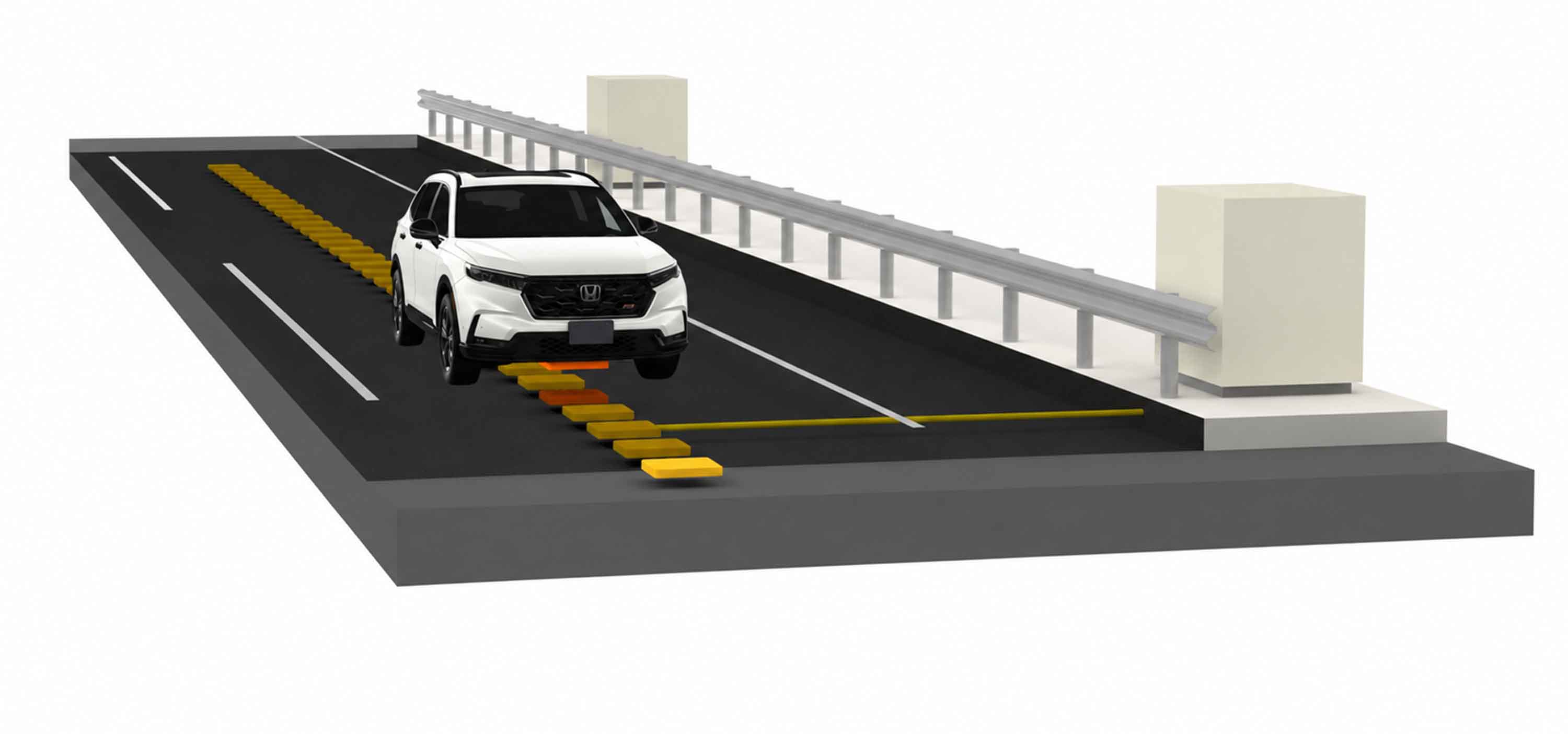
Honda R&D, Taisei Corporation and Taisei Rotec Corporation have developed wireless EV charging road technology capable of supplying power to electric vehicles while they are driving. The dynamic wireless power transfer (DWPT) system uses magnetic coupling to wirelessly charge passenger EVs and large commercial vehicles as they travel over specially equipped roads. Public-road demonstrations are planned in Japan from fiscal 2027, beginning April 1, 2027. Honda has been developing dynamic wireless power transfer technology since 2021, while joint research with Taisei and Taisei Rotec began in 2025. Initial testing at T-FIELD/SATTE evaluated the wireless EV charging system, pavement structures and construction methods ahead of public-road trials. Honda says in-motion wireless EV charging could reduce how often electric vehicles need to stop at charging stations, with logistics and transportation expected to be among the first potential applications.
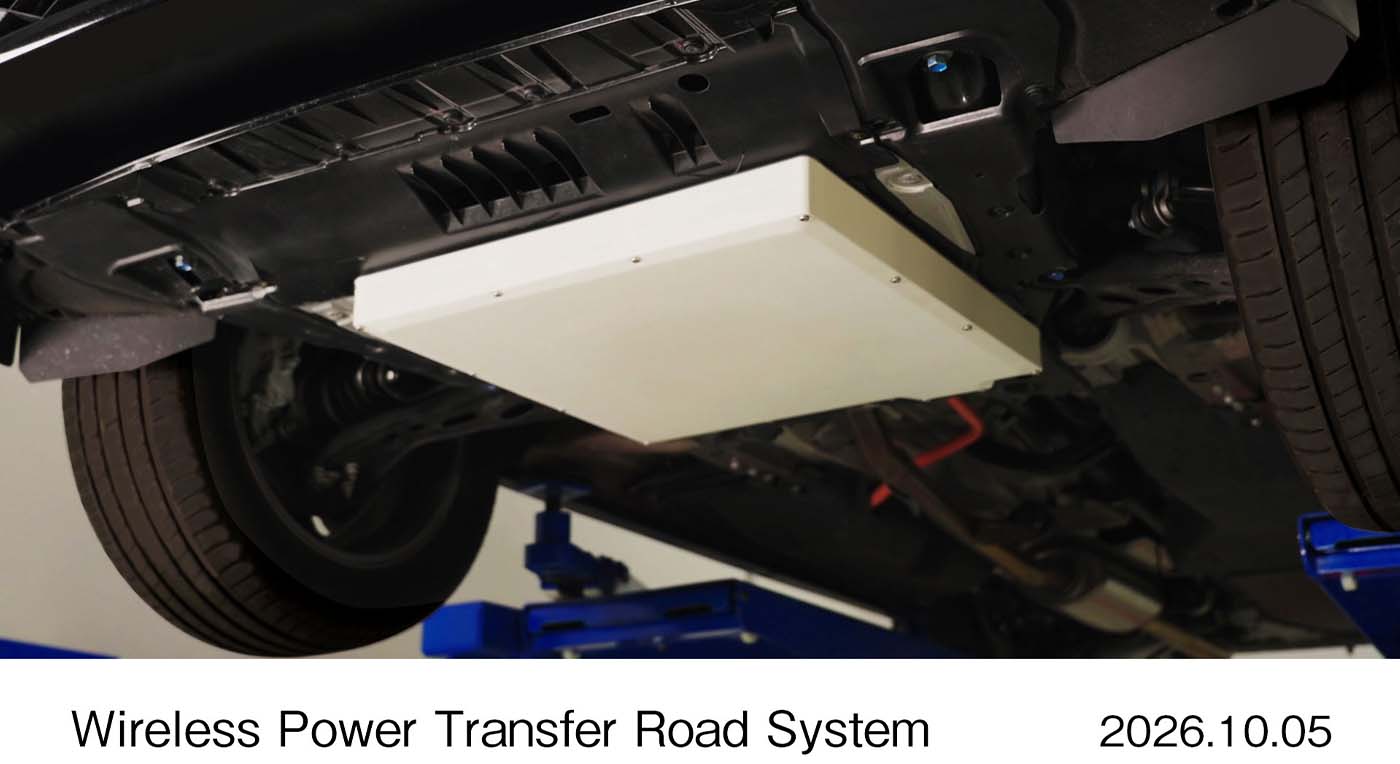
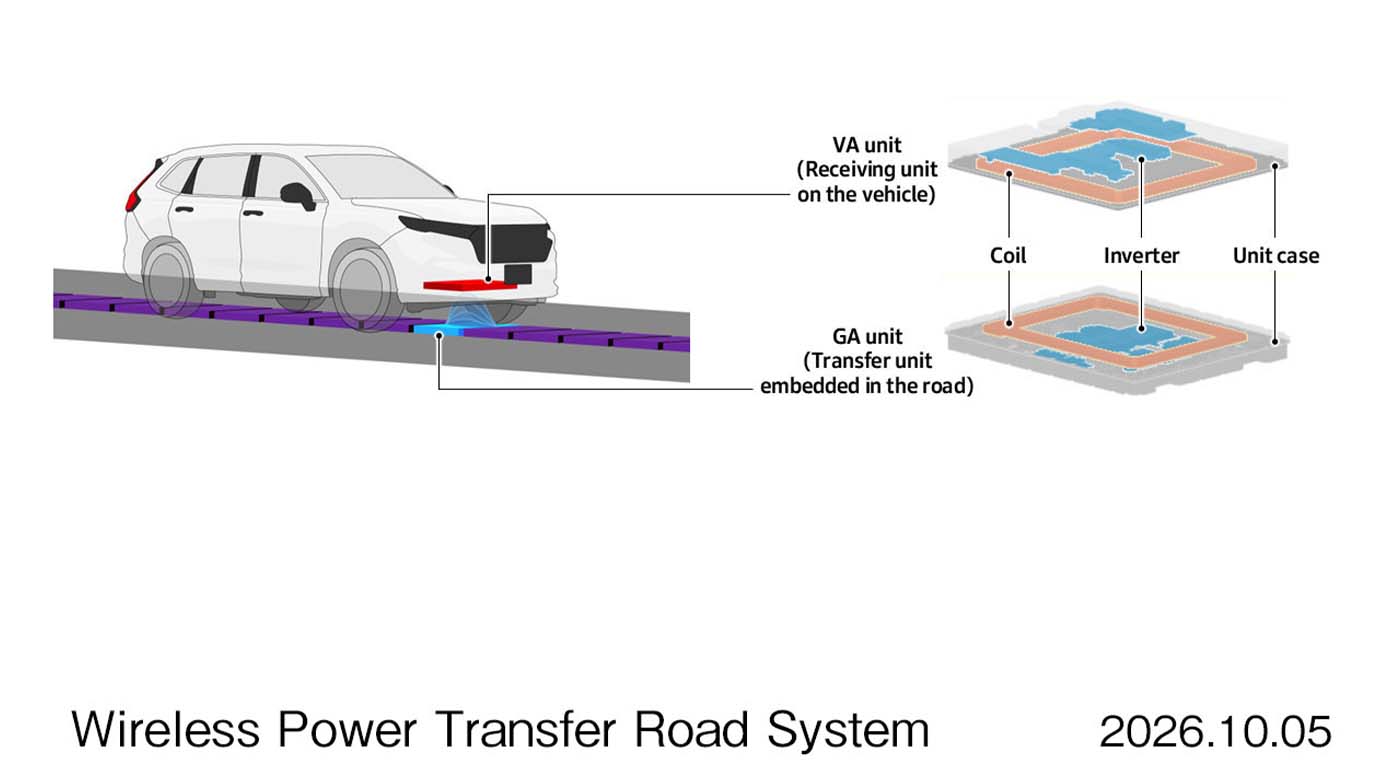
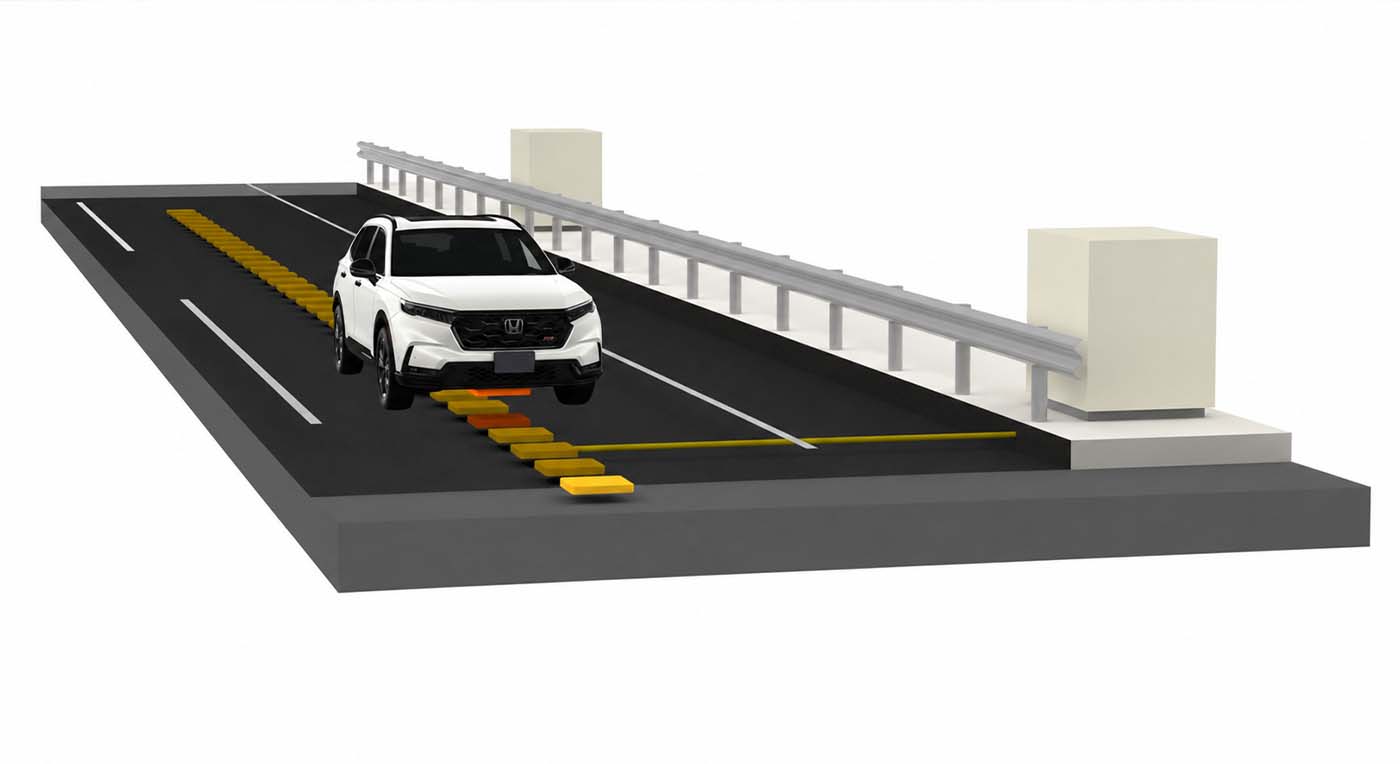
How Honda's wireless EV charging road works
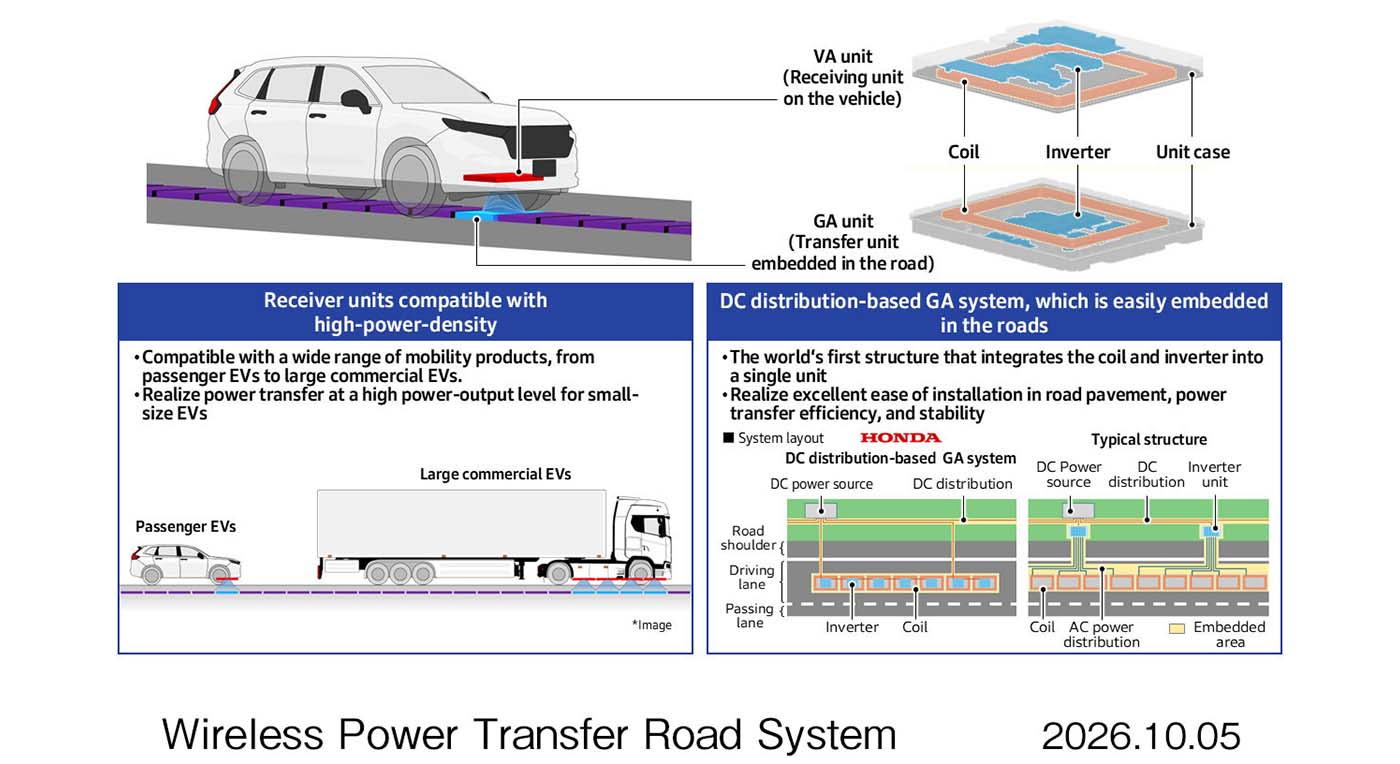
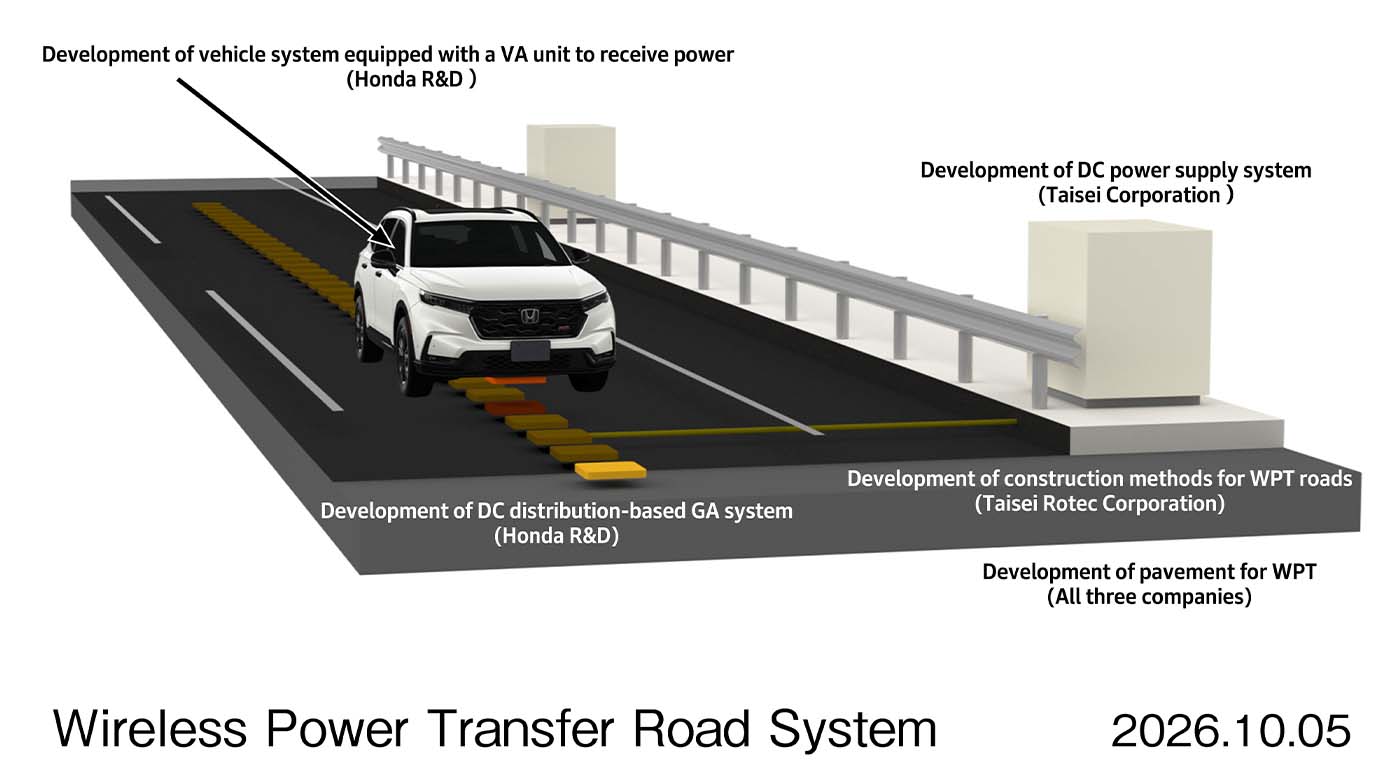
Taisei is developing the high-response DC power supply system, while Honda is responsible for high-power-density transmitter and receiver technology compatible with DC distribution.
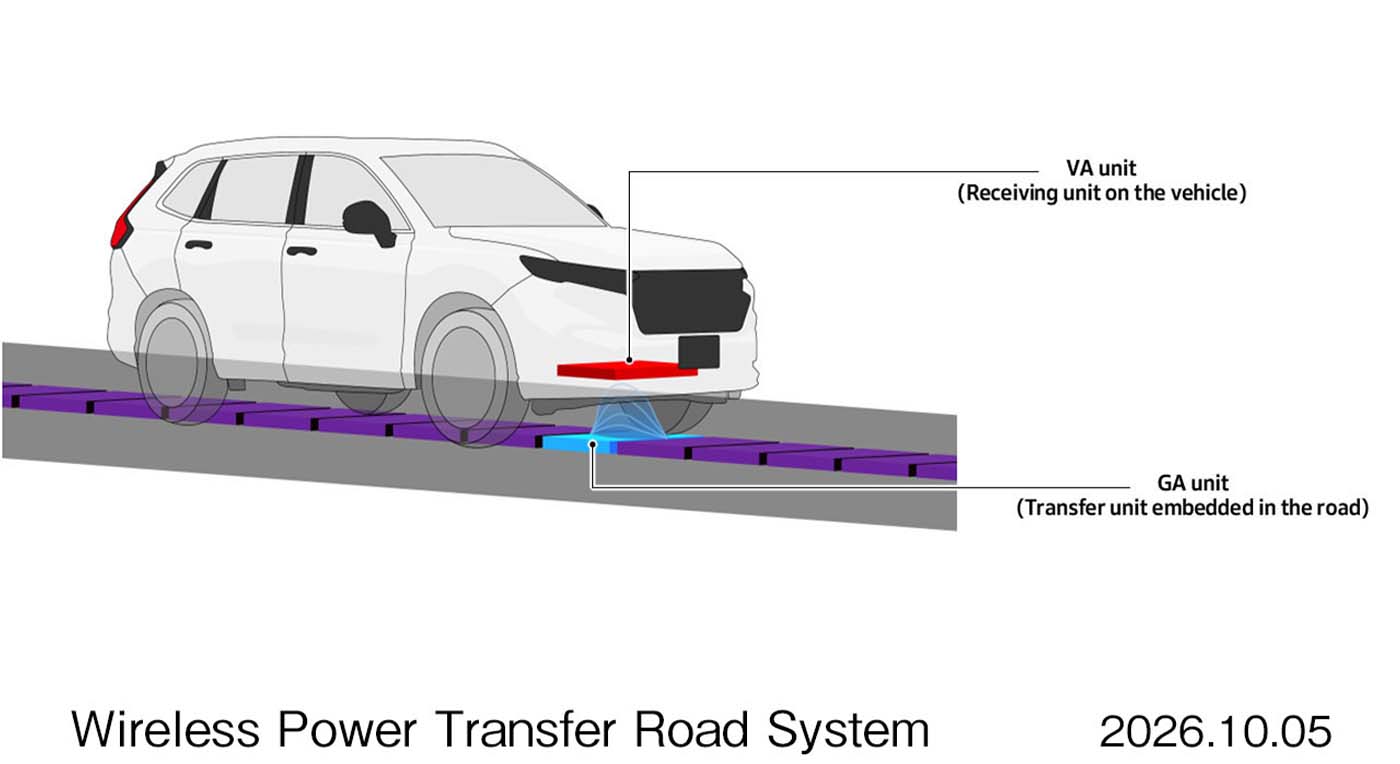
Honda’s ground assembly (GA) units are embedded into the road, while a vehicle assembly (VA) receiver fitted to the vehicle collects power as it travels over the equipped roadway. Taisei Rotec is developing construction methods for roads incorporating the wireless EV charging equipment.
Multiple transmitter units are linked through DC distribution, while the companies are jointly developing pavement structures and working on durability, system upgrades and wireless power-transfer testing.
Designed for commercial vehicles around 20 tonnes
The EV charging road infrastructure has been engineered for long-term use under traffic from large commercial vehicles with a gross weight of around 20 tonnes, while also supporting stable high-power transfer to vehicles travelling at speed.
Honda says each ground assembly integrates the inverter and coil into a single DWPT unit, which it claims is a world-first among publicly disclosed systems as of the end of September 2026.
The units are designed to be milled and embedded into existing road surfaces. The system also includes measures to address uneven surfaces created during milling, while DC distribution simplifies wiring and reduces the number of components and installation work required.
This approach is also intended to make future upgrades and pavement renewal easier, potentially improving the practicality of dynamic wireless EV charging roads.
Testing at up to 150 kW
From late 2026, the partners plan to build another test roadway at Taisei Group’s T-FIELD/TAMRA facility.
Testing will include durability equivalent to one million wheel loads, based on a 49 kN load per wheel, alongside DWPT performance testing and evaluation of measures to limit electromagnetic-field leakage.
The programme is intended to verify both wireless EV charging performance and the structural safety of the embedded charging units.
Future testing will examine power outputs of up to 150 kW for potential use with large commercial vehicles and assess charging reliability at higher vehicle speeds.
Public-road trials from 2027
Honda, Taisei and Taisei Rotec will also participate in the Tateyama Project, a DWPT demonstration led by NEXCO East on the Tateyama Expressway in Chiba Prefecture from Japan’s 2027 fiscal year.
The technology forms part of Honda’s wider EV charging infrastructure efforts, which include the Honda Charge network in Japan and support its carbon-neutrality target for 2050.
Honda will showcase its dynamic wireless EV charging research at Japan Mobility Show Bizweek 2026 from October 13–16 in Chiba and the ITS World Congress 2026 from October 19–23 in Gangneung, South Korea.










Loading comments...