Audi Q9 debuts as brand’s largest flagship SUV
Published Date :
Audi’s first Q9 and largest SUV ever offers six- or seven-seat layouts, automatic doors, curved OLED rear lights, air suspension and a 299 PS mild-hybrid V6 diesel powertrain.
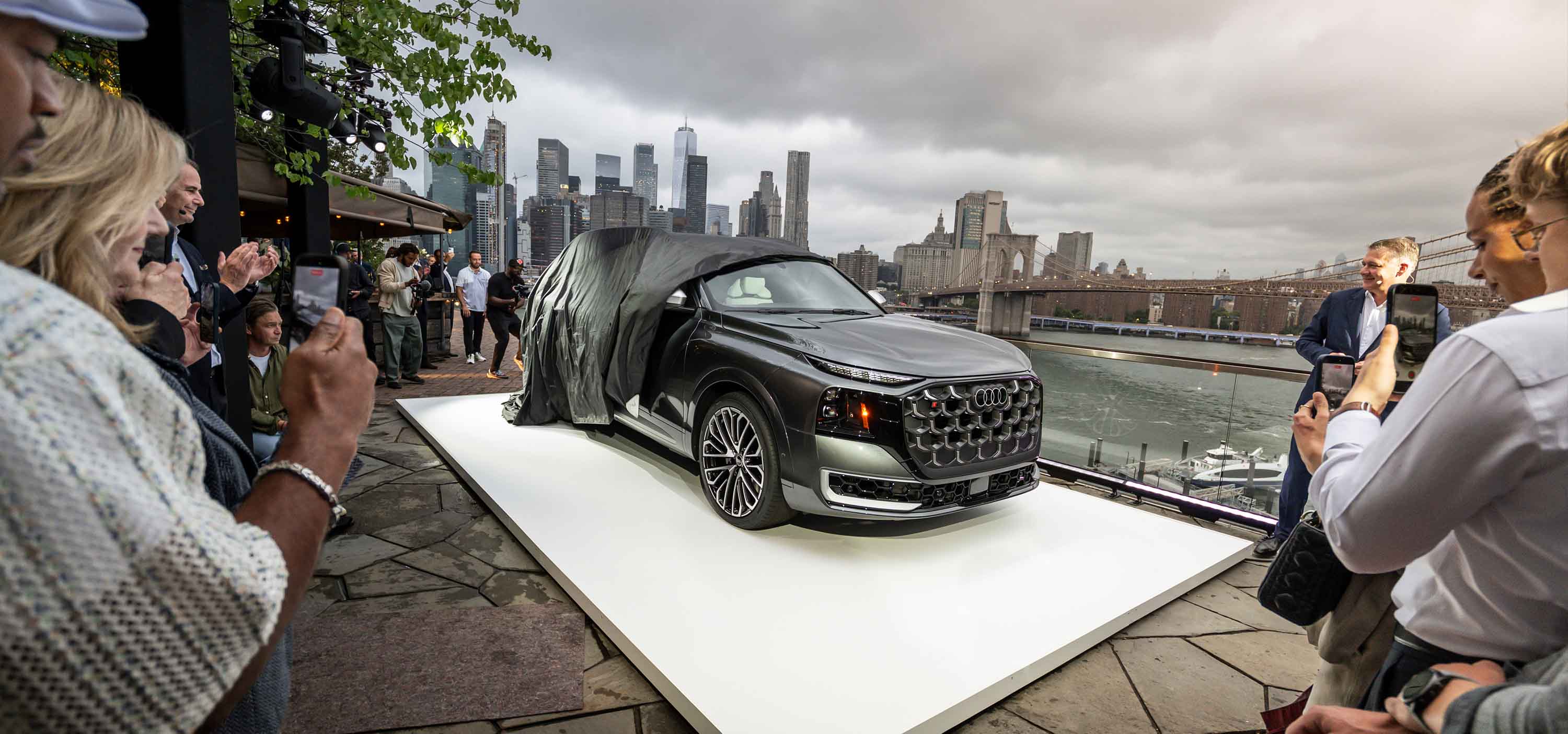
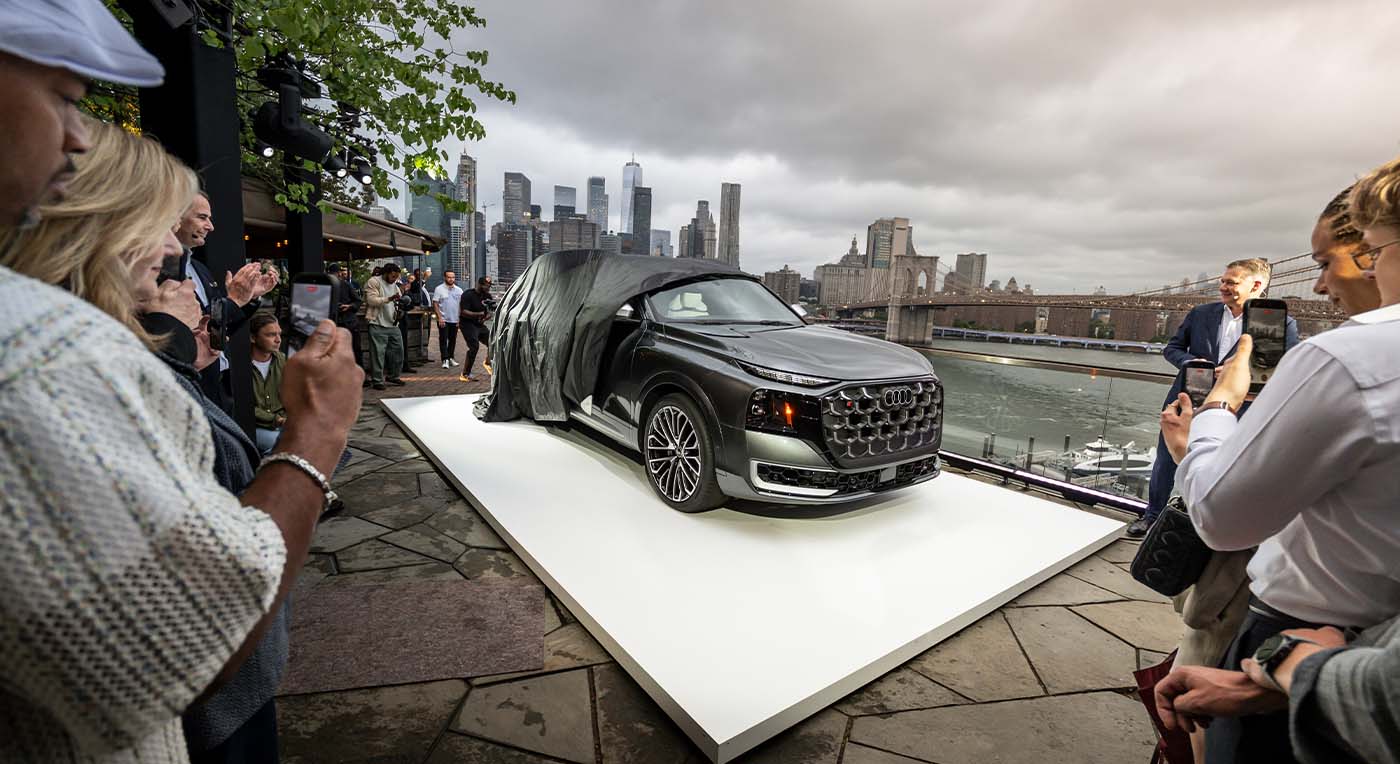
Audi has unveiled the Q9, its largest model and the first to carry the number nine. Positioned above the Q7 and Q8, the flagship combines three-row practicality, business-class comfort, quattro all-wheel drive and advanced lighting, infotainment and driver-assistance technology. German orders open at the end of July 2026, with deliveries beginning in November. The Q9 TDI 220 kW starts at €108,400, approximately $124,100 or AED 455,900. Production takes place in Bratislava, while the UAE arrival is expected in Q1 2027, with local specifications and pricing still to be announced.
Audi’s largest model yet
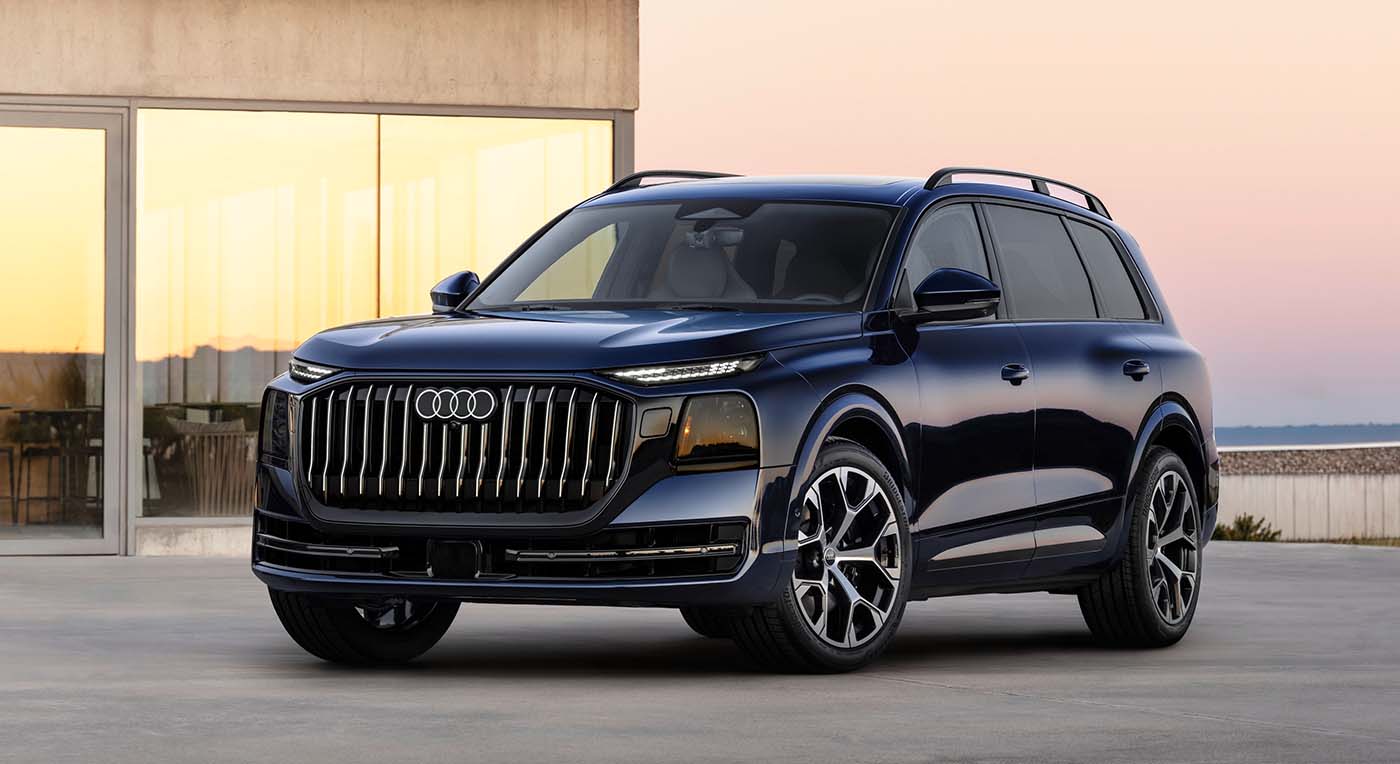
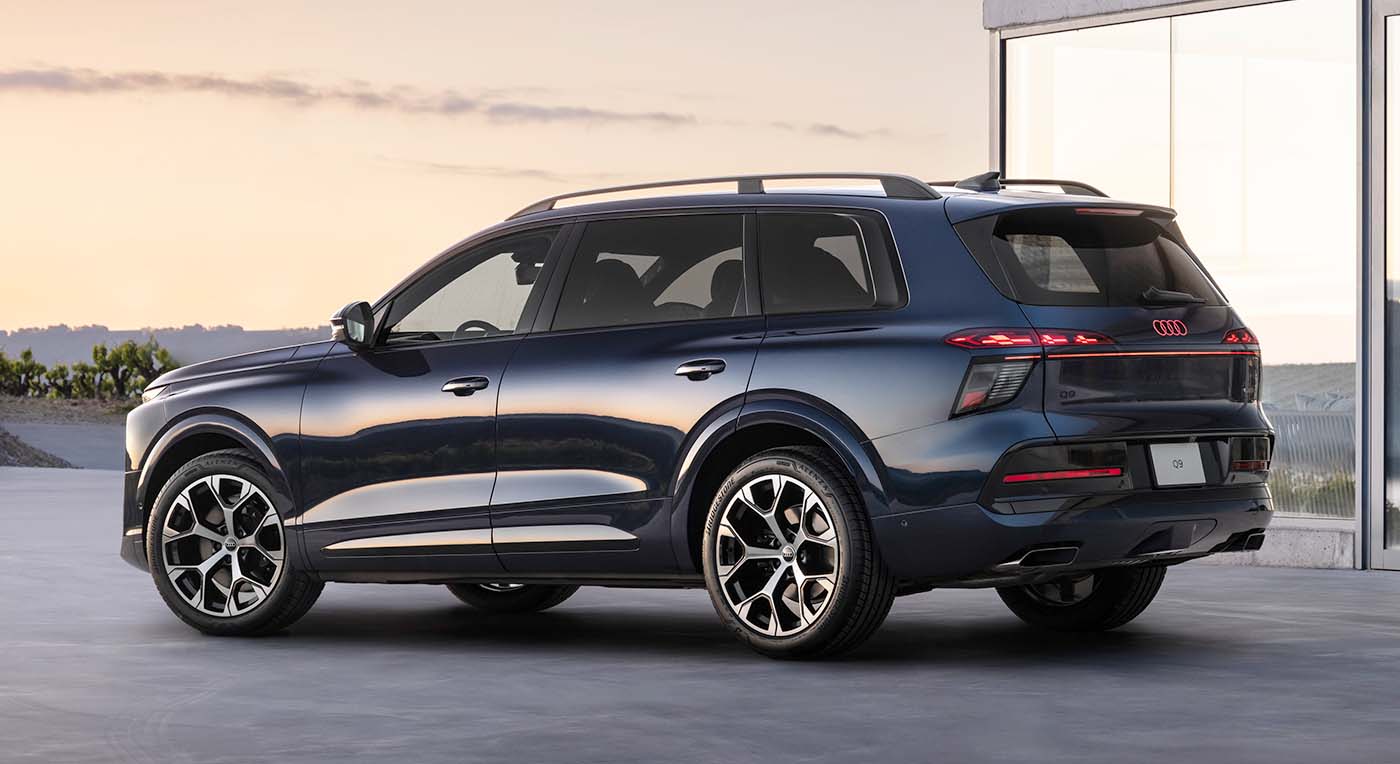
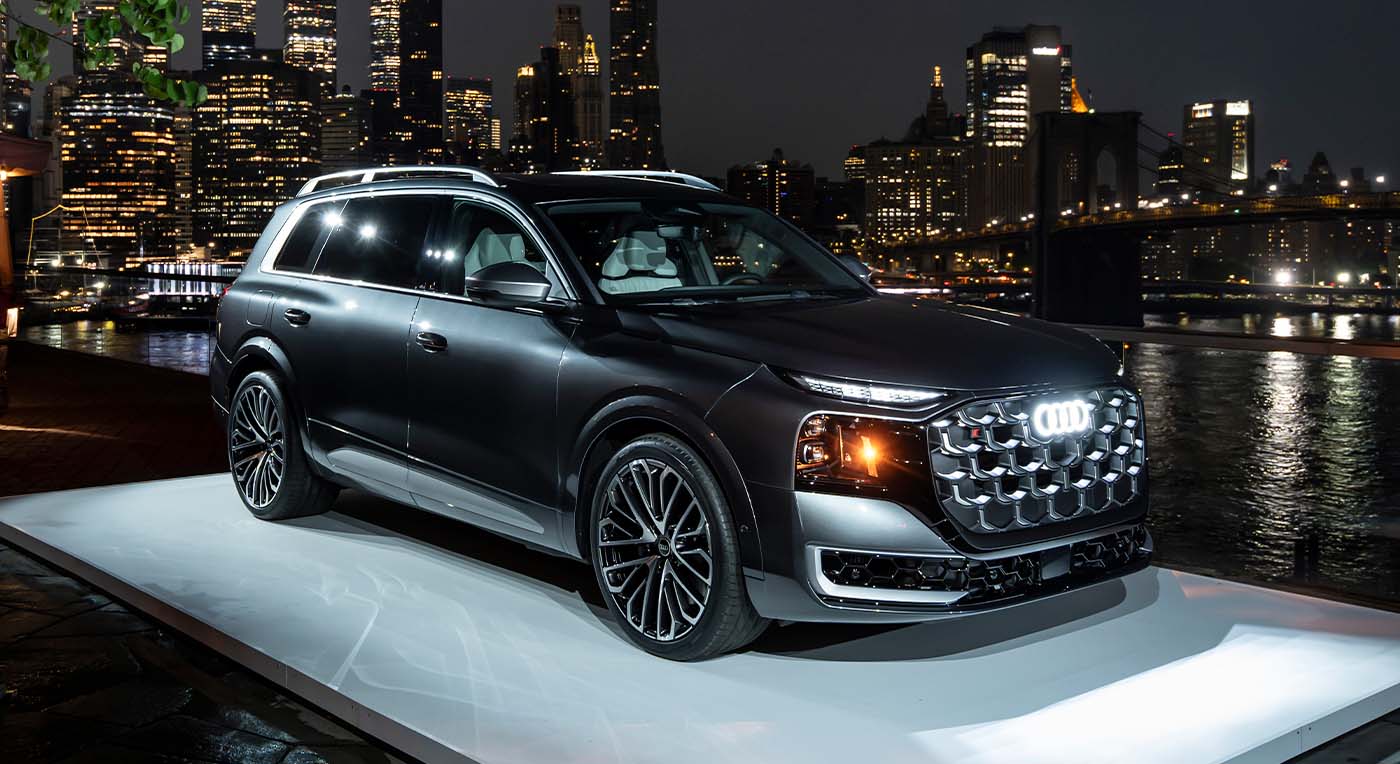
Measuring 5,310 mm long, 2,210 mm wide and 1,810 mm tall, with a 3,140 mm wheelbase, the Q9 is Audi’s largest production vehicle. Its upright black-masked front, straight beltline, pronounced shoulders, long rear doors and extended overhang emphasise its size, while an illuminated Singleframe is optional.
The Advanced line features vertical grille slats and restrained detailing, while the S line adds an open grille, more prominent lower bodywork and a sportier rear spoiler. Wheels range from 20 to 23 inches, with acoustic foam fitted to the two largest sizes.
World-first curved OLED rear lights
The Q9 is the first production vehicle with curved digital OLED rear lights. Six ultra-thin 0.1 mm glass panels contain 512 individually controlled segments, following the body’s contours to improve side visibility while creating static, dynamic and partially active signatures. A full-width strip with illuminated Audi rings connects the lamps.
Indicators can project turn signals onto the road, while communication lights warn others of hazards, breakdowns or opening doors. Door-sill projectors create a rhombus-shaped welcome graphic.
Digital Matrix LED headlights with micro-LED technology can display lane-departure, blind-spot and ice warnings, highlight pedestrians and improve guidance through construction zones.
Six- or seven-seat cabin
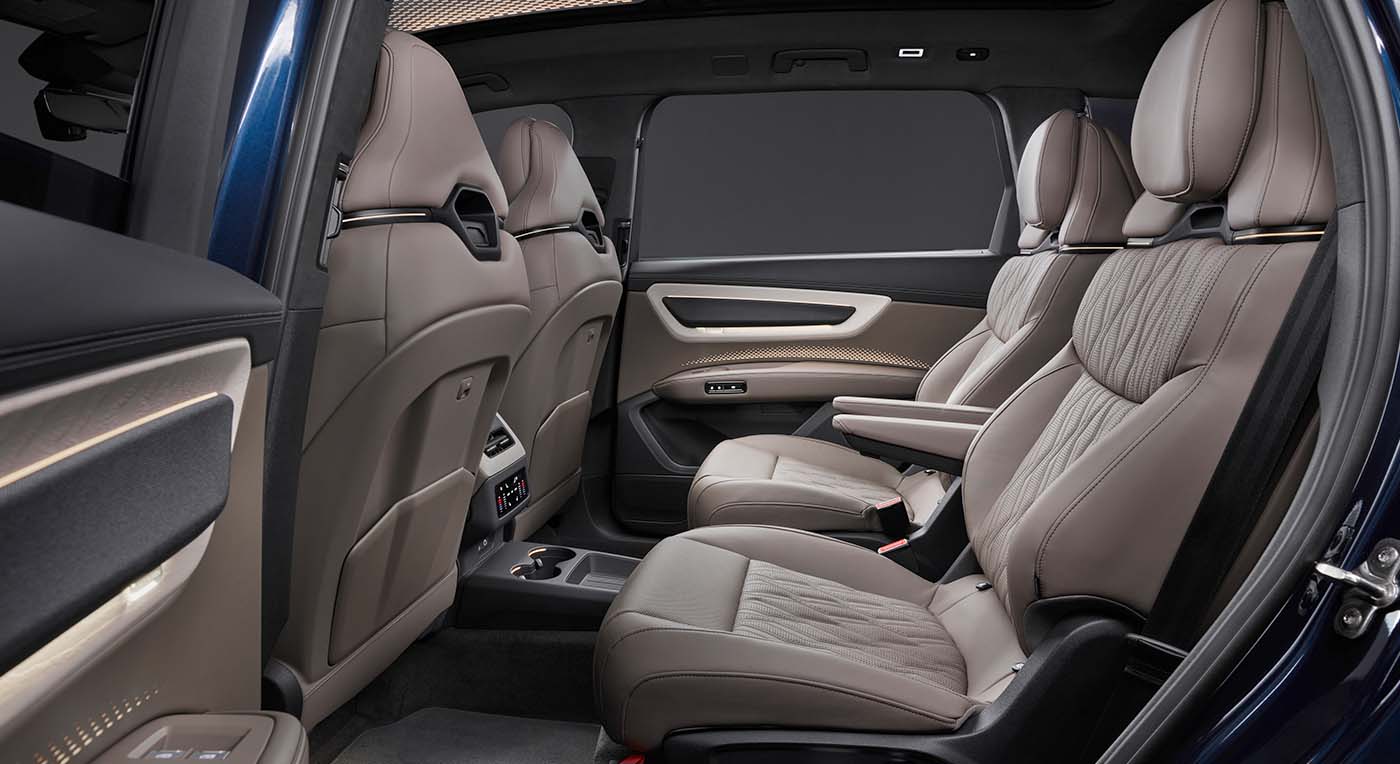
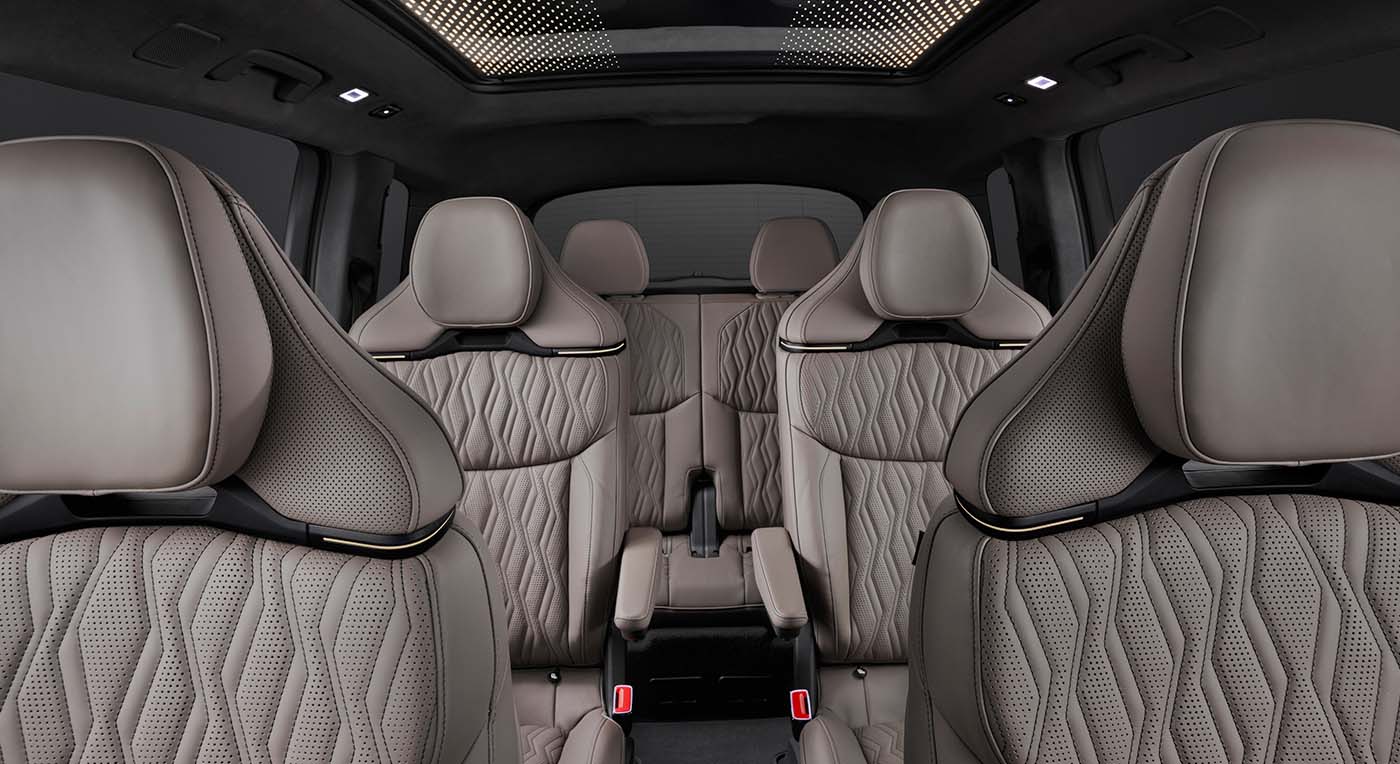
The Q9 seats seven as standard, with power-adjustable seats, Isofix points across all three second-row positions and adult-friendly third-row space. Its electrically sliding 35/30/35 second row tilts forward without requiring fitted child seats to be removed, while both rear rows can be folded from the boot.
An optional six-seat layout adds two individual power-adjustable second-row seats. All six seats can be heated, while front Sports Seat Plus adds ventilation and massage. Heated front and rear armrests are also available.
Audi’s first automatic doors can be controlled from inside or through the myAudi app. Surround sensors prevent them striking obstacles, soft-close mechanisms pull them shut, and exit warning can stop them opening when cyclists, pedestrians or vehicles approach.
Panoramic roof and premium materials
The standard opening panoramic roof spans more than 1.5 square metres. Optional switchable glass has nine independently controlled sections, reflects infrared light, blocks over 99.5 per cent of UV radiation and turns opaque when parked. A later illuminated version adds 84 LEDs and 30 ambient-linked colours.
Interior choices include alpaca wool, Dinamica microfibre, leather, leatherette and fine Nappa leather, complemented by wood, carbon-fibre and textured trim. Matte surfaces reduce fingerprints, while Audi Exclusive packages offer further customisation.
Two Qi2.2 wireless chargers are joined by USB-C outputs of up to 60W in front, 100W in the second row and 45W in the third. An aluminium luggage-rail system, underfloor load-cover storage, large cupholders and a supplied roof-rack system improve practicality.
Three screens and 4D sound
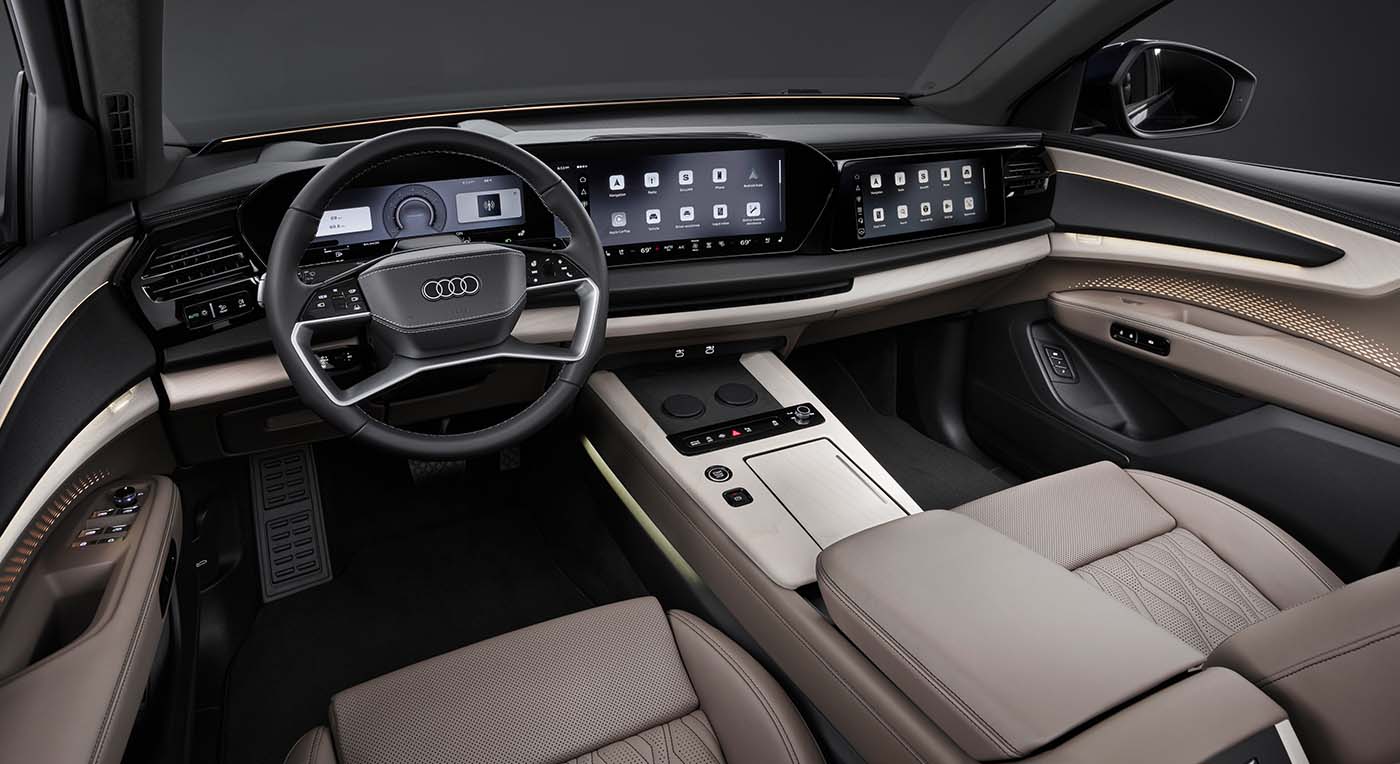
The curved OLED MMI display combines a 12.3-inch virtual cockpit and 14.5-inch touchscreen, while a standard 12.3-inch passenger display uses a privacy filter.
Android Automotive OS supports smartphone-free apps for navigation, entertainment, parking, charging, productivity, weather and news. Audi’s voice assistant controls vehicle functions and uses ChatGPT for broader queries, while an integrated dashcam is optional.
The 1,360-watt Bang & Olufsen system uses 22 speakers, including four in the front headrests. Fraunhofer Symphoria manages sound distribution, while seat actuators create adjustable music-synchronised vibrations. Headrest speakers provide private calls, navigation prompts and personalised audio.
Mild-hybrid diesel and air suspension
The German Q9 launches with a 3.0-litre V6 diesel producing 299 PS and 630 Nm, while selected European markets receive a 245 PS, 500 Nm version. Both use MHEV Plus technology, with a generator adding up to 24 PS during acceleration.
An electrically powered compressor works with two-stage turbocharging, while an eight-speed Tiptronic and permanent quattro all-wheel drive are standard. The 299 PS model claims 7.4–8.0 litres per 100 km.
Standard adaptive air suspension offers 90 mm of height adjustment and can lower the Q9 by 62 mm for easier access. Optional all-wheel steering turns the rear wheels by up to five degrees, improving manoeuvrability at low speeds and stability at higher speeds.
Advanced driver assistance
Safety equipment includes front and rear automatic emergency braking, pedestrian and cyclist detection, blind-spot monitoring, rear cross-traffic alert, a 360-degree camera, automated parking and trailer-assistance systems.
Emergency Assist can detect an unresponsive driver, issue warnings and bring the Q9 to a controlled stop, moving onto the shoulder where possible and initiating an emergency call.
Adaptive Driving Assistant Plus enables hands-free Level 2 driving at up to 130 km/h on approved roads in Germany, the US and Canada, although the monitored driver remains responsible.


Loading comments...