
Nissan launches autonomous driving project in UK
Published Date :
The £3 million UK government-backed ADventure project will deploy a specially equipped Nissan LEAF to test autonomous passenger mobility services in Cambridge, exploring how self-driving technology can operate in real-world communities
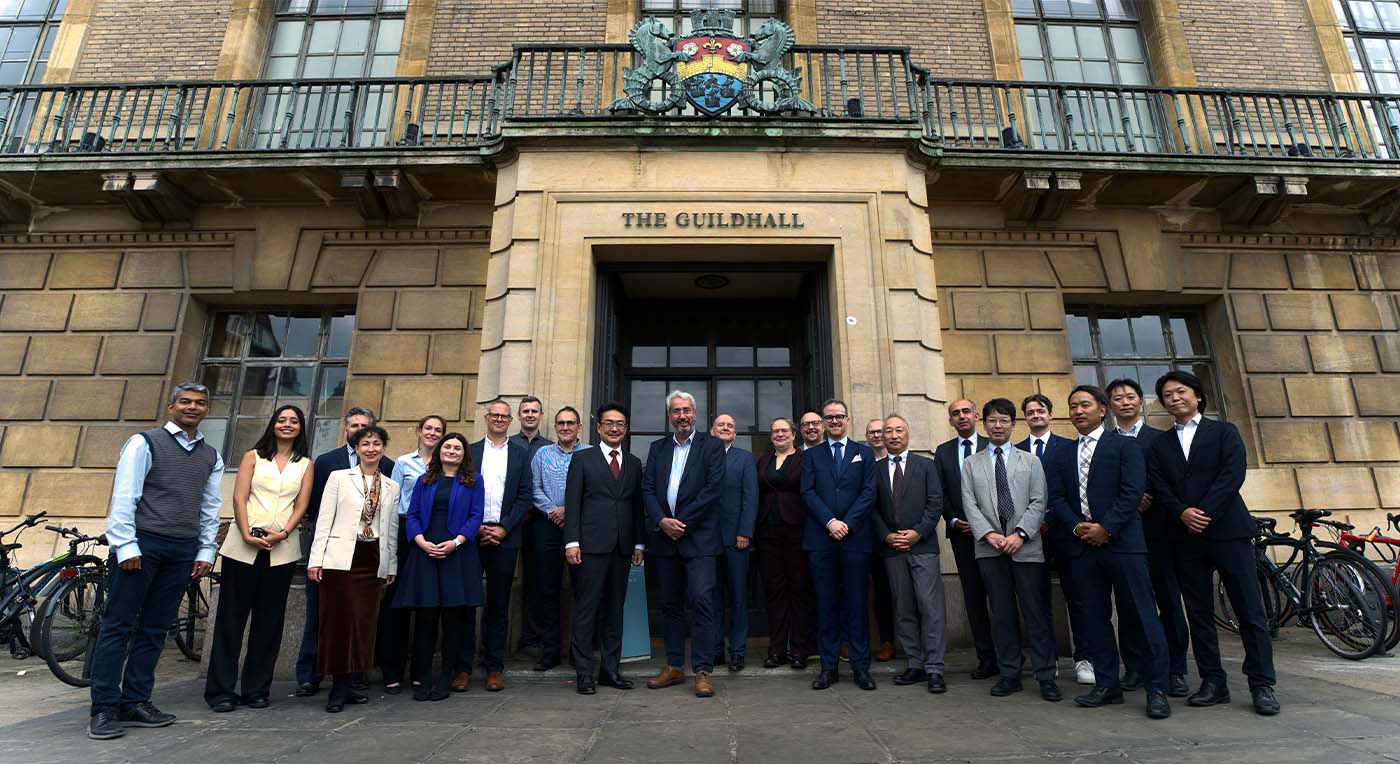
Japanese automaker Nissan has launched a new autonomous driving research project in the UK aimed at taking self-driving technology beyond vehicle development and exploring how it could work as a real-world mobility service. Called ADventure, the £3 million consortium project is led by Nissan in collaboration with Warwick Manufacturing Group (WMG), University of Warwick. The city of Cambridge has been selected for the first real-world trials, with the goal of creating a scalable blueprint that could be deployed in other UK cities and communities.

Autonomous mobility in real-world conditions
Rather than focusing solely on the technology, ADventure will examine how autonomous passenger services could integrate into communities, improve connectivity and accessibility, and address local transport challenges.
Nissan says a potential use case could involve transporting someone who does not drive to a medical appointment. Local authorities, commuters and residents will be involved in determining how such services could provide social value and complement existing transport networks.
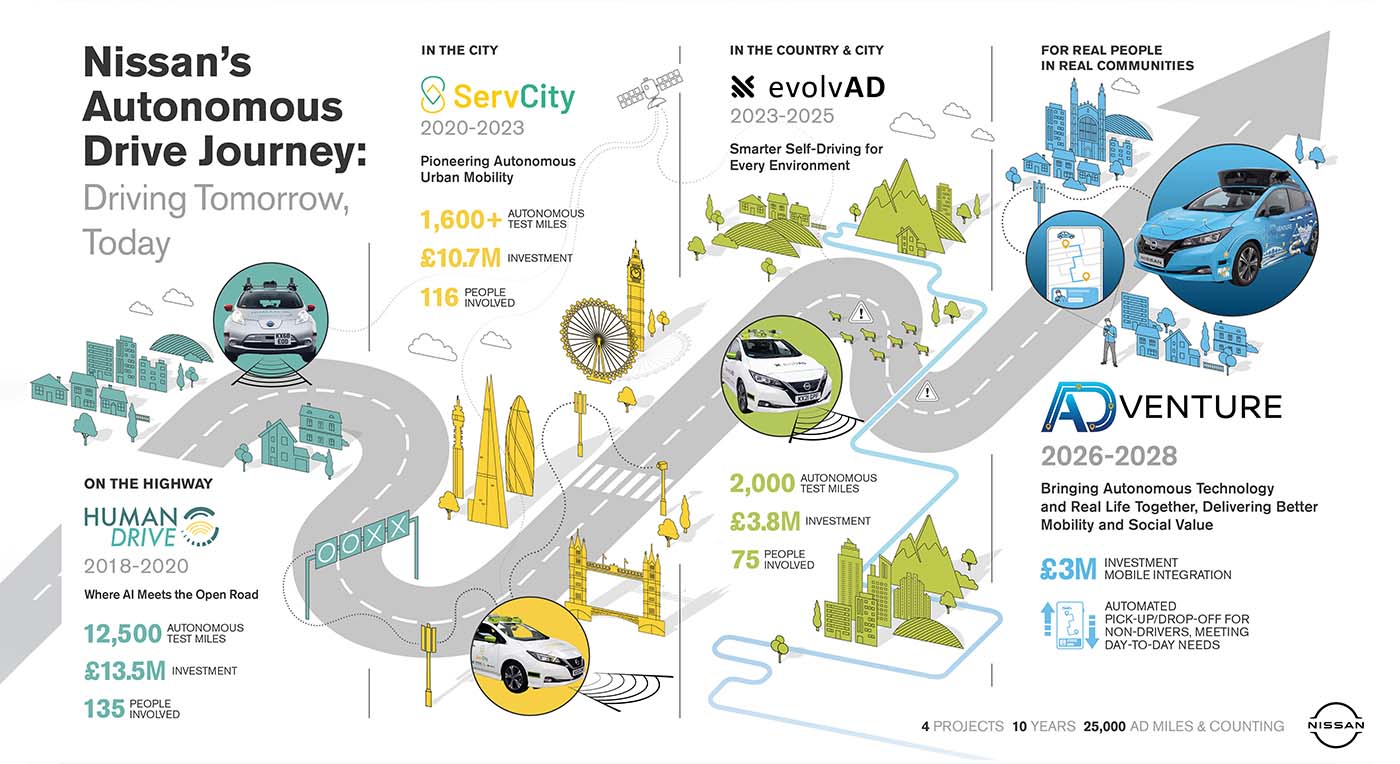
Engineers from Nissan Technical Centre Europe (NTCE) will lead the collaborative programme, building on more than a decade of the company's autonomous-driving research.
David Moss, Senior Vice President, Research and Development, Nissan AMIEO, said the programme would take autonomous vehicle research beyond central London and help Nissan understand how the technology could serve different communities and everyday journeys.
Three key focus areas
Working with WMG and PAVE UK (Partners for Automated Vehicle Education UK), ADventure will focus on three areas: designing autonomous mobility services around the needs of cities and communities; understanding what passengers need to feel informed, comfortable and included; and testing autonomous-driving technology safely and effectively on public roads.
The project is backed by the UK Government's Department for Business, Innovation, Science and Trade (BIST) and facilitated through the Advanced Propulsion Centre UK (APC), in partnership with Innovate UK and inward investment. It forms part of the UK's efforts to accelerate connected and autonomous mobility technologies.
Cambridge was chosen following a scoping process because of its experience in transport innovation and autonomous mobility research. The city has previously hosted several autonomous-driving initiatives.
Nissan LEAF used as autonomous test vehicle
Real-world testing will use a 2022 Nissan LEAF, previously used in UK autonomous driving research projects.
The vehicle has been equipped with Nissan-developed autonomous driving technology and will be used to study passenger mobility requirements and gather data on real-world usage scenarios.
The research will also include participation from local communities to evaluate how autonomous services could improve transport connectivity, accessibility and inclusion.
Building on previous Nissan autonomous projects
The ADventure initiative builds on Nissan’s earlier UK autonomous driving programmes, including HumanDrive, ServCity and evolvAD, which have contributed to understanding how self-driving systems perform in varied driving environments.
The project will conclude with a public-road demonstration in Cambridge, showcasing how autonomous mobility services could support future transport systems that are safer, more connected and more sustainable across the UK.






Loading comments...