Michelin unveils AI digital twin for safer performance
Published Date :
The universal tyre digital twin uses AI, advanced modelling and real-time vehicle data to predict tyre behaviour without sensors, improving safety, efficiency and tyre life
Michelin has introduced a breakthrough AI-powered tyre digital twin system that transforms how vehicles monitor and respond to tyre performance in real time. The new universal tyre digital twin uses artificial intelligence, advanced mathematical modelling and existing vehicle data to predict tyre behaviour without requiring any additional physical sensors. Michelin says the system enhances safety, improves vehicle performance and extends tyre lifespan by turning every tyre into a real-time data source. The innovation is part of Michelin’s long-term push into intelligent mobility, software-defined vehicles and predictive automotive systems.
A virtual tyre that works in real time
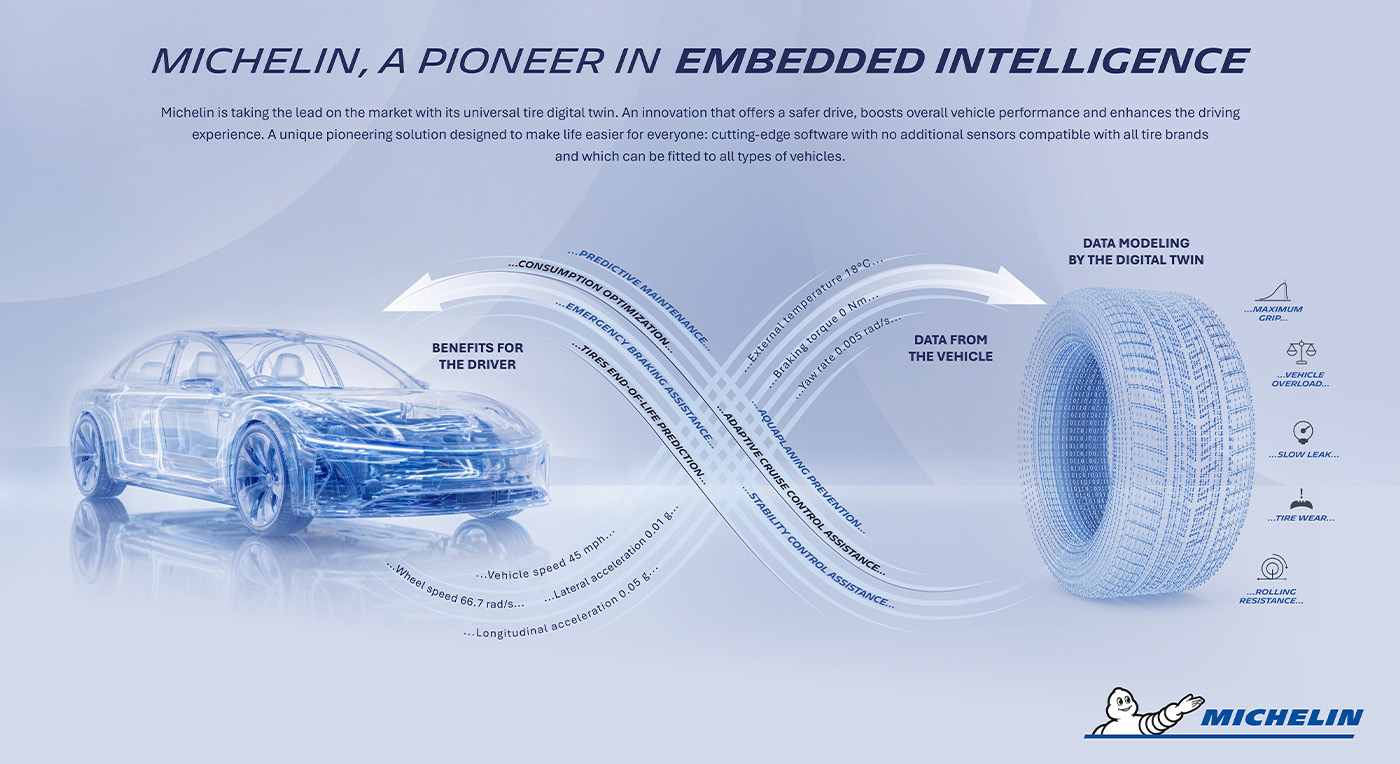
The digital twin acts as a continuously updated virtual replica of the physical tyre. It analyses key parameters such as tyre pressure, wear, grip, load and driving conditions, and compares them with live vehicle data.
Instead of simply displaying information, the system communicates directly with vehicle control systems. This enables it to:
Predict available grip levels in real time
Reduce aquaplaning risk
Improve performance of ABS and ADAS systems
Monitor tyre pressure continuously
Detect vehicle overloading
Michelin claims the technology can improve stability, optimise fuel consumption and even reduce braking distances by several metres.
The system operates silently in the background, requiring no changes in driver behaviour while continuously improving driving safety and efficiency.
No sensors required: fully software-based system
A key breakthrough of Michelin’s digital twin technology is its software-only architecture. It uses existing vehicle signals, eliminating the need for additional tyre-mounted sensors.
The system is designed to be fully compatible with all tyre brands, vehicle types and mobility platforms, including:
Passenger cars
Commercial trucks
Autonomous shuttles
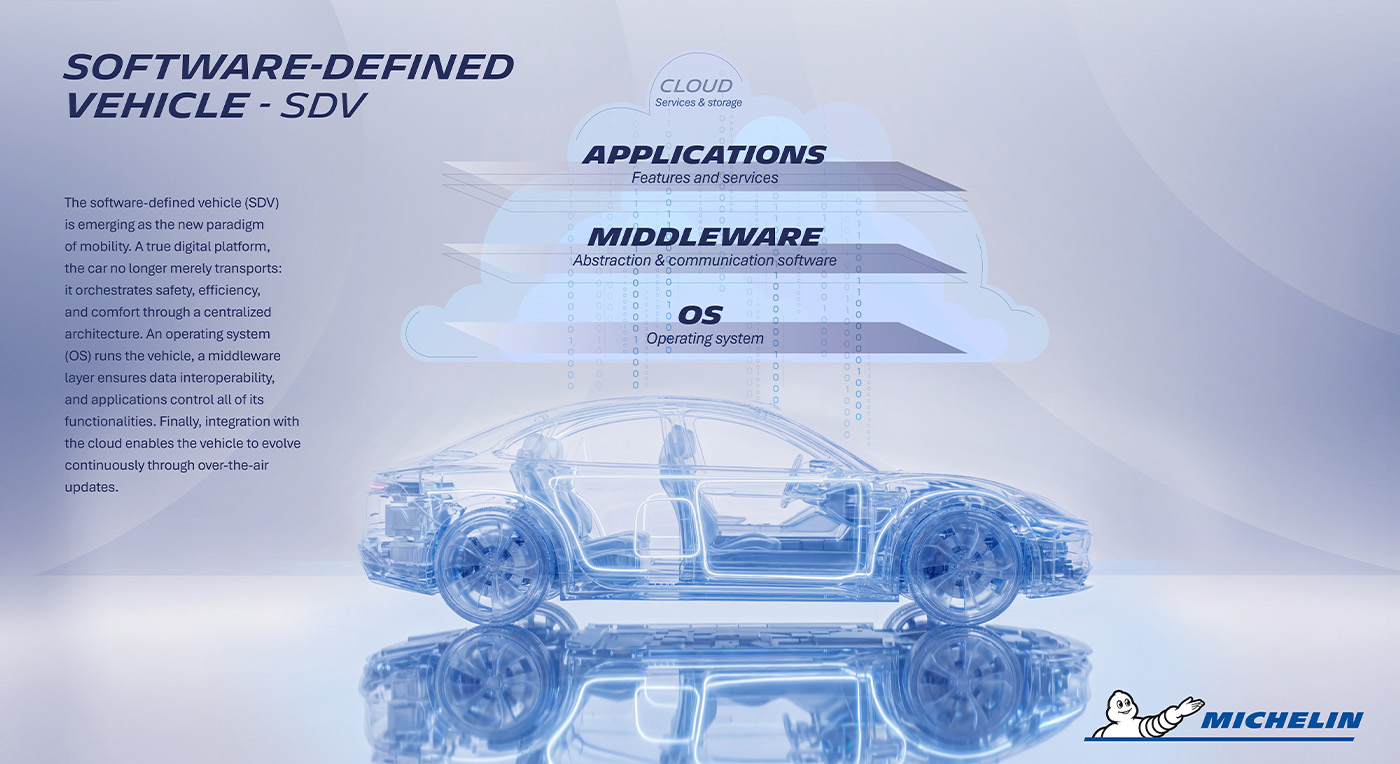
Built for the emerging Software Defined Vehicle (SDV) ecosystem, the technology is the result of more than a decade of research, multiple patents and millions of kilometres of testing.
Partnerships driving future mobility
Michelin is collaborating with several global technology and automotive companies to accelerate adoption of the system.
Key partners include:
Brembo
Hyundai
QNX
ETAS
Sonatus
Michelin says integrating real-time tyre data into braking systems can significantly improve vehicle safety. In collaboration with Brembo, tests have shown that braking distances in emergency situations can be reduced by up to four metres.
Tyres as intelligent data platforms
Michelin believes tyres will become a core part of the future vehicle data ecosystem as cars become increasingly software-defined and autonomous.
The company is already expanding beyond traditional tyre manufacturing with innovations such as:
Michelin Uptis airless tyre
Connected fleet management systems
Predictive maintenance solutions
These developments are part of Michelin’s strategy to transform tyres into intelligent mobility components that actively contribute to vehicle decision-making systems.
A step toward the future of software-defined mobility
By combining AI, vehicle data and advanced simulation models, Michelin’s tyre digital twin represents a major step toward the future of software-defined mobility.
The technology aims to improve road safety, reduce maintenance costs and support more efficient vehicle operation across global transport systems.
As automotive systems continue to evolve, Michelin positions itself not just as a tyre manufacturer, but as a key player in the intelligent mobility ecosystem.





Loading comments...