10 ways to save fuel while driving
Published Date :
From smoother acceleration and smarter A/C use to correct tyre pressures and better journey planning, these practical habits can help reduce fuel consumption without sacrificing comfort.
Fuel prices may change from month to month, but motorists can cut running costs by changing how they drive and maintain their vehicles. The US Department of Energy estimates that better driving and maintenance habits can improve the average driver’s fuel economy by around 10 per cent. Some may remember a famous Top Gear experiment in which a Toyota Prius was driven flat-out around the test track while a BMW M3 simply kept pace. Under those specific conditions, the Prius returned 17.2 UK mpg (approximately 6.1 km/l), compared with the M3’s 19.4 UK mpg (approximately 6.9 km/l). It certainly didn’t prove that an M3 is generally more economical than a Prius, but it neatly illustrated Jeremy Clarkson’s point: it’s not just what you drive, but how you drive. With that in mind, here are some simple tips and tricks to improve your car or SUV’s fuel economy…and save some money in the process.
1. Accelerate and brake smoothly
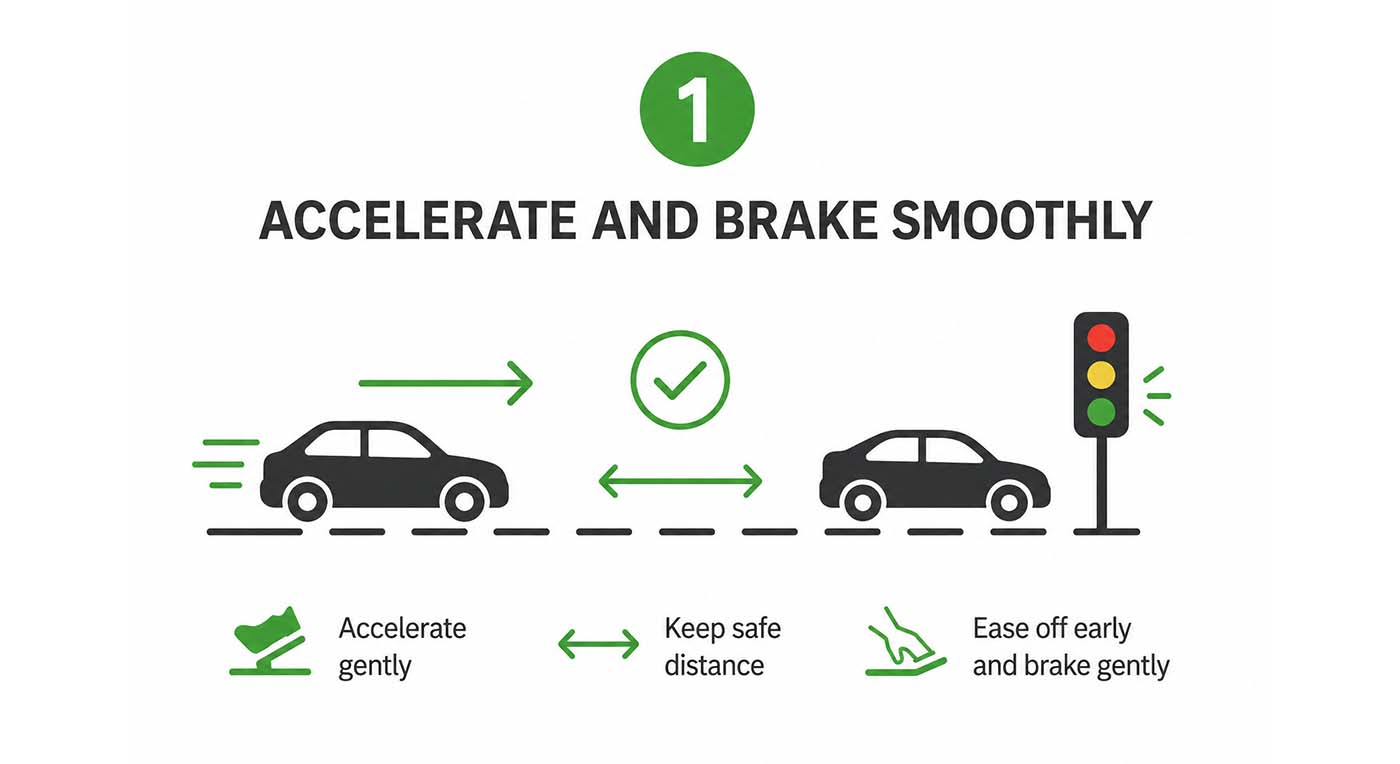
Hard acceleration consumes considerably more fuel than building speed progressively, while heavy braking wastes energy that has already been used to get the vehicle moving.
Look ahead, maintain adequate space from the vehicle in front, and ease off the accelerator early when approaching traffic lights or congestion. Dubai’s RTA says smooth driving can save up to 10 per cent on fuel, while the US Department of Energy similarly recommends gradual acceleration and anticipating traffic conditions.
2. Keep your speed steady
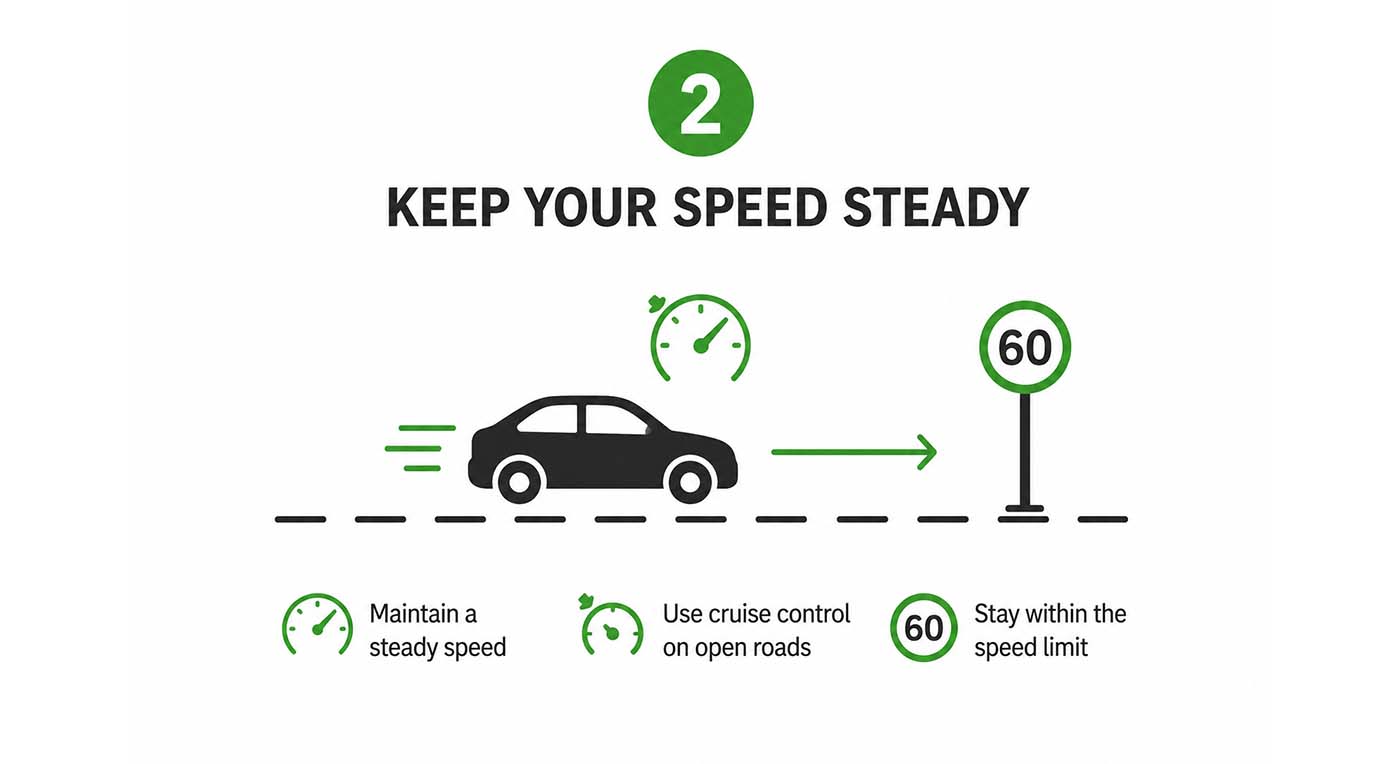
Maintaining a consistent speed is generally more efficient than repeatedly accelerating and slowing down. Cruise control can help on open, relatively level motorways, although it is less useful when traffic conditions require frequent speed changes.
Higher speeds also increase aerodynamic drag. According to the US Department of Energy, aggressive driving, including speeding, rapid acceleration and hard braking, can reduce fuel economy by around 15 to 30 per cent at motorway speeds and 10 to 40 per cent in stop-and-go traffic.
So avoid unnecessary speeding and stay within the posted speed limit.
3. Use the air conditioning intelligently
Turning off the A/C is hardly practical during a UAE summer, but it can still be used more efficiently.
FuelEconomy.gov says air conditioning can reduce the fuel economy of a conventional vehicle by more than 25 per cent in very hot conditions, particularly on short journeys.
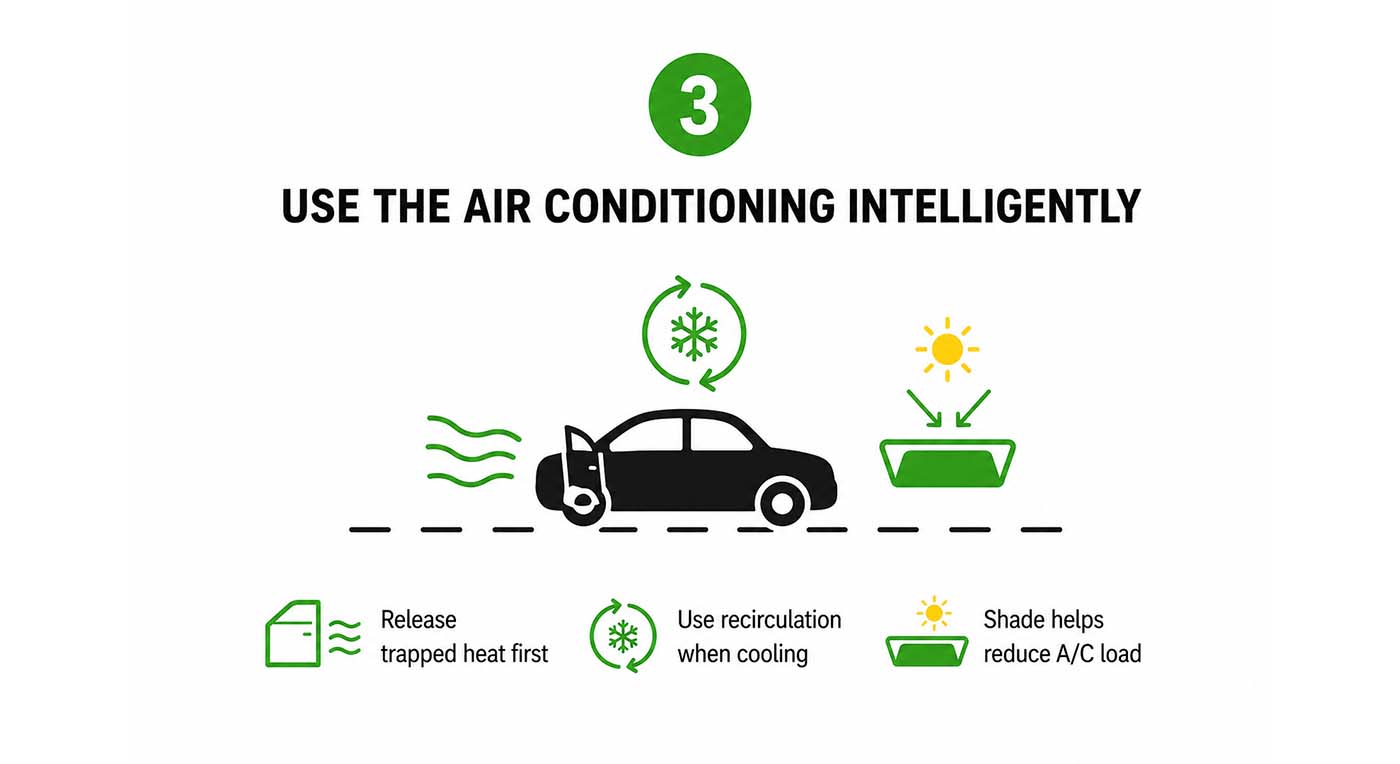
If the car has been sitting in the sun, briefly open the doors or windows to release trapped heat. Once the cabin begins to cool, use the recirculation setting so the system is cooling air that is already inside the cabin rather than continuously drawing in hot outside air.
At lower speeds, driving with the windows open can be more efficient. At motorway speeds, however, using the A/C is generally preferable because open windows increase aerodynamic drag. Parking in the shade or using a windscreen sunshade can also help reduce the load on the air-conditioning system.
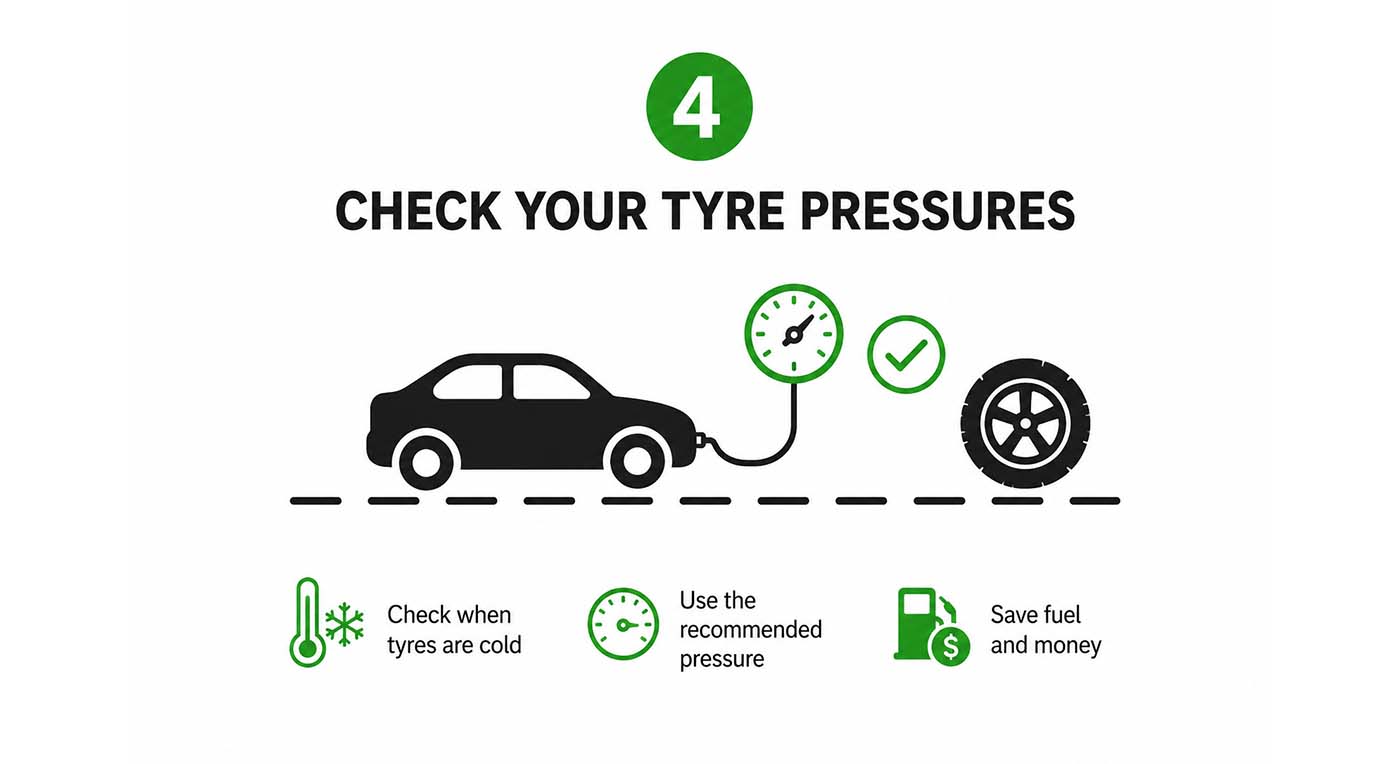
4. Check your tyre pressures
Underinflated tyres increase rolling resistance, meaning the engine has to work harder to keep the vehicle moving. They can also accelerate tyre wear and affect handling.
The US Department of Energy says properly inflated tyres can improve fuel economy by around 0.6 per cent on average and up to 3 per cent in some cases.
Always use the tyre pressure specified by the vehicle manufacturer rather than the maximum figure printed on the tyre itself. The recommended pressure is usually listed on the driver’s door jamb or in the owner’s manual and should ideally be checked when the tyres are cold.
Dubai’s RTA also recommends maintaining the correct tyre pressure to help save fuel and reduce running costs.
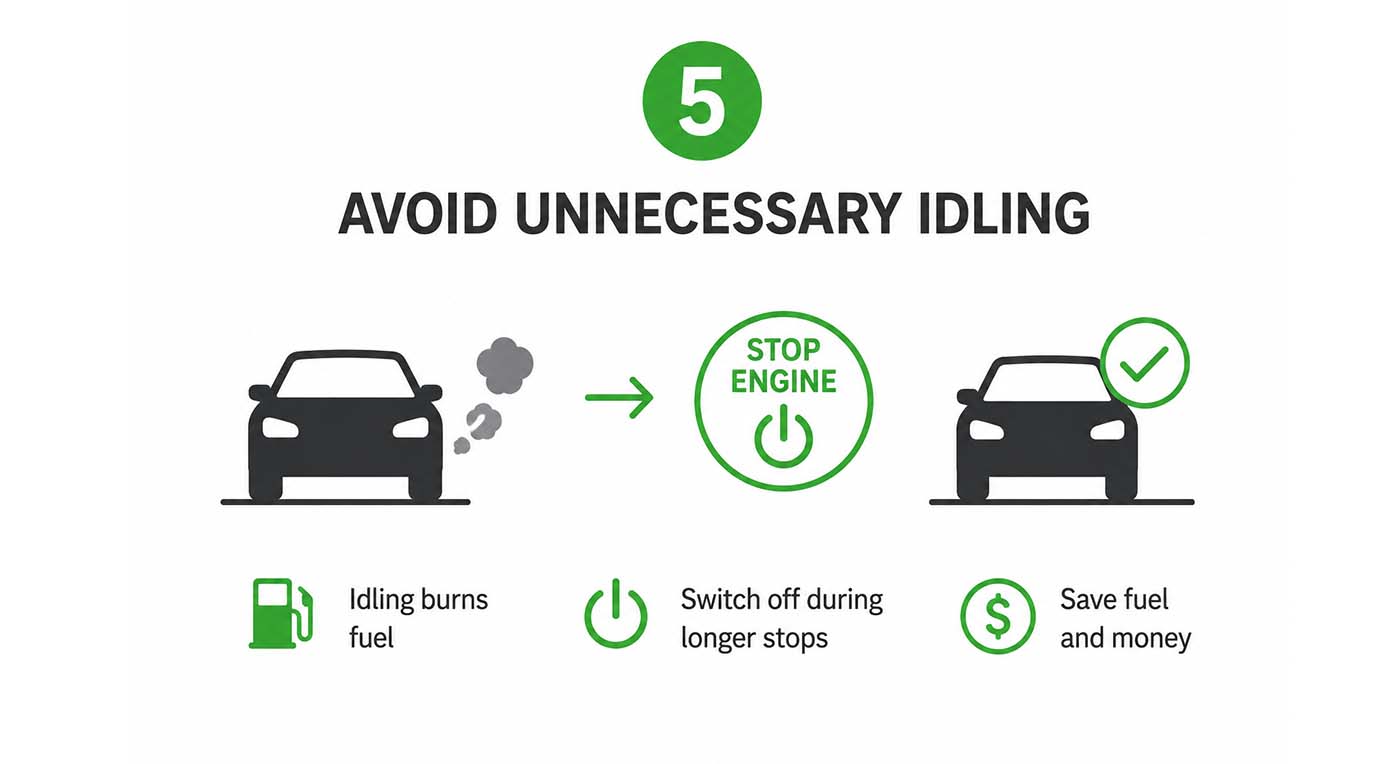
5. Avoid unnecessary idling
Leaving the engine running while waiting outside a building, school or shop burns fuel without covering any distance.
The US Department of Energy estimates that idling can consume roughly a quarter to half a gallon of fuel per hour, depending on engine size and A/C use.
Switch off the engine during longer stops when it is safe and practical to do so. Many modern vehicles handle this automatically through stop-start systems. The feature may sometimes feel intrusive, but reducing unnecessary fuel consumption is exactly what it is designed to do.
Never switch off the engine while the vehicle is moving.
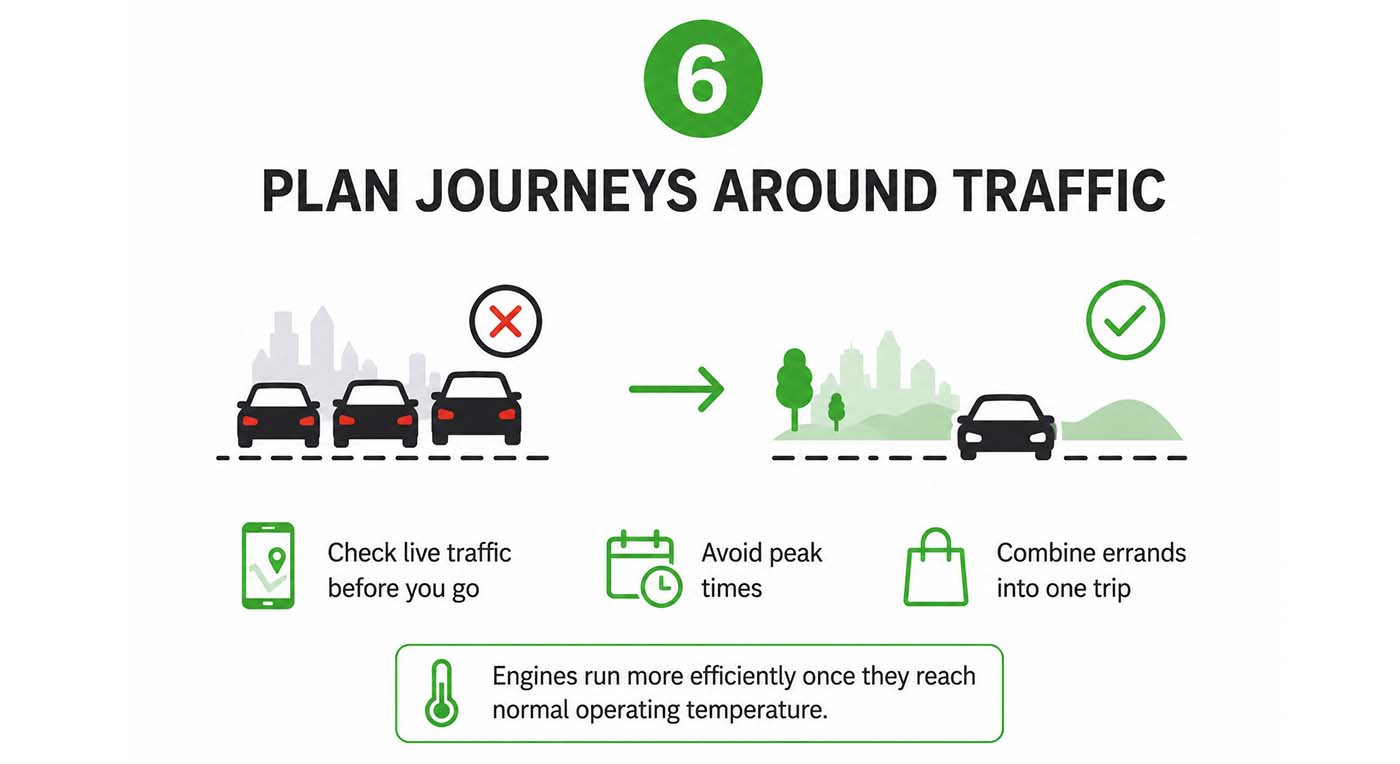
6. Plan journeys around traffic
A slightly longer but consistently moving route can sometimes be more fuel-efficient than a shorter journey involving prolonged stop-start congestion.
Check live traffic information before setting off and avoid peak commuting periods where possible. Combining several errands into a single journey can also reduce the number of cold starts.
The US Department of Energy recommends combining trips because engines generally operate more efficiently once they have reached their normal operating temperature.
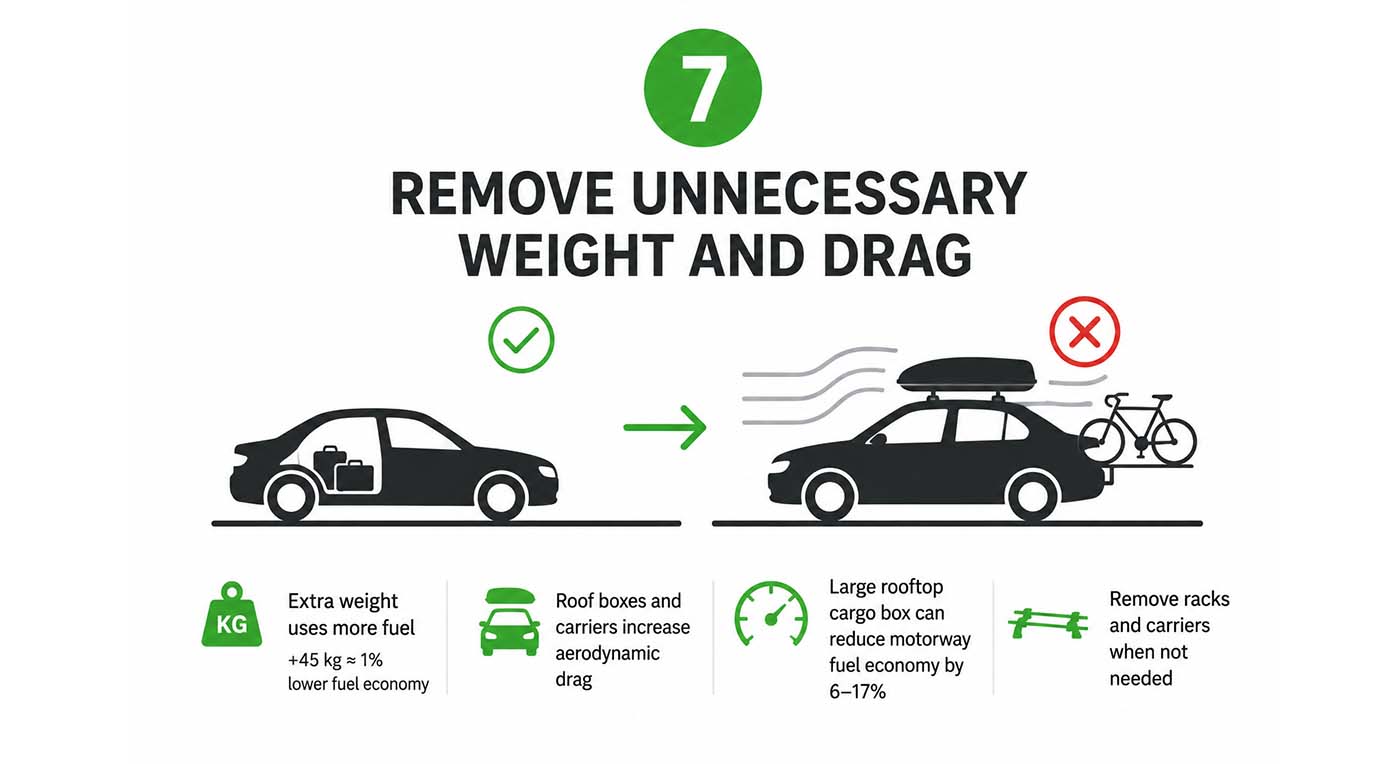
7. Remove unnecessary weight and drag
Carrying heavy items you rarely use means the vehicle has to move extra weight on every journey.
The US Department of Energy estimates that an additional 100 lb, or around 45 kg, can reduce fuel economy by roughly 1 per cent, with the impact generally greater on smaller vehicles.
Roof racks, cargo boxes and bicycle carriers can have an even bigger effect at motorway speeds because they increase aerodynamic drag. Testing cited by FuelEconomy.gov suggests that a large rooftop cargo box can reduce motorway fuel economy by around 6 to 17 per cent.
Remove roof racks, cargo boxes and external carriers when they are not required.
8. Maintain the vehicle properly
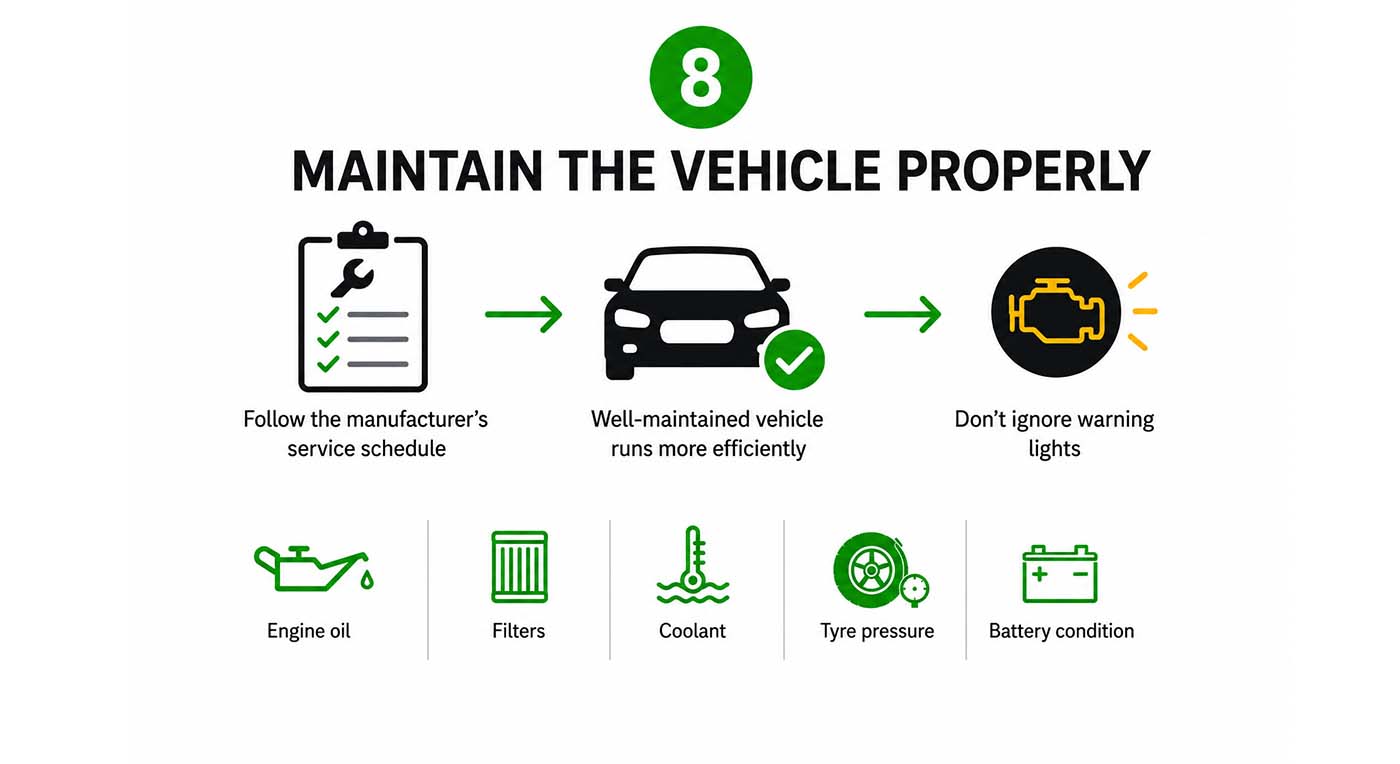
Follow the manufacturer’s service schedule and use the recommended engine oil and replacement components.
Correcting engine faults, maintaining the proper tyre pressures and using the correct engine oil can all help improve efficiency. A warning light should therefore not be ignored simply because the vehicle appears to be driving normally.
One caveat concerns air filters: replacing a clogged filter on a modern fuel-injected vehicle does not necessarily improve fuel economy, although it may improve acceleration and performance.
Preventative checks should include engine oil, filters, coolant, tyre pressure and battery condition.
9. Use the correct fuel grade
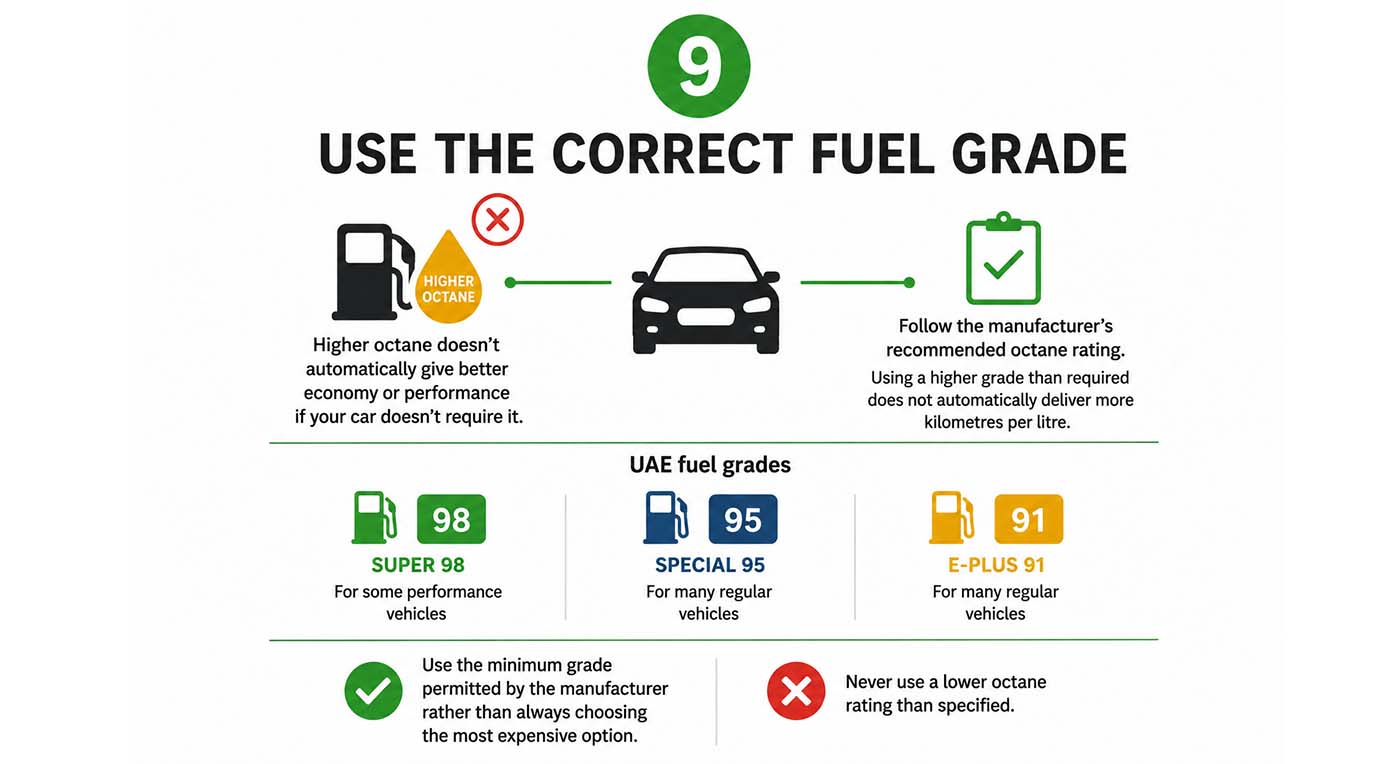
Higher-octane petrol does not automatically provide better fuel economy or performance if your vehicle does not require it.
ADNOC Distribution advises motorists to follow the manufacturer’s recommended octane rating and notes that using a higher grade than required does not automatically deliver more kilometres per litre.
The UAE commonly offers Super 98, Special 95 and E-Plus 91. Some performance vehicles require Super 98, while many regular cars are designed to run on 95 or 91.
Use the minimum octane grade permitted by the manufacturer rather than automatically choosing the most expensive option — but never use a lower octane rating than specified.
10. Use the vehicle’s efficiency features
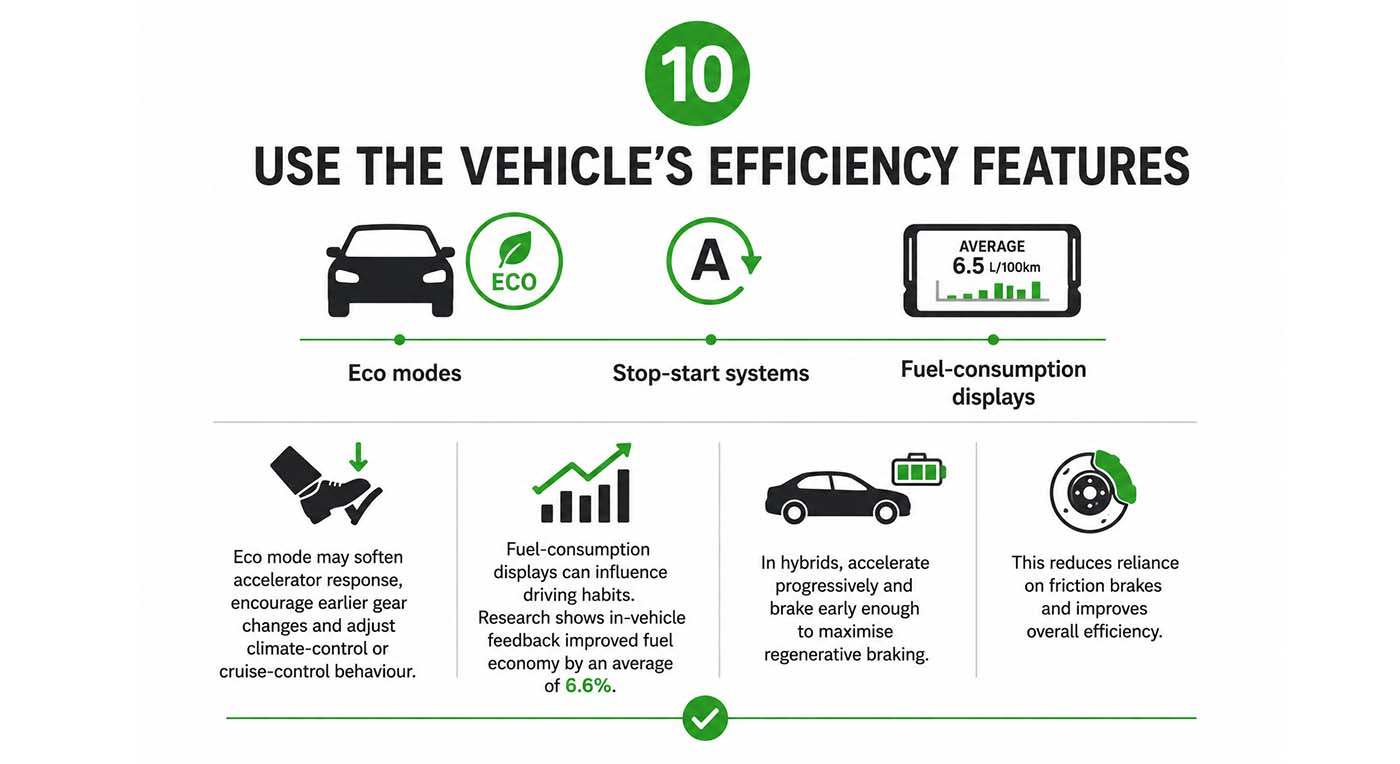
Many modern vehicles include Eco modes, stop-start systems and displays showing real-time or average fuel consumption.
Depending on the vehicle, Eco mode may soften accelerator response, encourage earlier gear changes and adjust climate-control or cruise-control behaviour to improve efficiency.
Fuel-consumption displays can also influence driving habits. Research cited by the US Department of Energy found that in-vehicle feedback improved fuel economy by an average of 6.6 per cent in one study.
In hybrids, accelerate progressively and brake early enough to maximise regenerative braking, rather than relying unnecessarily on the conventional friction brakes.
Small changes add up
No single trick will transform a large SUV into an economy car. But smoother acceleration, sensible speeds, correct tyre pressures, less idling, reduced aerodynamic drag and intelligent A/C use can collectively make a measurable difference.
The most efficient driving style is also generally a calmer one: anticipate traffic, maintain adequate space from the vehicle ahead, avoid unnecessary speed, and allow the vehicle to carry its momentum rather than constantly accelerating and braking.
Over thousands of kilometres, these small changes can help reduce fuel bills, tyre wear and unnecessary strain on the vehicle.




Loading comments...