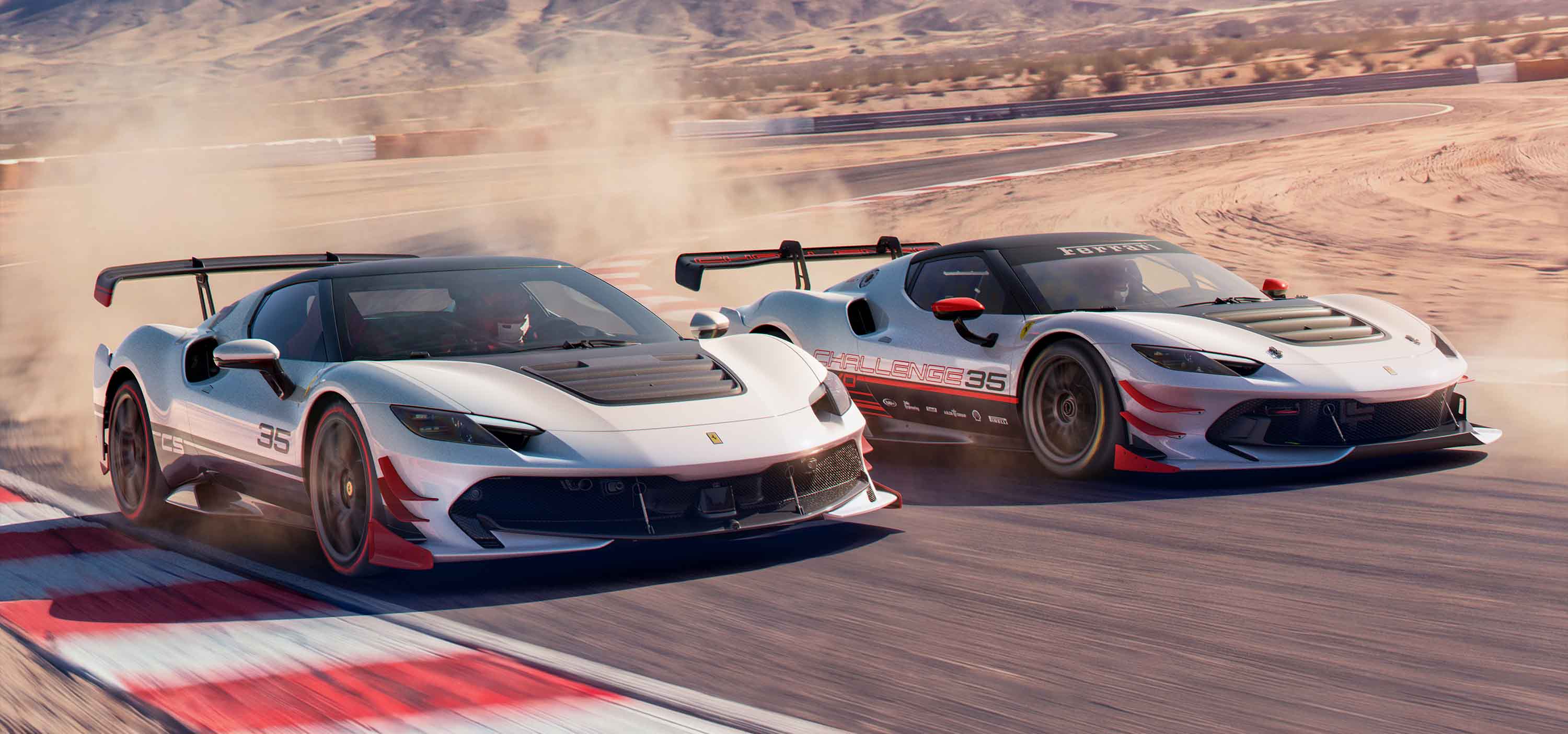
Ferrari unveils 296 Challenge Stradale and Challenge Evo
Published Date :
Ferrari has unveiled the road-legal 296 Challenge Stradale and track-only 296 Challenge Evo, featuring non-hybrid twin-turbo V6 engines producing up to 700 cv, extensive aerodynamic upgrades and racing-derived technology
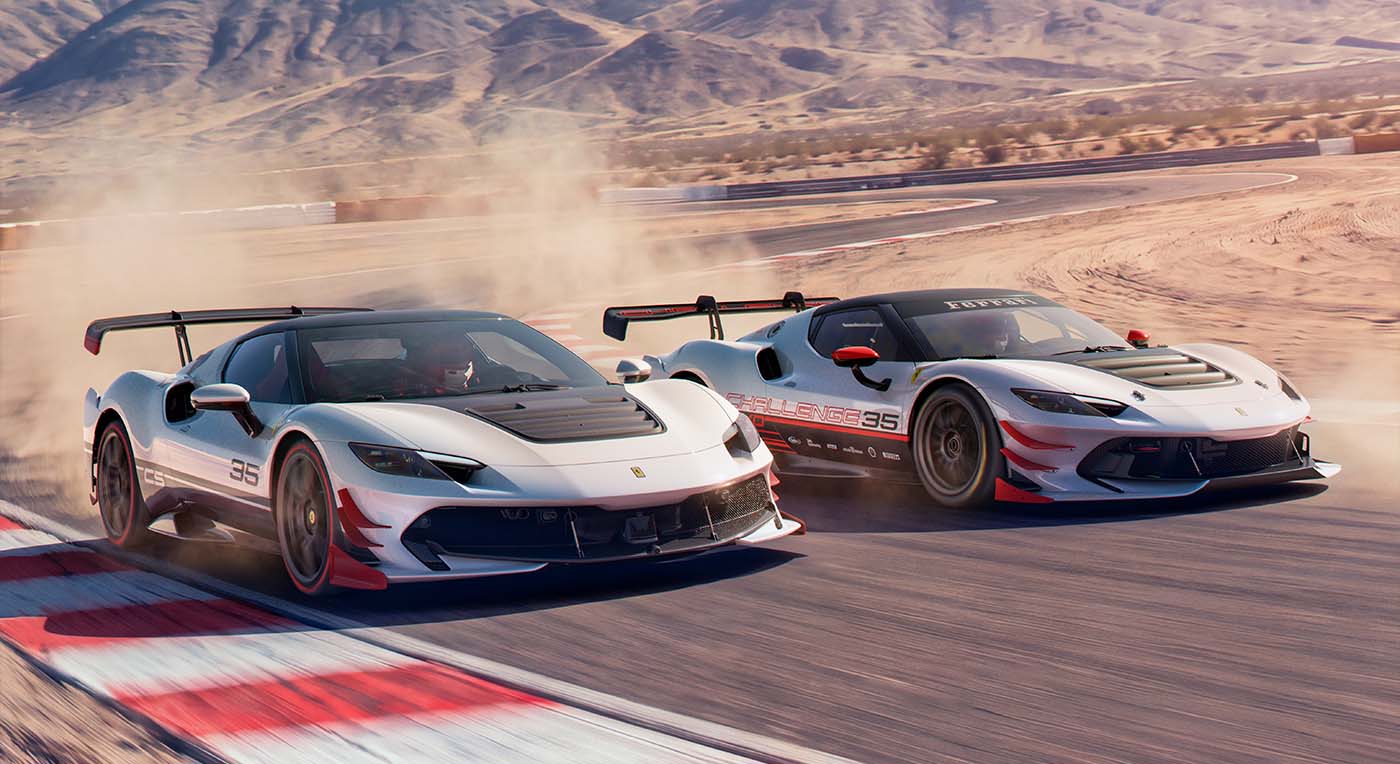
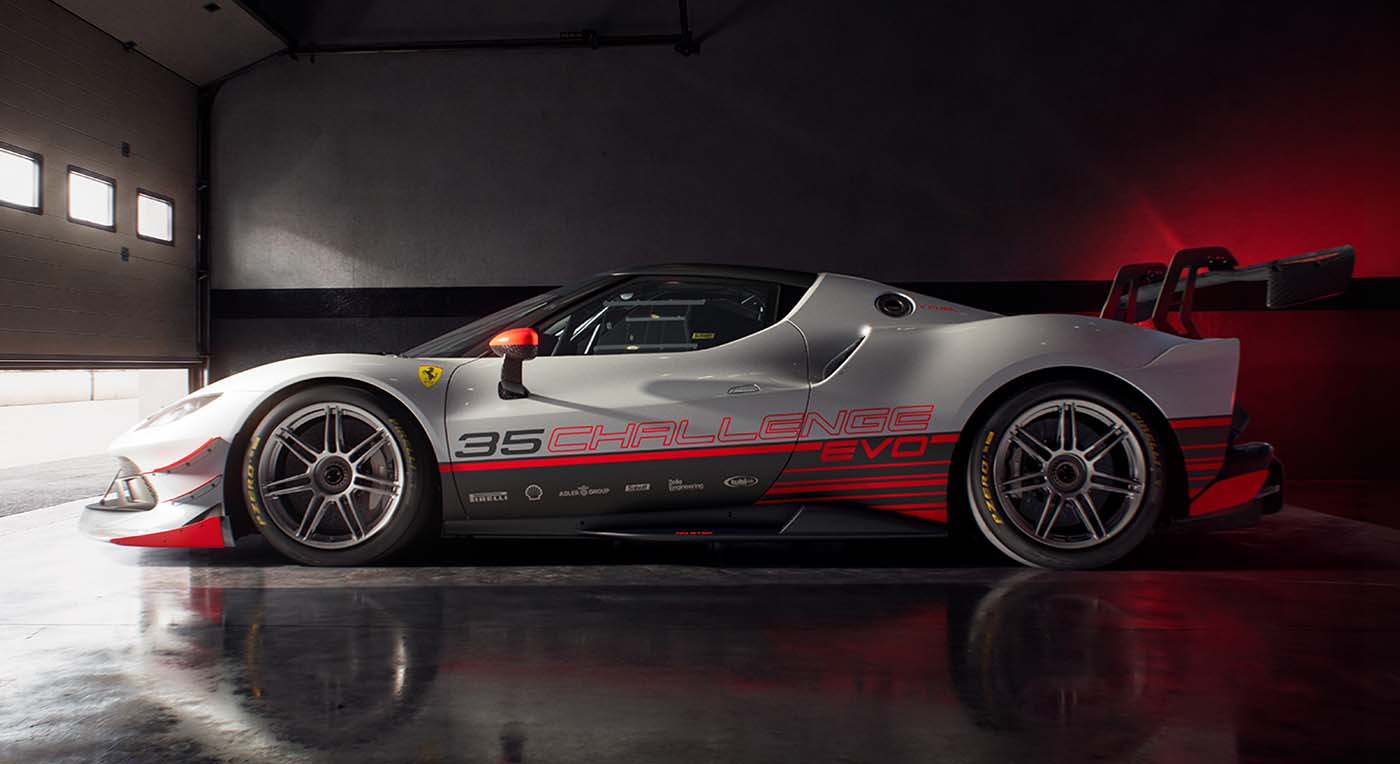
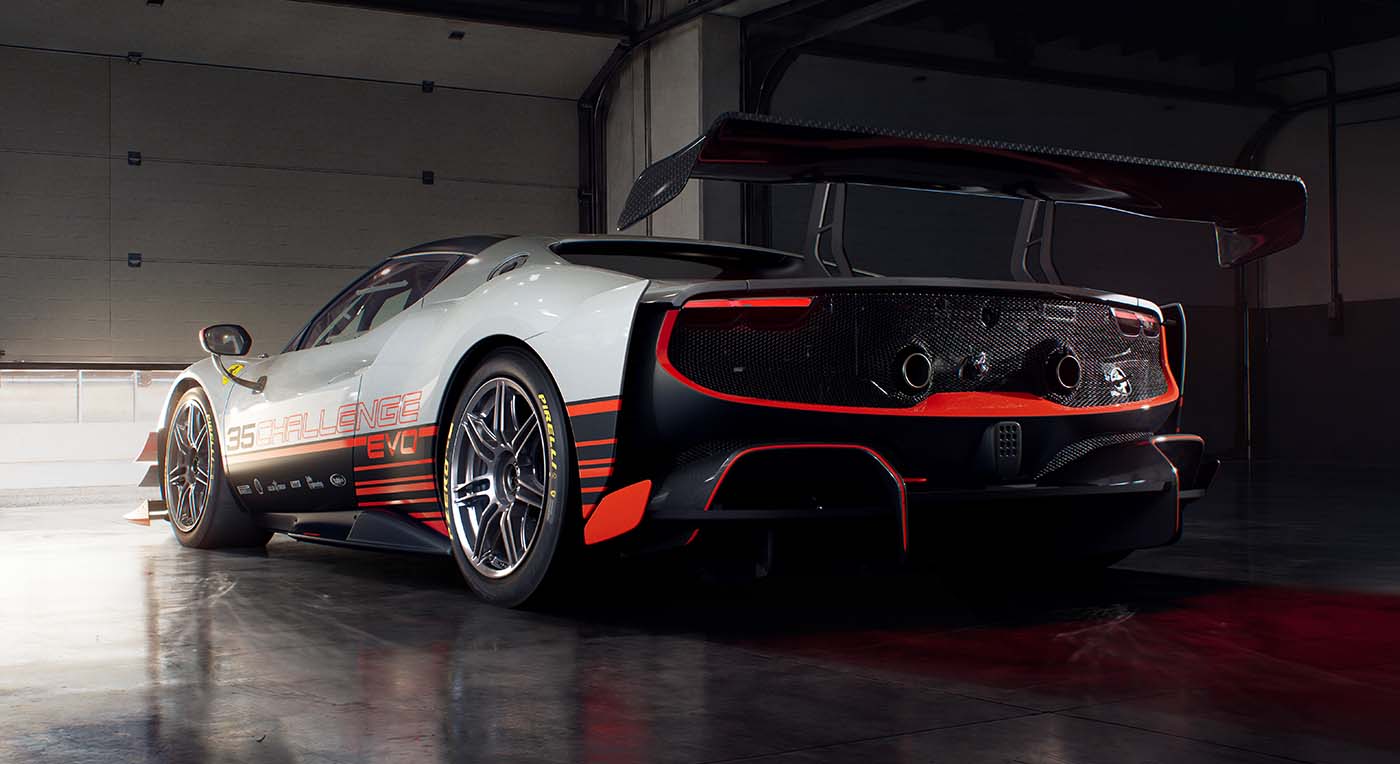
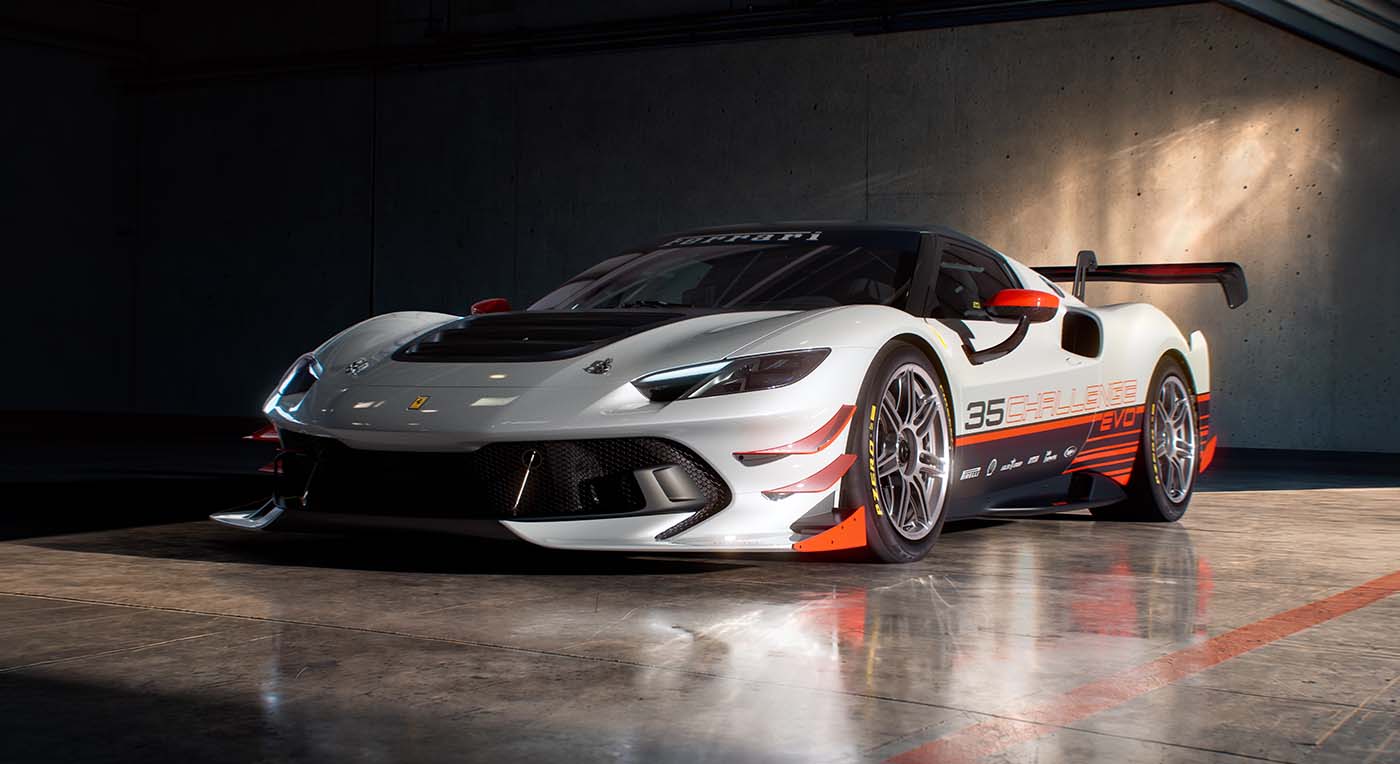
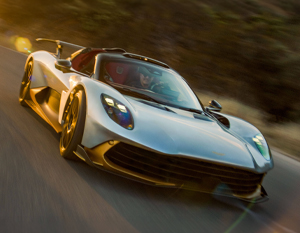
Italian sportscar manufacturer Ferrari unveiled the 296 Challenge Stradale and 296 Challenge Evo on 21 November 2026 during the Ferrari Finali Mondiali, held at the Circuit de Barcelona-Catalunya in Spain. Developed in parallel, the two models demonstrate how Ferrari transfers motorsport technology into its production cars. The road-legal Stradale delivers a more direct, track-focused driving experience, while the Challenge Evo is designed for the Ferrari Challenge championship, where it will make its racing debut in 2027.
Non-hybrid twin-turbo V6 powertrains
Both models use Ferrari's 2,992 cc, 120-degree twin-turbocharged V6 engine without hybrid propulsion, reducing weight and mechanical complexity. The Stradale features an eight-speed F1 dual-clutch transmission, while the Evo uses a seven-speed unit.
The Stradale also receives revised turbocharging, variable valve timing and racing-derived transmission calibration, improving dynamic torque response by more than 32% compared with the 296 GTB. Additional changes include lighter driveline components, improved cooling, a revised exhaust and Ferrari's first application of a belt starter generator in a road car. An optional track-only exhaust is also available.
296 Challenge Stradale: road-legal racing performance
The Stradale weighs 140 kg less than the 296 GTB, benefiting from the removal of hybrid components and extensive lightweight construction.
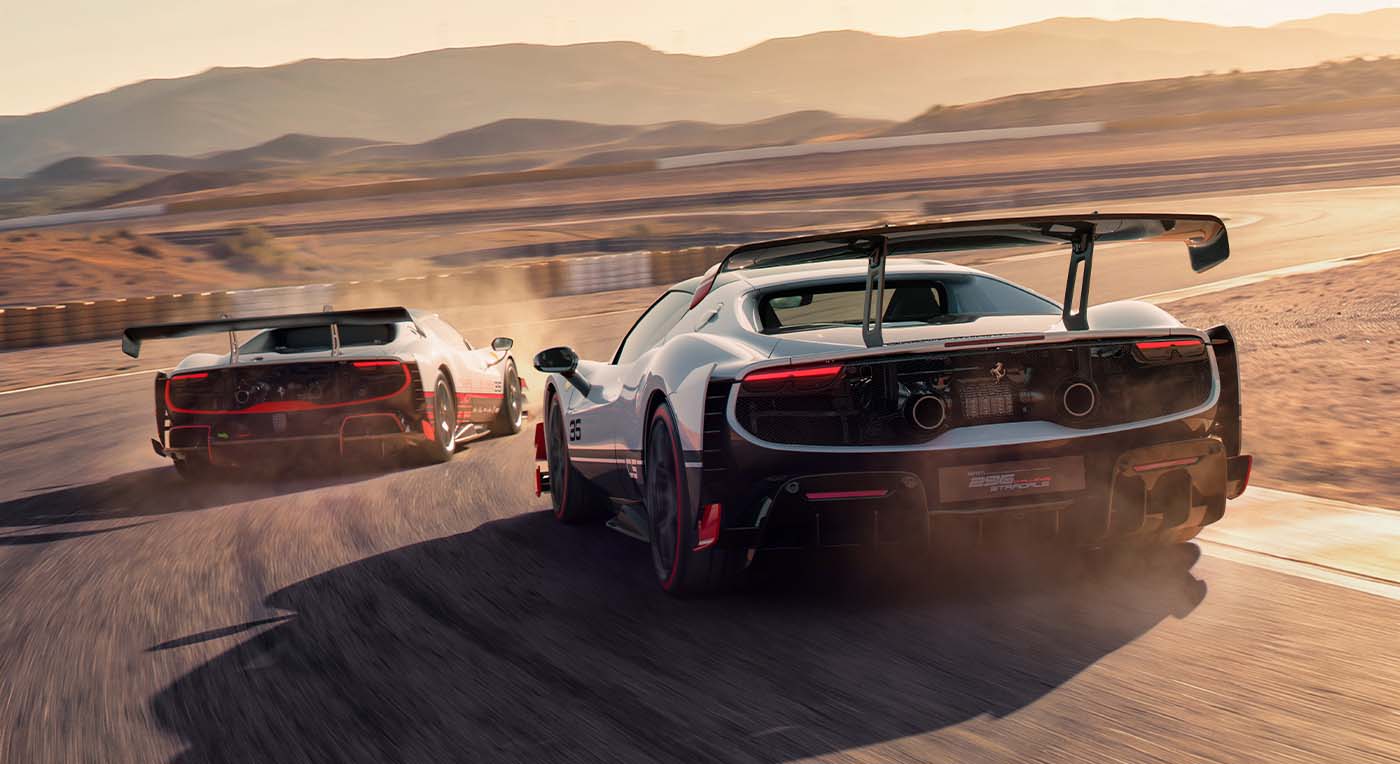
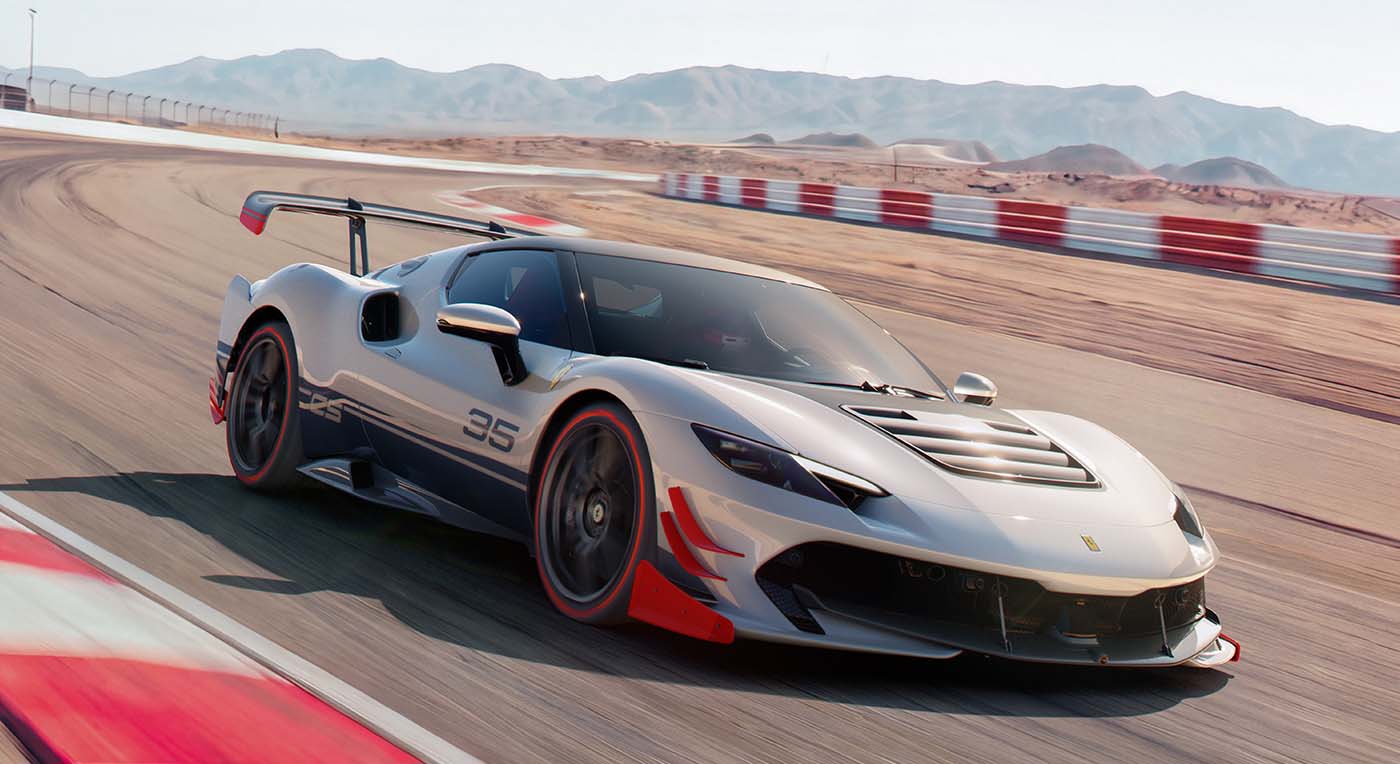
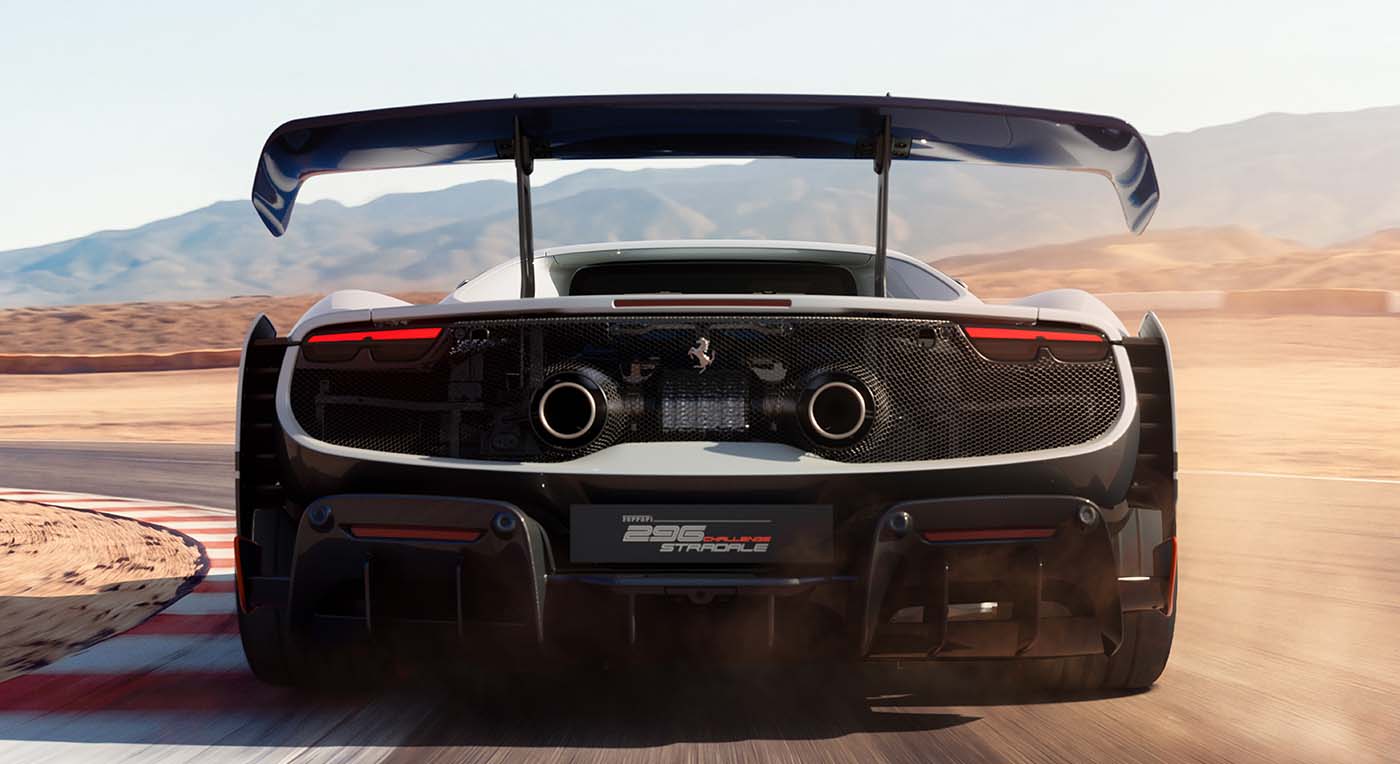
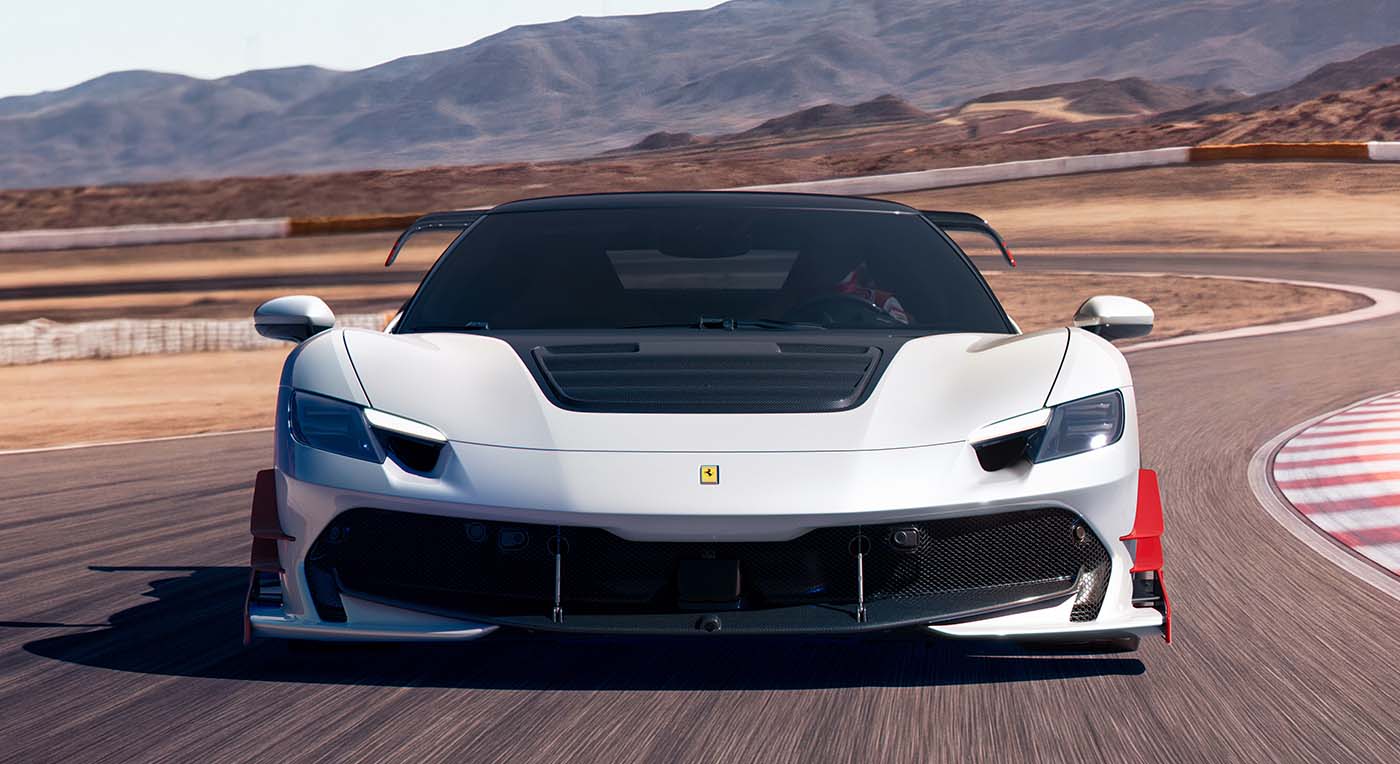
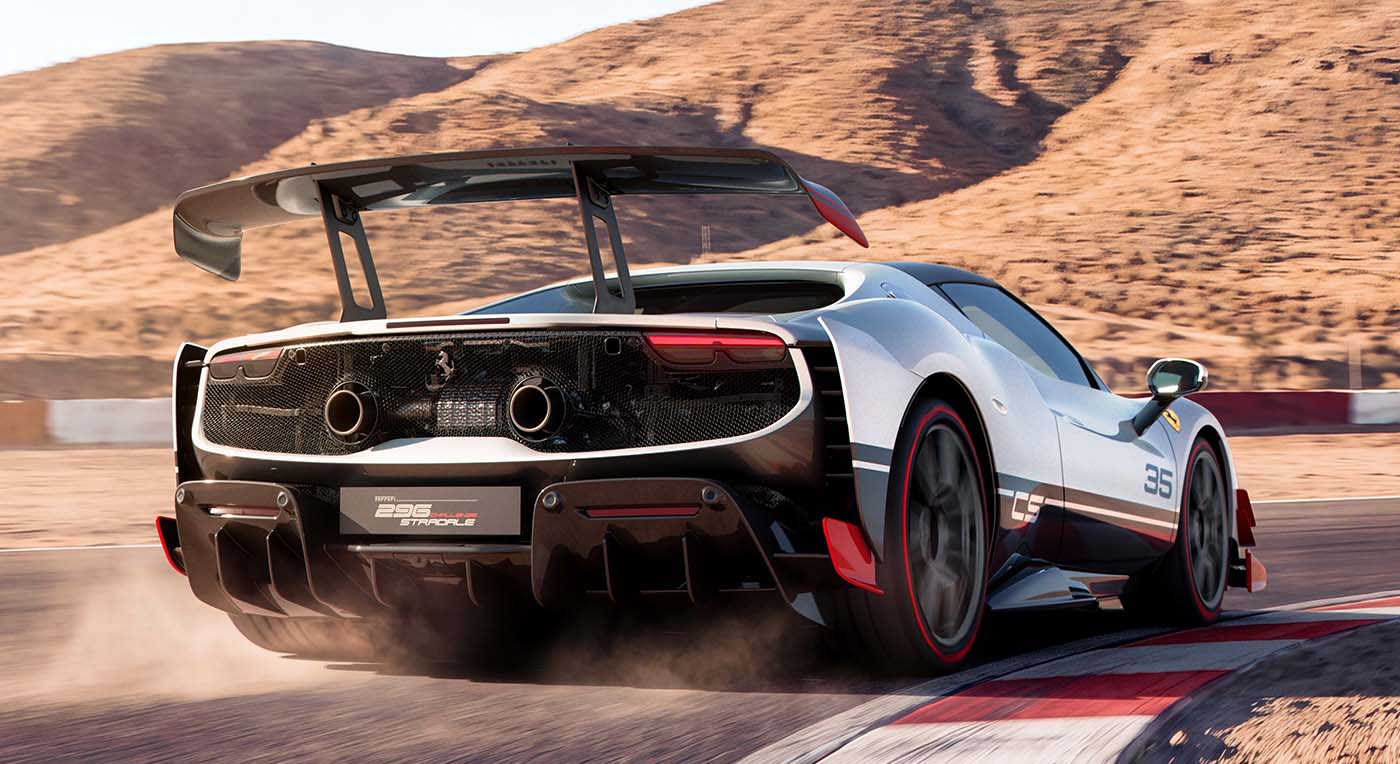
Its aerodynamic package includes a prominent front splitter, bumper flicks, vortex generators, an enclosed underbody, aero dampers and a fixed rear wing derived from the Challenge Evo.
Revised suspension geometry, stiffer springs, semi-active dampers and specially developed Pirelli P Zero R and P Zero Trofeo RS tyres are designed to improve grip and consistency.
Compared with the 296 GTB, Ferrari claims 7% greater lateral performance, 34% improved stability and a 68% reduction in roll gradient.
Other upgrades include carbon-ceramic brakes, ABS Evo across all Manettino settings, revised traction-control systems and the F80-derived Ferrari Integrated Vehicle Estimator (FIVE).
Race-inspired exterior and stripped-back cabin
Designed by the Ferrari Styling Centre under Flavio Manzoni, the Stradale features a ventilated bonnet, aggressive aerodynamic elements, seven twin-spoke wheels, a fixed rear wing and a prominent diffuser.
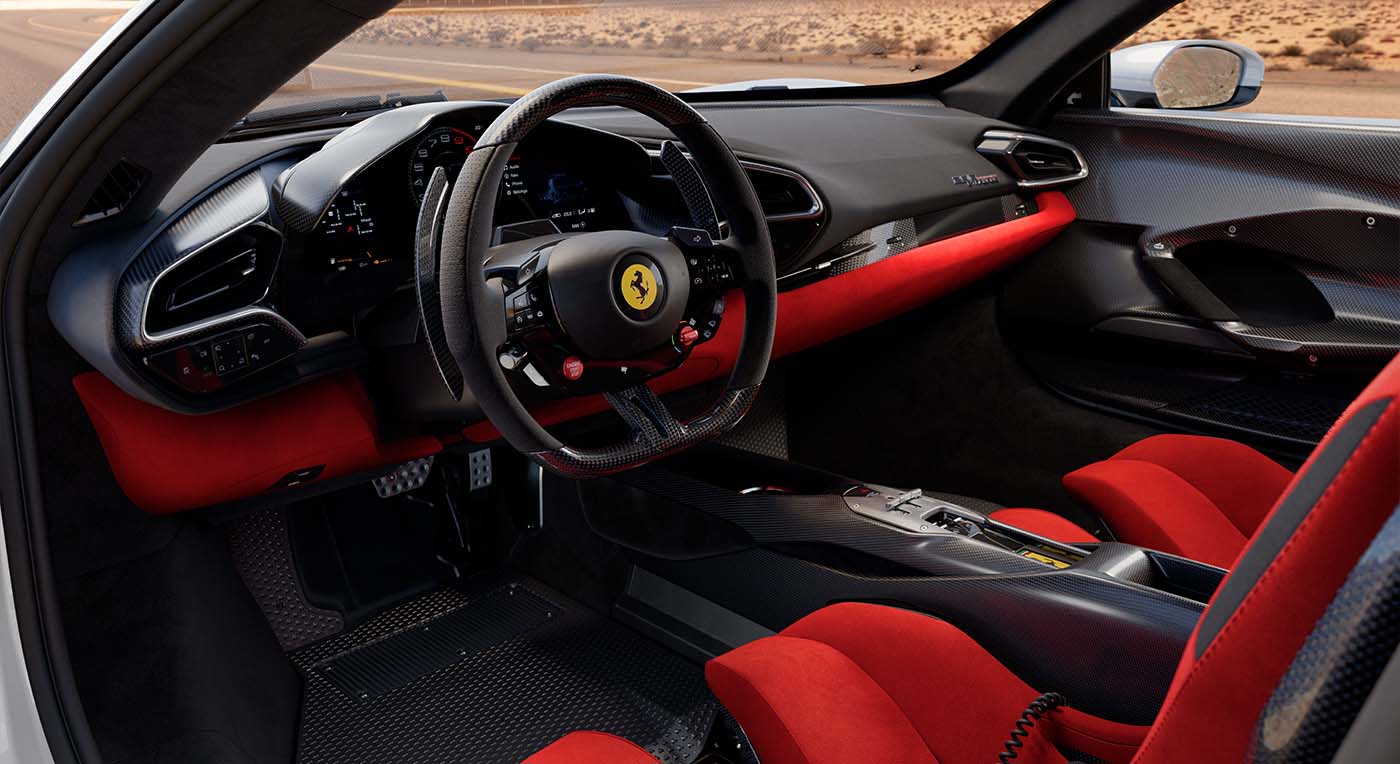
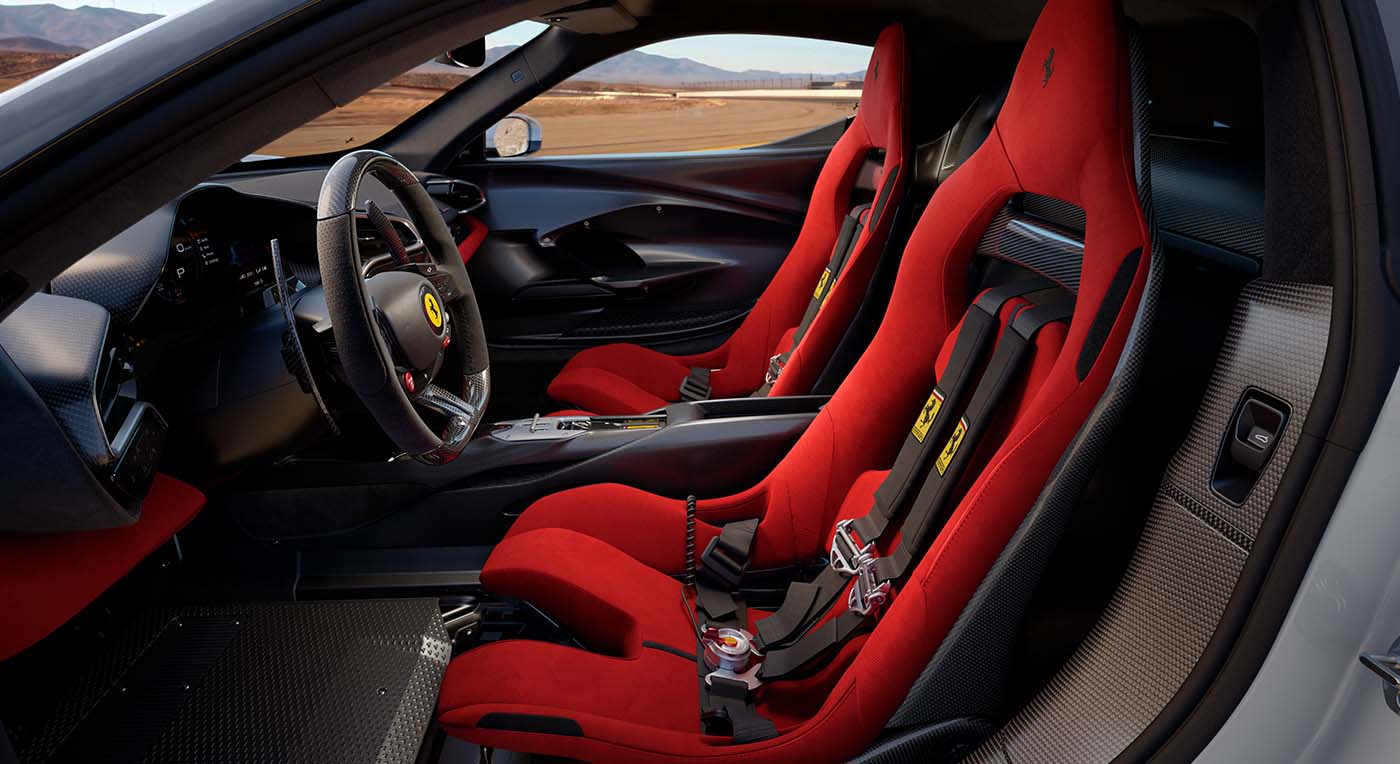
The minimalist interior incorporates carbon-fibre door panels, a lightweight centre console and optional exposed chassis sections.
Options include racing liveries, Alcantara upholstery, forged wheels, carbon-fibre wheels and tubular seats that weigh 25% less than conventional racing seats.
Despite its track-focused character, the Stradale retains adaptive cruise control, automatic emergency braking, lane assistance, blind-spot monitoring, Matrix LED lighting and driver-monitoring systems. Ferrari's seven-year scheduled maintenance programme is also available.
296 Challenge Evo: improved aerodynamics and handling
The track-only Challenge Evo builds on the 296 Challenge introduced in 2024, focusing on improved aerodynamics, handling, braking stability and consistent race performance.
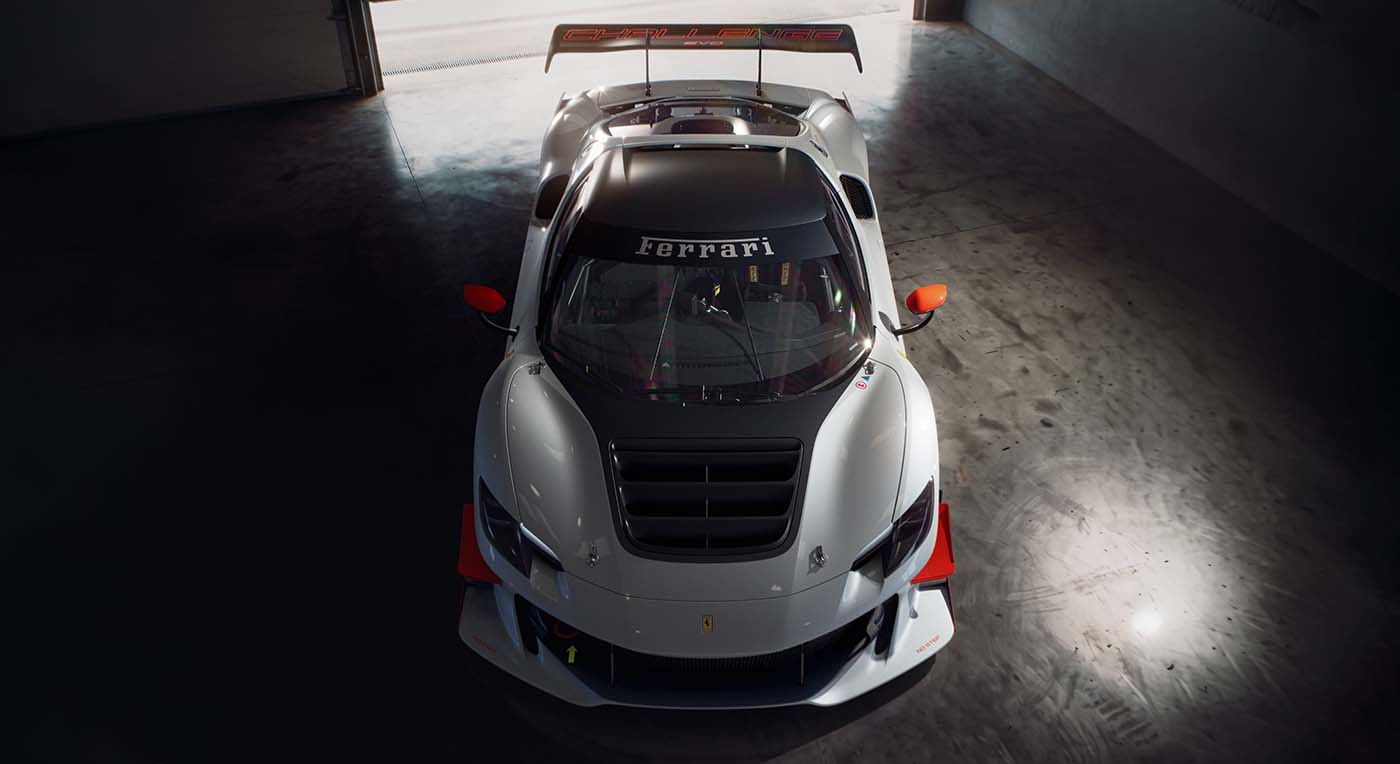
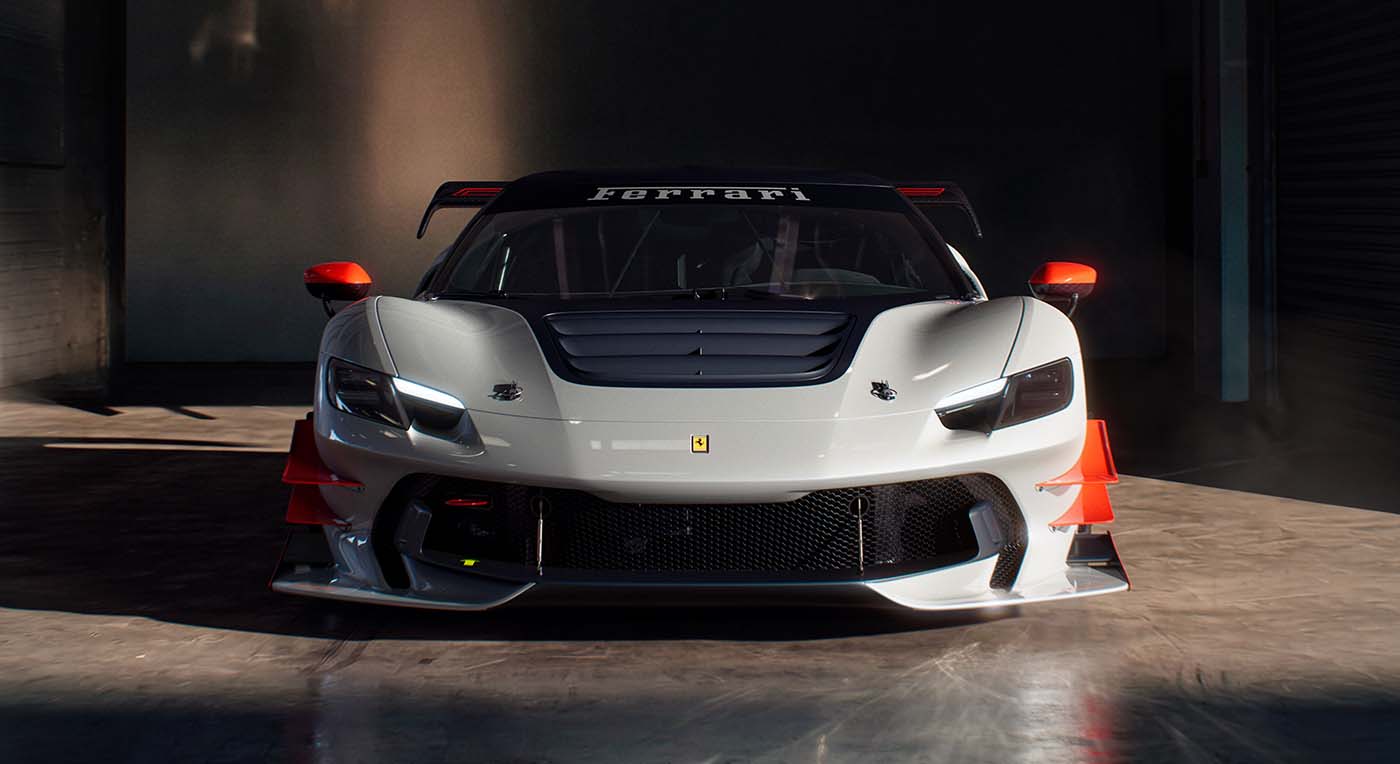
Two aerodynamic configurations are offered: High Downforce, which maximises grip on technical circuits, and Low Drag, which reduces aerodynamic resistance on high-speed tracks. The redesigned package includes a larger splitter, revised underbody, carbon-fibre components, new mirrors, an extended rear diffuser and a more adjustable rear wing.
Revised traction-control strategies, electronic differential calibration and brake-pedal characteristics are designed to improve stability, cornering performance and tyre durability. Two independent Manettino switches control traction intervention, while four ABS settings cover dry and wet conditions.
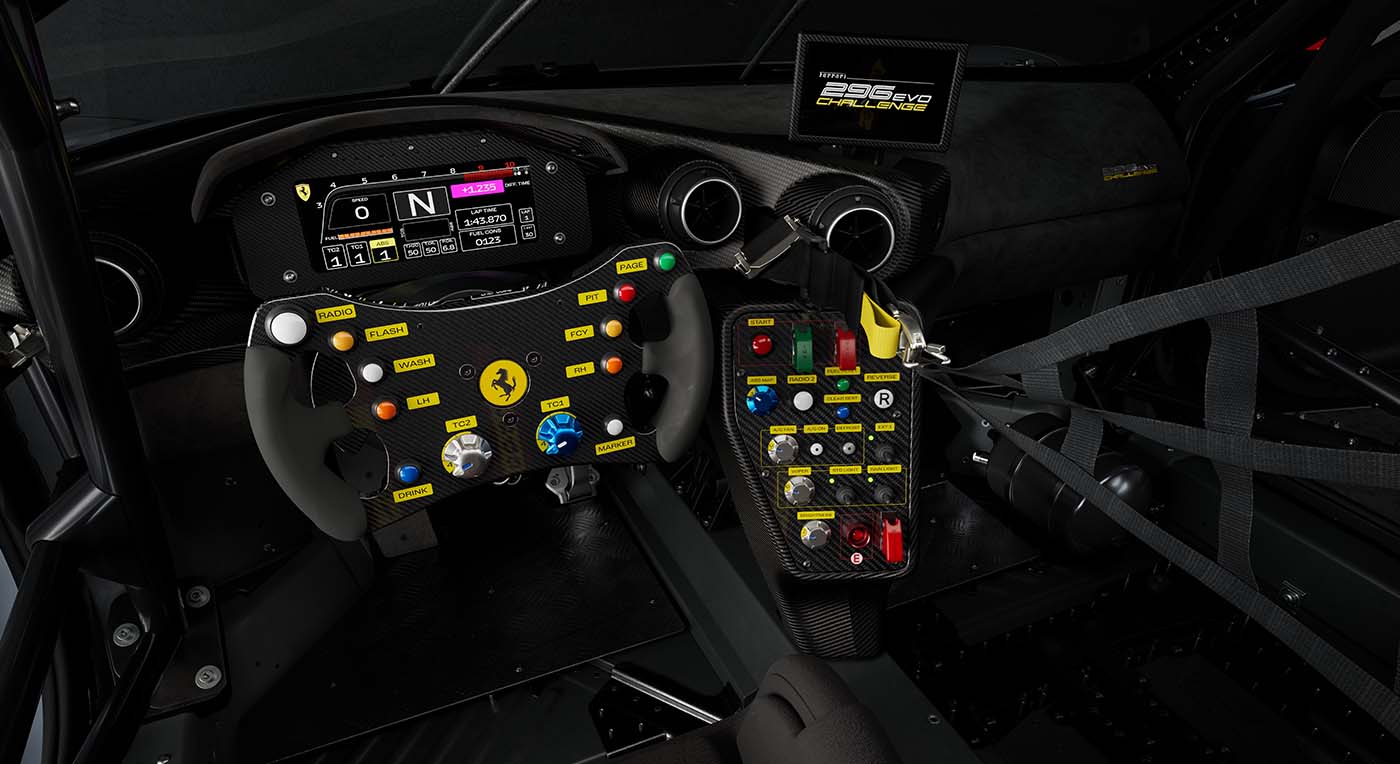
A redesigned instrument cluster provides clearer information on vehicle dynamics, tyre pressures and lap times. Optional equipment includes a removable passenger seat, an exhaust silencer and an LTE antenna for Race Control communications, which is mandatory in Ferrari Challenge competition.
Ferrari 296 Challenge Stradale vs Challenge Evo: specifications
Specification | Challenge Stradale | Challenge Evo |
Engine | 3.0L twin-turbo V6 | 3.0L twin-turbo V6 |
Maximum power | 670 cv (661 bhp) | 700 cv (690 bhp) |
Maximum torque | 740 Nm | 740 Nm |
Power per litre | 224 cv | 234 cv |
Maximum engine speed | 8,500 rpm | 8,500 rpm |
Transmission | 8-speed DCT | 7-speed DCT |
Hybrid propulsion | None | None |
Dry weight | 1,330 kg* | 1,330 kg |
Weight-to-power ratio | 1.98 kg/cv* | 1.90 kg/cv |
0–100 km/h | 2.8 seconds | Not stated |
0–200 km/h | 7.9 seconds | Not stated |
Top speed | Over 300 km/h | Not stated |
200–0 km/h braking | 101 metres | Not stated |
Fiorano lap time | 1:18.500 | Not stated |
Mugello lap improvement | — | 0.8 seconds |
Downforce at 250 km/h | 617 kg | 12% higher maximum than predecessor |
Downforce improvement | +72% vs 296 GTB | +100 kg at 250 km/h |
Low Drag configuration | — | 4% drag reduction |
Length | 4,678 mm | 4,795 mm |
Width | 2,039 mm | 1,958 mm |
Height | 1,301 mm | 1,159 mm |
Wheelbase | 2,600 mm | 2,600 mm |
Wheels | 20-inch | 19-inch |
Stradale figures based on optional lightweight equipment. Evo weight-to-power ratio calculated from Ferrari's published figures.
Ferrari Challenge expands into the Middle East
The Ferrari Challenge enters its 35th season in 2027, with the Challenge Evo becoming the championship's tenth model since its introduction in 1993. The Evo will initially compete in the European and North American championships in 2027, joining regional competitions from 2028.
A new Middle East championship begins in Bahrain on 11–12 December 2026, followed by Qatar and Saudi Arabia in January 2027 and Abu Dhabi in March 2027.
The European series will also introduce three endurance races at Mugello, Hockenheim and Valencia in 2027. Each race will last 40 minutes plus one lap, with two-driver entries permitted and a mandatory pit stop.


Loading comments...