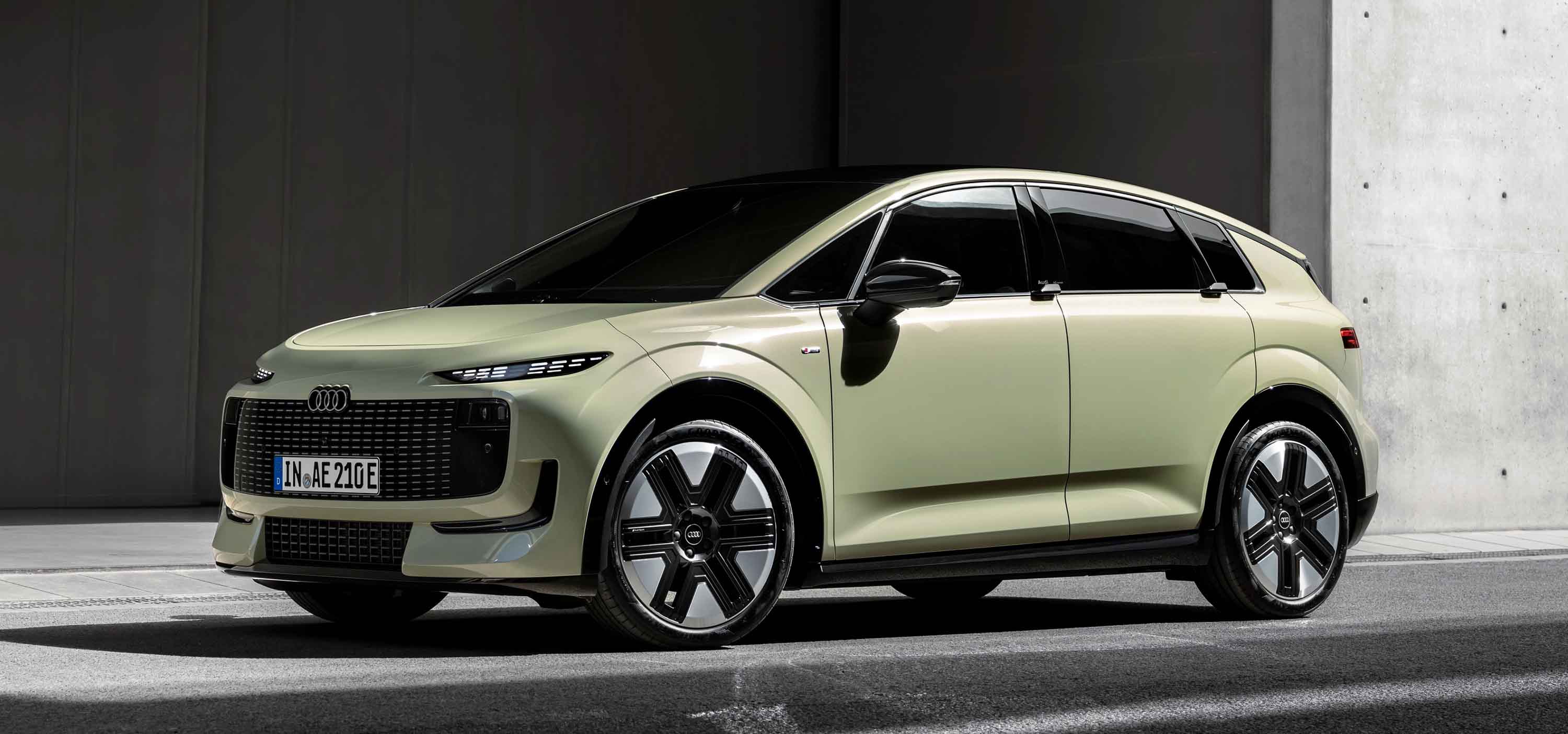
Audi A2 e-tron becomes brand’s most efficient model
Published Date :
The new Audi A2 e-tron electric car consumes as little as 12.8 kWh/100 km, offers up to 646 km of WLTP range and starts from €38,200 (around $44,400) in Germany
German luxury marque Audi has revealed the new A2 e-tron electric vehicle, its most efficient series-production EV to date, with WLTP energy consumption as low as 12.8 kWh/100 km. Developed in Germany and built at Audi’s Ingolstadt plant, the compact rear-wheel-drive EV has been designed primarily for European customers. Orders open on September 10, 2026, with first deliveries beginning in December. Prices in Germany start at €38,200, approximately $44,400 or AED 163,000.
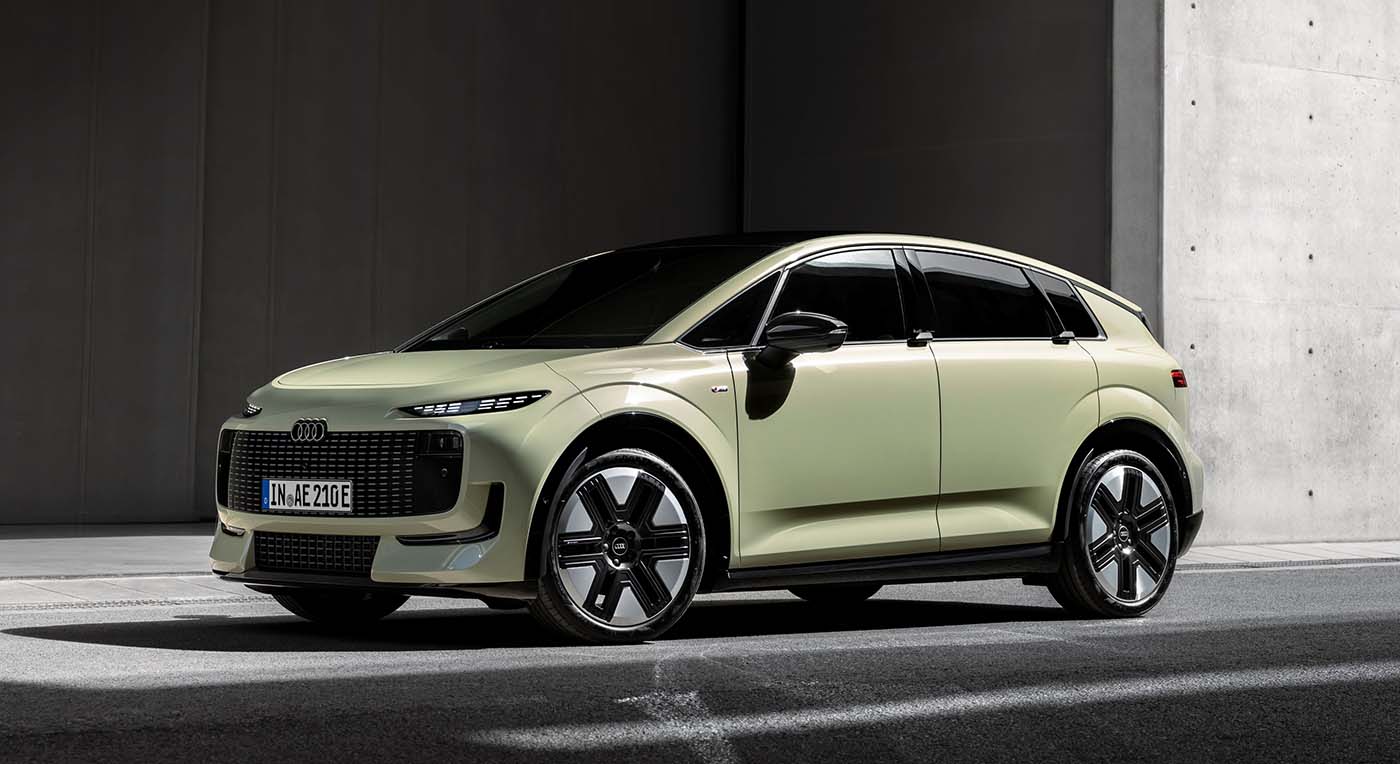
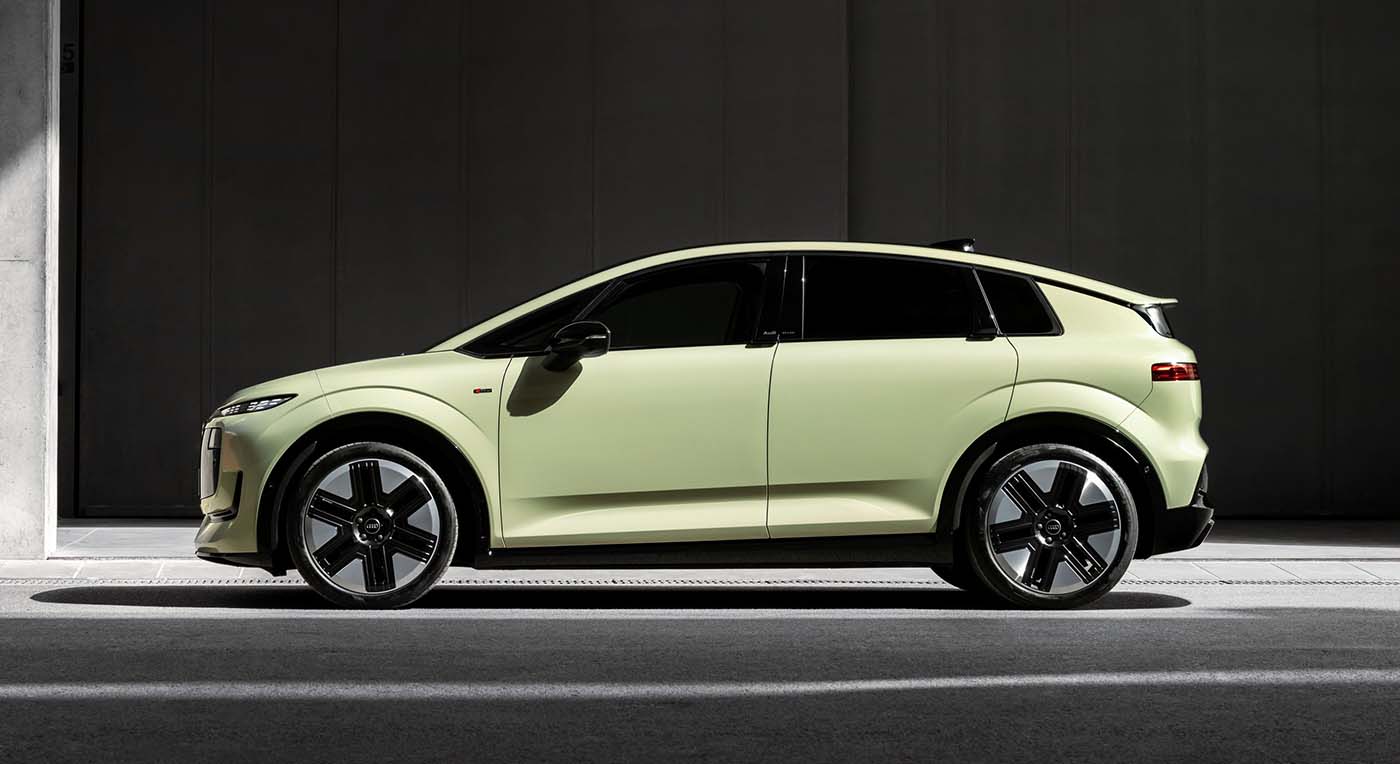
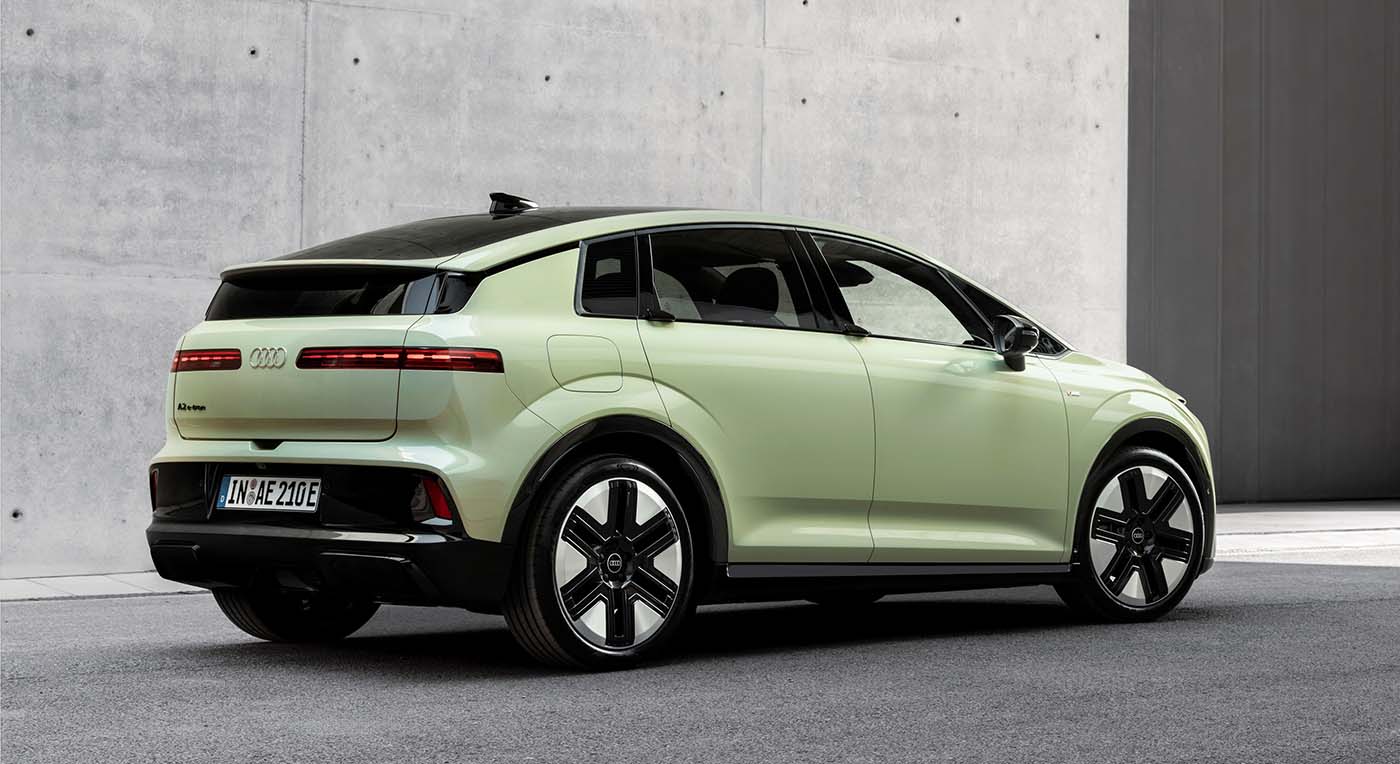
Body, aerodynamics and chassis
The car has a 2.77-metre wheelbase and wheels ranging from 18 to 20 inches, with the aerodynamic 19-inch setup identified as the most efficient.
The Audi A2 e-tron has a 0.24 drag coefficient, which Audi says is its best figure in the compact EV segment. Aerodynamic measures include an active cooling-air intake, largely enclosed underbody, aero-optimised wheels, wheel-arch gap reducers and flush electric door handles with haptic sensors.
Depending on version, suspension choices include comfort suspension, sport suspension and electronically controlled dampers. The 240 kW model gets damper control as standard, while progressive steering is also standard on this version.
Optional lighting includes Matrix LED headlights, four digital daytime-running-light signatures and LED rear lights pro with dynamic indicators.
Four versions and three battery sizes
The Audi A2 e-tron electric SUV uses permanent-magnet synchronous motors and comes in four power outputs with three gross battery capacities:
125 kW / 350 Nm, 52 kWh: 0–100 km/h in 8.8 sec, 160 km/h, up to 423 km WLTP
140 kW / 350 Nm, 61 kWh: 7.9 sec, 160 km/h, up to 515 km
170 kW / 350 Nm, 84 kWh: 7.0 sec, 160 km/h, up to 646 km
240 kW / 545 Nm, 84 kWh: 5.7 sec, 200 km/h, up to 630 km
The 52 and 61 kWh batteries use LFP chemistry, while the 84 kWh unit uses NMC cells. Silicon-carbide semiconductors are used in the power electronics. The 140 kW version with the optional efficiency package achieves the headline 12.8 kWh/100 km WLTP consumption. Four recuperation settings are offered, including one-pedal driving through B mode.
Up to 183 kW DC charging
Maximum DC fast charging power is 100 kW, 105 kW and 183 kW for the 52, 61 and 84 kWh batteries respectively.
Audi quotes 10–80% charging times of 24 minutes, around 25–26 minutes, and 29 minutes respectively. Optional bidirectional charging includes Vehicle-to-Load, allowing external equipment such as e-bikes, laptops and tools to be powered from the vehicle.
In Germany, Austria and Switzerland, Vehicle-to-Home allows the A2 e-tron to supply stored electricity back to a household using a compatible DC wallbox. V2H discharge is limited to a battery state of charge between 20 and 80%.
396-litre boot and 13-litre frunk
Boot capacity stands at 396 litres, expanding to 1,336 litres with the rear seats folded.
The 170 and 240 kW models also get a 13-litre front storage compartment as standard.
An optional luggage package adds a variable boot floor, cargo net, V2L socket and additional Fidlock mounting points.
Digital cabin and connectivity
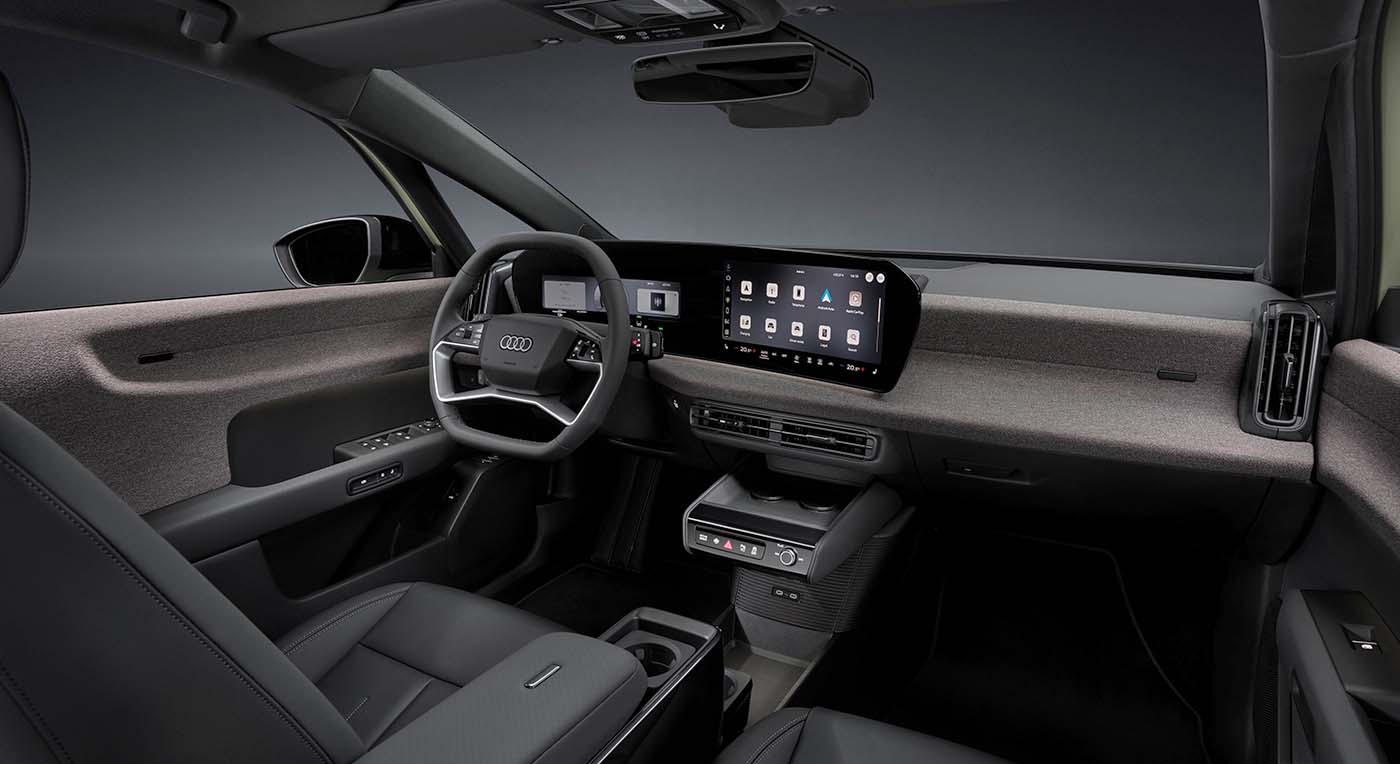
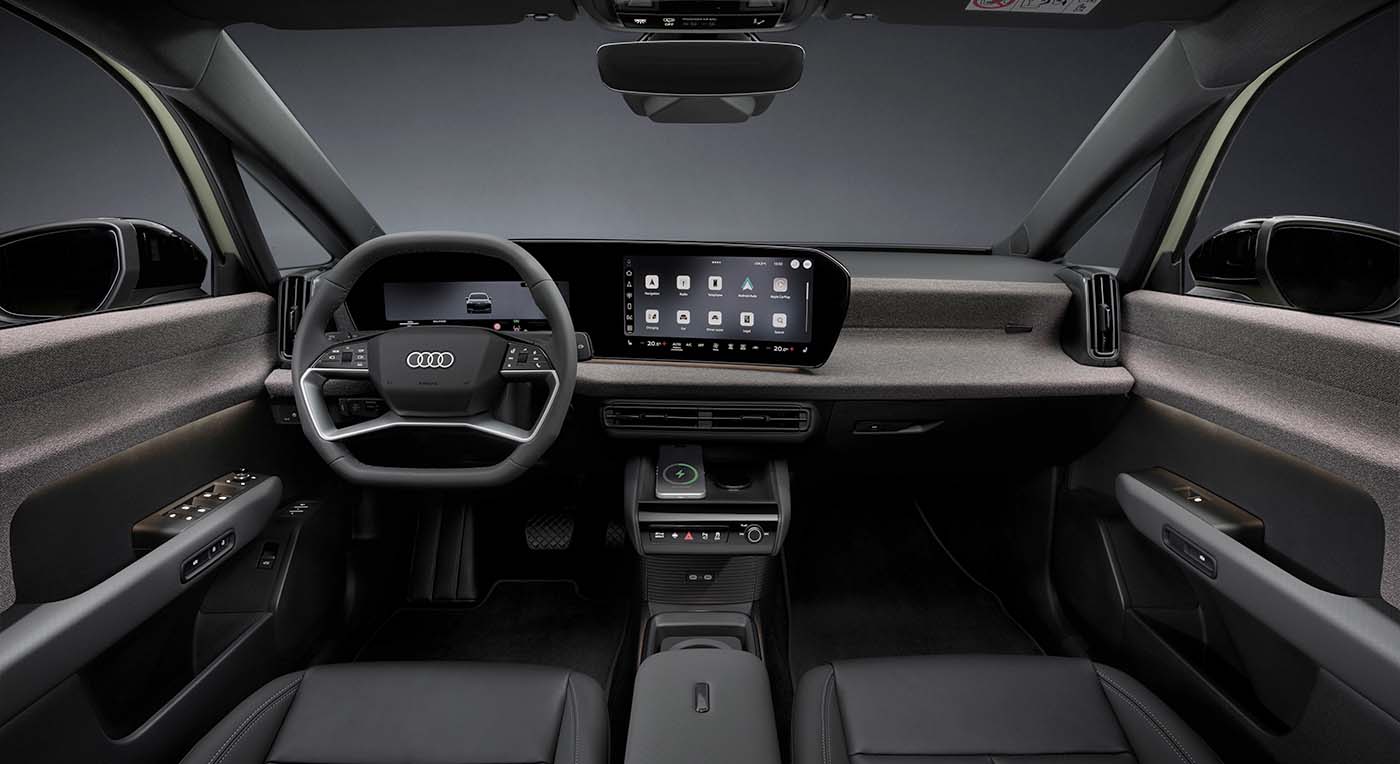
Inside, Audi’s Softwrap fabric surface runs across the dashboard and doors, while an optional panoramic glass roof provides 1.6 square metres of glass with UV and heat protection.
Standard displays comprise an 11.9-inch Audi virtual cockpit plus and curved 12.8-inch MMI touchscreen, while an augmented-reality head-up display is optional.
The e-tron route planner calculates charging stops using traffic, route topography and charger availability, and can precondition the battery before fast charging.
Audi’s AI-enabled assistant supports natural-language commands, while Audi connected work integrates Microsoft Outlook and Teams alongside an AI-based Work Agent.
The centre console includes a Qi 2.2 wireless charging tray capable of charging two smartphones simultaneously at up to 25 watts each, with active cooling and magnetic retention.
Three sound systems are offered, including an optional 14-speaker, 660-watt Sonos system.
Driver assistance
Standard features include adaptive cruise control, emergency braking, swerve and attention assists, side assist with exit warning, rear cross-traffic assist, Parking System Plus and a reversing camera.
Optional systems add active lane guidance up to 210 km/h, future assisted motorway lane changes, a 3D surround-view camera, automated parking, storage of up to five parking manoeuvres, and reverse assist that can retrace around 50 metres of a previously driven route.
Audi A2 e-tron prices
German prices start at:
125 kW / 52 kWh: €38,200 — around $44,400 / AED 163,000
140 kW / 61 kWh: €41,900 — around $48,700 / AED 179,000
170 kW / 84 kWh: €48,900 — around $56,800 / AED 209,000
240 kW / 84 kWh: €51,200 — around $59,500 / AED 218,000


Loading comments...