Body type
5-seat, 5-door large plug-in hybrid SUV
2027 BYD Ti 7 Super Hybrid Premium Review
BYD’s new five-seat Super Hybrid SUV blends boxy styling, 480 hp, a claimed 870 km range and generous equipment, making it one to watch at a relatively affordable AED 156,900.
Just when you think the Chinese automotive space has reached saturation point, along comes the 2027 BYD Ti 7 Super Hybrid, a large five-seat plug-in hybrid SUV combining rugged styling, family practicality and strong performance. We first drove the Ti 7 at its UAE launch and came away impressed. This time, we spent longer with it and approached it with a more critical eye to see whether that positive first impression would hold up. The Ti 7 is offered in two UAE variants: Design at AED 156,900 and Premium at AED 169,900. Our test car was the latter, and the additional AED 13,000 brings far more than just bigger wheels.
What’s in the name?
BYD, as many of you will know, stands for Build Your Dreams. The Shenzhen-headquartered group has a broad automotive portfolio that includes brands such as Denza and Fangchengbao.
The ‘Ti’ in Ti 7 is a reference to titanium, whose chemical symbol is Ti. In its home market of China, the SUV is sold as the Fangchengbao Tai 7, or 钛7, with the Chinese character 钛 meaning titanium. That also explains why the name is pronounced closer to ‘Tai Seven’ rather than ‘Tee Seven’ or ‘T-I Seven’. Fangchengbao, meanwhile, translates roughly to ‘Formula Leopard’.
There has been Australian media speculation that the Ti 7 could eventually join the Denza range there, potentially as a B7, but that name has not been officially confirmed. For now, BYD is already using the Ti 7 name under its own brand in markets such as the UAE and UK, while Denza Australia has no B7 in its current line-up.


Exterior design: Boxy, rugged and striking in Emerald Green
Even in a land that loves SUVs, the Ti 7 manages to stand out. Its rugged, boxy form, high flat bonnet and squared-off roofline give it strong off-road presence, while distinctive stacked L-shaped LED signatures front and rear add a modern touch.
At 5,016 mm long, 1,995 mm wide and 1,865 mm tall, with a 2,920 mm wheelbase, it is a substantial SUV. Black lower-body protection, pronounced wheel arches, side steps and roof rails reinforce the adventure-ready look, while the hidden exhaust keeps the rear clean. What looks like a spare-wheel carrier is actually a useful 32.5-litre tailgate storage box.
I particularly like the body-coloured square panel between the C- and D-pillars, a design detail reminiscent of the Land Rover Defender and one that adds character to the otherwise upright side profile.
Ground clearance is 190 mm laden, with approach and departure angles of 24 and 25 degrees. The Premium rides on 255/50 R20 tyres, while the Design gets 255/60 R19s. These are relatively road-biased tyres, which reinforce the Ti 7’s urban-friendly character. Chunkier, knobbier rubber, however, would give it an altogether more purposeful look.
The Premium’s dark alloy wheels are particularly attractive, with an intricate geometric design that looks like more thought went into it than some American TV shows.
Colour makes an even bigger difference. Our Emerald Green test car was a genuine attention magnet, with phones appearing almost everywhere we stopped. It proved to be a hit with onlookers wherever we went.
Interior design: Minimalist, chic and spacious
The Ti 7's rugged exterior gives way to a cabin that feels surprisingly chic and welcoming. It embraces minimalism without becoming boring, thanks not to a bare, featureless dashboard but to thoughtful details such as the chunky four-spoke, flat-bottomed steering wheel with satin-finish spokes, contrasting trim and subtle ambient lighting.
It is strictly a five-seater, which pays dividends in passenger space. BYD quotes more than 3.3 metres of cabin space, and there is generous room in both rows.
The power-adjustable seats are particularly impressive. Their sculpted, contoured shape feels almost like a hug, with enough cushioning for long-distance comfort and sufficient bolstering to hold occupants securely when the road gets bumpy. The Premium adds leather upholstery, rear-seat ventilation, greater electric adjustment, heating, memory and massage for the front seats, plus electrically adjustable second-row backrests.
A giant 15.6-inch central touchscreen dominates the dashboard, joined by a 10.25-inch digital instrument display and, on the Premium, a 26-inch head-up display.
The large panoramic glass roof further enhances the airy atmosphere, while dual-pane soundproof glass for the windscreen and front doors contributes to the cabin’s refined character.


Features and practicality: The Ti 7’s strong suit
This is where the Ti 7 really begins to justify its dimensions.
BYD claims 47 storage compartments throughout the cabin, providing plenty of places for phones, wallets, bottles and the assorted paraphernalia that inevitably accumulates in a family SUV. The rear centre armrest incorporates two cupholders, while four USB ports and a 12V outlet cater to charging and power needs.
With the second row in place, luggage capacity stands at 485 litres, supplemented by a clever 32.5-litre storage box integrated into the tailgate. Fold the 60:40-split rear seats and BYD claims up to 1,880 litres of cargo capacity.
The Premium also gets one of the Ti 7's more unusual features: a built-in refrigerator capable of cooling contents to -6°C or heating them to 50°C. It is a genuinely useful addition, particularly for families on the move and on longer road trips.
Connectivity is strong. Bluetooth functionality is incorporated into the multifunction steering-wheel controls, while the 15.6-inch DiLink infotainment system includes FM, AM and DAB radio. Wireless Apple CarPlay and Android Auto are standard, alongside a four-zone voice-interaction system and a 14-speaker audio system.
A 50W wireless charging pad is also included, while dual-zone automatic climate control handles cabin cooling. Remote starting and remote air-conditioning control are supported through the electronic key.
The Ti 7 also supports Vehicle-to-Load (V2L), allowing its high-voltage battery to power compatible external electrical devices. Charging is rated at 6.6 kW AC and up to 54 kW DC.
Powertrain and performance: Silent 480 horses and 870 km of range
Underneath that upright body is considerably more performance than its utilitarian appearance might suggest.
The Ti 7 uses what BYD calls its Super Hybrid system, combining a 1.5-litre turbocharged petrol engine with electric propulsion to produce 360 kW, or 480 hp, and 630 Nm. Drive goes to all four wheels, as you would expect from something with such rugged aspirations — you can’t look this much like an off-roader without having at least some of the hardware to back it up.
A 26.6 kWh battery provides a claimed 80 km of pure-electric range, while total combined range is quoted at 870 km. BYD lists combined fuel consumption at 7.2 litres/100 km.
BYD claims 0–100 km/h in 5.3 seconds, and the performance certainly feels believable. It repeatedly dips below the six-second mark with ease, while there is still plenty of energy in reserve at highway speeds. That is properly muscular acceleration for something of this size and stature.
Electric assistance delivers strong initial response, while transitions between electric and petrol propulsion are smooth enough that you rarely think about what is happening underneath.
It stops confidently too. The brake pedal feels consistent and predictable, with regenerative braking feeding some energy back into the battery, while ventilated disc brakes front and rear provide the conventional stopping power.


Ride and handling: Comfortable and capable
The steering is light, visibility is good and the turning radius is quoted at 5.7 metres, impressive considering the Ti 7 stretches beyond five metres in length.
Suspension consists of a double-wishbone front arrangement and five-link rear, supported by BYD’s DiSus-C intelligent damping system. On city roads and highways, the setup works well, isolating occupants from smaller imperfections while remaining composed at motorway speeds without feeling excessively floaty. It also rides surprisingly well over washboard surfaces, light trails and sandy tracks, although tarmac remains its natural habitat.
Physics inevitably enters the conversation when changing direction quickly. This is still a tall, substantial SUV rather than something designed to attack a mountain pass, but body movements are adequately contained and it never feels cumbersome in normal driving.
Drivers can choose between Normal, Eco and Sport modes, along with Mud, Sand, Snow and Mountain terrain settings. More unusual are Tank Turn, Track and Crawl modes.
We would still reserve judgement on how the Ti 7 compares with traditional body-on-frame 4x4s in serious desert conditions. During our time off the tarmac, however, it ploughed through loose sand with reassuring ease and climbed and descended sandy slopes without drama.
The trade-off is energy consumption. Sustained off-road driving depleted the battery noticeably faster, so heading deep into the desert with a low state of charge would not be advisable, particularly in summer. The Ti 7 would also benefit from more off-road-focused tyres if regular desert driving is part of the plan.
Safety and driver assistance
BYD has also equipped the Ti 7 with a comprehensive suite of driver-assistance systems.
A 360-degree camera system is particularly useful when manoeuvring an SUV that is almost two metres wide, complemented by front and rear parking sensors. The large central display also works in its favour here, providing a broader and more useful view than the smaller landscape-oriented screens commonly seen elsewhere. Adaptive Cruise Control is integrated into the steering-wheel controls.
Other systems include Blind Spot Detection, Lane Keeping Control, Lane Departure Assistance, Emergency Lane Keeping Assist, front and rear collision warning, Intelligent Speed Limit Control and Traffic Sign Recognition.
Passive safety equipment includes front driver and passenger airbags, a far-side airbag, front and rear side airbags and integrated curtain airbags. All seats feature pretensioning seatbelts and seatbelt reminders, while ISOFIX mounting points are provided for child seats.
The Premium’s 26-inch head-up display also keeps key information closer to the driver’s line of sight, while an automatic anti-glare rear-view mirror and memory exterior mirrors add further convenience.


Verdict: Good-looking, functional and close to complete
Legacy brands are facing an increasingly relentless wave of Chinese competition, with BYD and others launching new models at a remarkable pace…and offerings like the 2027 BYD Ti 7 Super Hybrid show why.
The Ti 7 is what happens when you combine the rugged, adventure-inspired styling the region loves with the qualities buyers increasingly expect, like power, comfort, space and connectivity. There is plenty here for families to appreciate, while the 480 hp output and claimed 870 km combined range add serious performance and long-distance appeal. It also has just enough off-road ability to keep up with the pack on a weekend morning, even if it is unlikely to lead it.
At AED 156,900 for the Design and AED 169,900 for the Premium, the latter is well worth the additional AED 13,000. The extra equipment makes a meaningful difference to everyday comfort and convenience rather than simply padding out the specification sheet.
And if you want strangers photographing your family SUV while you are trying to enjoy a quiet afternoon at Love Lake, order it in Emerald Green. Sunrise Gold attracts plenty of attention too, although my personal favourite remains Atlantis Grey, which can appear almost blue in certain light.
Rivals and alternatives
The market is prowling with SUVs ready to pull buyers in every direction, and the Ti 7 sits at an interesting intersection between electrified family SUVs and traditional adventure-focused 4x4s.
The iCAUR V23 and V27 and Deepal G318 appeal to buyers drawn to similarly boxy Chinese styling and electrified powertrains, while the 212 T01 takes a more old-school approach with body-on-frame construction and greater off-road intent.
Other alternatives include GWM’s Tank 300 and larger Tank 500, along with the Haval H9, all targeting buyers who want rugged styling with varying degrees of genuine off-road ability.
The Toyota Land Cruiser Prado remains an established benchmark, although it sits at a higher price point in the UAE. The Jeep Wrangler offers stronger traditional off-road credentials but less emphasis on family-car refinement and electrified efficiency.
Those prioritising comfort can also look towards models such as the Jeep Grand Cherokee and Infiniti QX60, while BYD’s own Song Plus offers plug-in hybrid efficiency in a more conventional crossover package.

Specifications
Engine
1.5-litre turbocharged petrol-electric PHEV with dual electric motorsDrivetrain
All-wheel driveCombined peak output
360 kW / 480 hpCombined peak torque
630 NmBattery
26.6 kWhEV range
80 km claimedCombined range
870 km claimedFuel consumption
7.2 litres/100 km claimed0–100 km/h
5.3 seconds claimedTop speed
190 km/hLength / Width / Height
5,016 / 1,995 / 1,865 mmWheelbase
2,920 mmGround clearance
190 mm ladenTurning radius
5.7 metresFuel tank
60 litres
Boot space
485 litres / 1,880 litres with rear seats foldedCharging
6.6 kW AC / 54 kW DCPrice
AED 156,900 (Design) / AED 169,900 (Premium)FAQs
Cars Reviews You May Like
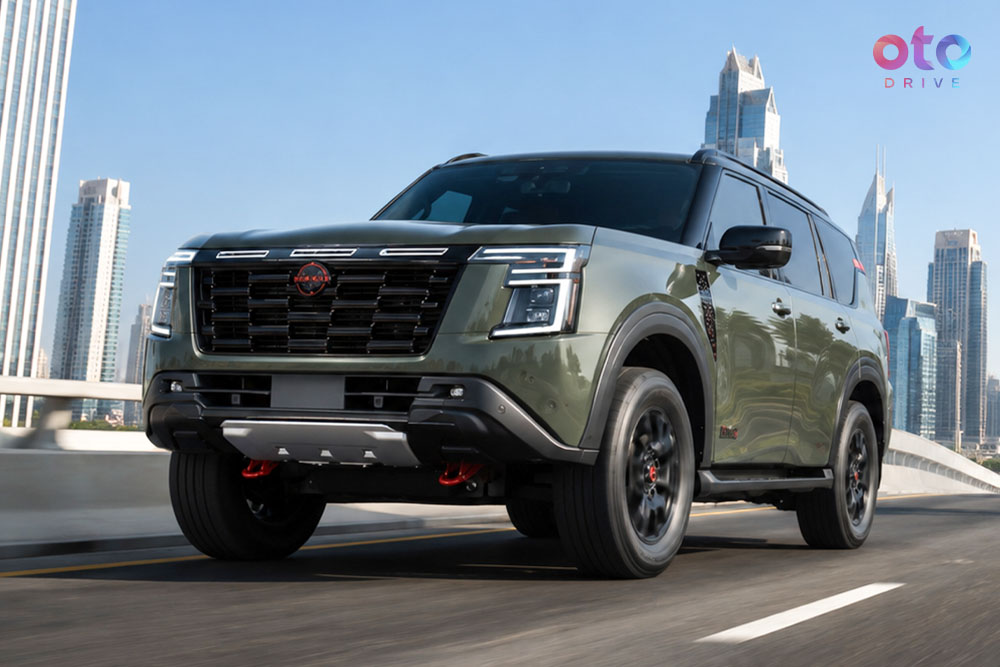
2026 Nissan Patrol PRO-4X First Drive
Nissan’s adventure-ready, off-road-focused variant of its flagship SUV is more versatile than you’d think
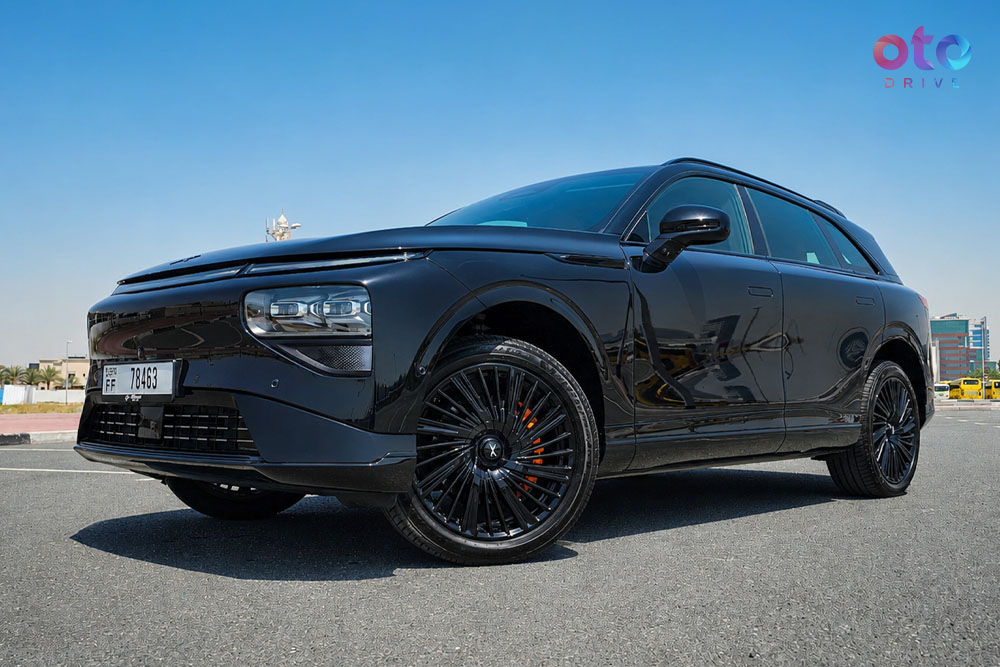
2026 XPENG G9 Performance First Drive
With 575 PS, a luxurious five-seat cabin, adaptive air suspension and lightning-quick 525 kW charging, the AED 232,000 XPENG G9 Performance combines serious pace with premium-SUV c…
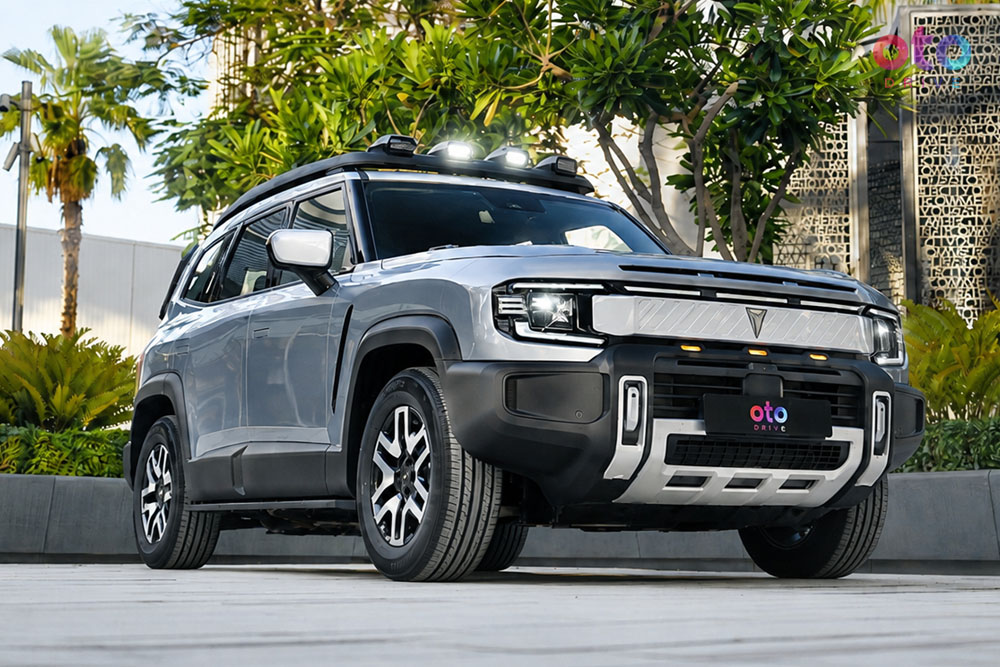
2026 Deepal G318 High AT Review
With rugged off-road styling, a quiet 430 PS range-extender powertrain, a spacious cabin and available air suspension, the 2026 Deepal G318 High AT delivers comfort, capability and…
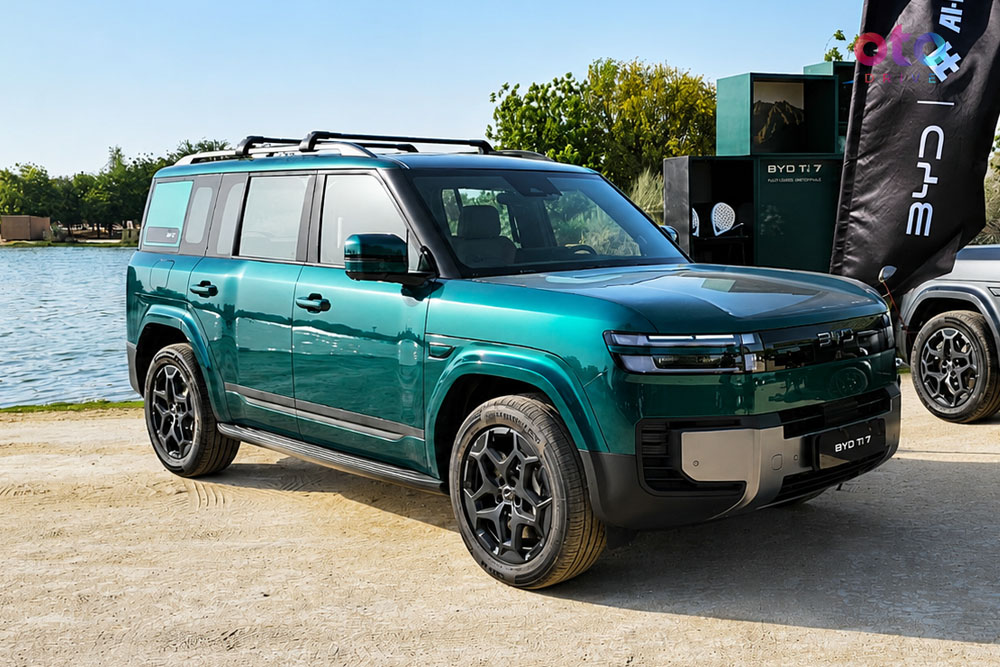
2027 BYD Ti 7 Super Hybrid Premium First Drive
BYD’s flagship Super Hybrid SUV combines rugged styling, family practicality and strong efficiency in a segment that’s getting increasingly competitive
2026 Nissan Patrol PRO-4X First Drive
Nissan’s adventure-ready, off-road-focused variant of its flagship SUV is more versatile than you’d think
2026 XPENG G9 Performance First Drive
With 575 PS, a luxurious five-seat cabin, adaptive air suspension and lightning-quick 525 kW charging, the AED 232,000 XPENG G9 Performance combines serious pace with premium-SUV c…
2026 Deepal G318 High AT Review
With rugged off-road styling, a quiet 430 PS range-extender powertrain, a spacious cabin and available air suspension, the 2026 Deepal G318 High AT delivers comfort, capability and…
2027 BYD Ti 7 Super Hybrid Premium First Drive
BYD’s flagship Super Hybrid SUV combines rugged styling, family practicality and strong efficiency in a segment that’s getting increasingly competitive
2026 Nissan Patrol PRO-4X First Drive
Nissan’s adventure-ready, off-road-focused variant of its flagship SUV is more versatile than you’d think
2026 XPENG G9 Performance First Drive
With 575 PS, a luxurious five-seat cabin, adaptive air suspension and lightning-quick 525 kW charging, the AED 232,000 XPENG G9 Performance combines serious pace with premium-SUV c…
2026 Deepal G318 High AT Review
With rugged off-road styling, a quiet 430 PS range-extender powertrain, a spacious cabin and available air suspension, the 2026 Deepal G318 High AT delivers comfort, capability and…
2027 BYD Ti 7 Super Hybrid Premium First Drive
BYD’s flagship Super Hybrid SUV combines rugged styling, family practicality and strong efficiency in a segment that’s getting increasingly competitive
Subscribe to Newsletter
Get the latest car reviews, auto news, and exclusive stories straight to your inbox. Stay ahead in the automotive world with OTO Drive.
Exclusive Invite to Join Our
Automotive Community