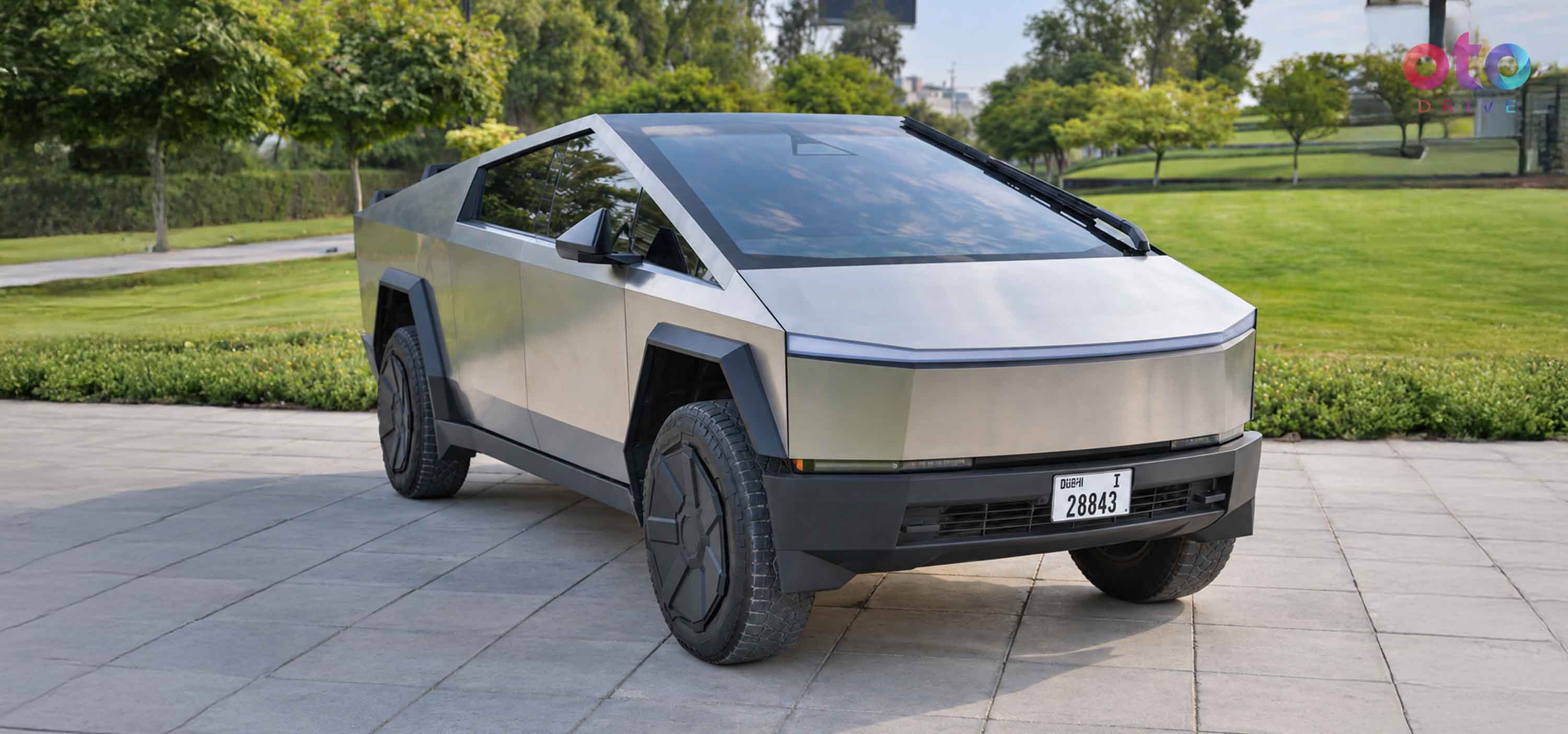
2026 Tesla Cyberbeast Review
The flagship of Tesla’s range is an outlandish full-size pickup that breaks industry norms, beats supercars to 100 km/h and is packed with features and party tricks
Over the past decade, Tesla stock has risen by approximately 2,640%, from a split-adjusted US$13.83 on September 23, 2016, to US$378.90 at the close on September 22, 2026. That extraordinary rise has come under the leadership of Elon Musk, a man some have described as a modern-day Iron Man.Under his watch, the Model Y became one of the world’s best-selling vehicles of 2025, with some global sales rankings placing it second only to the Toyota RAV4, while Tesla continued turning unconventional ideas into reality with the Semi and its expanding Robotaxi programme. Next up is the much-anticipated next-generation Roadster.The Cybertruck was very much part of that push. When unveiled in November 2019, its radical wedge-shaped, exposed stainless-steel body challenged conventional automotive design, while a promised starting price of just US$39,900 made it even more remarkable.That price promise, however, was never realised. Production began in 2023, with the first customer deliveries taking place on November 30. By then, Tesla had listed a future rear-wheel-drive version at US$60,990.Now the Cybertruck is in Dubai, and we’ve borrowed the range-topping Cyberbeast Tri-Motor to find out whether there is real substance beneath all that shock-value steel geometry…and exactly what around AED 458,670 (approximately US$124,900) gets you.
Exterior design
Dubai is hardly short of exotic machinery, with supercars and Rolls-Royces a common sight, yet few attract as much attention as the Cyberbeast. Surprised? What would you do if you saw a metallic tank on wheels hurtling down the highway? This is a vehicle built for pure shock value, and it delivers exactly that.
Its sharply geometric body wears no paint and is made from 30X cold-rolled stainless-steel panels using SpaceX-derived technology. The material is highly dent-resistant but a fingerprint magnet, while how it ages and resists corrosion over time remains to be seen. Up front, a thin full-width light bar provides the lighting signature, while the main headlamps sit lower, giving it a concept-car look.
It is also enormous, measuring 5,682.9 mm long, 2,413.3 mm wide with the mirrors extended, and 1,790.8 mm tall, though not quite as tall as an F-150. Engage Extract Mode, however, and the suspension raises the Cybertruck, giving it a claimed 407 mm of ground clearance and making it a towering beast. Some side steps would have been nice, though!
Despite its size, the wedge-shaped body achieves a 0.335 drag coefficient, which is remarkable for a segment dominated by brick-shaped vehicles, thanks to an aero-enhanced front fairing, recessed light bar and a deleted cowl for a smoother windshield transition.
And you won’t find any conventional Tesla logos on it. Instead, subtle triangular Cybertruck motifs appear here and there, while the three-headed Cerberus graphic on the tailgate symbolises the Cyberbeast’s tri-motor powertrain.
The massive Goodyear all-terrain tyres, with a factory-recommended pressure of an unusually high 50 psi, wrap around 20-inch Mantle Wheels, giving the Cybertruck plenty of presence and grip. But the aerodynamic wheel covers need to be aligned with the tyre design, or else they may trigger a tic in you.


Interior design
Where the exterior is designed to surprise and astonish, the cabin follows Tesla’s familiar minimalist philosophy. The standard black-and-tactical-grey interior suits its industrial, almost apocalyptic character, while the only alternative is a black-and-white scheme costing around AED 7,500 extra — no beige, tan or red options. Despite their plain appearance, the dashboard and door panels are padded at key touchpoints.
Up front is a vast windscreen, possibly the world’s largest fitted to a passenger vehicle, measuring roughly 1.8 by 1.75 metres at its widest point. It is so steeply raked that you cannot reach its lower edge from the driver’s seat, and it is swept by a single 1.2-plus-metre wiper, the longest fitted to a passenger vehicle.
The futuristic, almost-rectangular steering wheel is reminiscent of 1980s shows such as Knight Rider. Its material is grippy, but the wheel feels a little too small and the rim too thin for maximum comfort. Then again, when fully autonomous driving eventually arrives, you may hardly need it.
An 18.5-inch, 2560 x 1440 touchscreen, Tesla’s largest centre display, dominates the dashboard. Steering-wheel and mirror adjustments are made through it, as is gear selection, including the digital Park button. Personally, I’d prefer Tesla’s steering-column gear stalk or even a conventional toggle-style shifter.
The front seats are surprisingly sporty, with pronounced side bolsters. Rear space is vast, with roughly three inches of headroom and similarly generous knee room, although the sloping roof gives the cabin a different feel from other full-size trucks. The texture of the vegan leather feels better than in the older Model Y, but not as good as in the latest one.
Features and technology
The Cybertruck doesn’t just look like it came out of a video game…you can actually play games on the central screen, albeit only while stationary. The Arcade includes titles such as Castle Doombad Classic and Beach Buggy Racing 2, with the latter playable using the touchscreen, steering wheel or a compatible Bluetooth game controller such as a PS5 controller. You can also catch up on your favourite shows or creators through YouTube, Netflix and Amazon Prime, although you’ll need to link your accounts.
Rear passengers get their own 9.4-inch, 1440 x 900-pixel touchscreen for climate fan control and access to streaming services.
Then there is Light Show, which is pure theatre. The Cybertruck flashes its lights, moves the windows and operates components such as the frunk in a choreographed sequence, almost like watching a Transformer come to life.
The navigation and voice-control systems also work very well, certainly better than in many German or other American cars. The system can understand different accents and carry out commands such as lowering the windows or folding the mirrors.
The Cybertruck also gets an in-house-engineered 15-speaker audio system with two subwoofers, which delivers decent fidelity, along with two wireless phone chargers up front.
The A/C also performed well despite the summer sun shining through the panoramic glass roof. Only the front seats get both heating and ventilation, while the rear outboard seats get heating. There is also a glovebox with a USB connection.
Also worth mentioning is the Tesla app, which lets owners remotely lock or unlock the truck, control climate and charging, check range and location, operate the frunk, tonneau cover, tailgate, bed lights, outlets and ride height, and access Sentry Mode/Dashcam clips, software updates and service assistance.


Practicality and functionality
There are rubberised cupholders, a huge central storage cubby and a stainless-steel tray at the base of the centre console. The rear seats fold upwards to create a flat floor, with 1,533 litres of additional second-row storage.
Up front, the powered frunk offers 200 litres and a 200 kg load capacity, with a durable finish and illuminated close button. It can even support enough weight to sit on for a karak at sunrise. A separate under-bed gear locker adds 97 litres and a 100 kg load capacity, while a removable powered cooler is also available.
At the rear is a lockable cargo bed with around 1,700 litres of capacity, plus multiple tie-down and attachment points, including L-track rails along the sides. For camping, the optional Basecamp turns the rear into a sleeping tent.
The powered tonneau cover is water-resistant, self-locking and takes about 10 seconds to open or close. Tesla rates it to support 136 kg, and our roughly 100 kg test posed no issue. The tailgate is damped rather than powered, lowering in a controlled manner but requiring manual closing.
The Cyberbeast can tow up to 4,990 kg, or nearly five tonnes — enough for dirt bikes, jet skis or a sizeable caravan. An integrated trailer brake controller lets you adjust Brake Gain from 0–10 and Brake Boost response.
There is also plenty of scope for accessories. The Cybertruck has dedicated auxiliary power feeds, including 48V feeds, and delivers up to 9.6 kW of continuous power across five onboard outlets. The bed includes a 240V/40A outlet capable of running heavy appliances or charging a stranded EV, plus two 120V outlets sharing 20A. These are controlled through the Outlets & Mods touchscreen menu.
Powertrain, performance and charging
The fully electric Cybertruck uses a 123 kWh high-voltage battery and a 48V low-voltage architecture instead of the 12V system used by most cars, allowing thinner, lighter wiring while delivering the same or higher power.
Its tri-motor powertrain produces 845 hp (630 kW). Despite weighing over three tonnes, acceleration is brutal: engage Beast Mode and launch control, and it surges furiously to 100 km/h, yet almost silently. Tesla claims 0–100 km/h in 2.7 seconds; we recorded 2.75 seconds, with repeated sub-three-second runs easily achievable. It also covers the quarter-mile in under 12 seconds, putting it in supercar territory.
Braking needs a deft touch. It stops hard, but this is a 3,129 kg vehicle. Regenerative braking is largely automatic and adjusts based on trailer or cargo weight.
Official Cyberbeast range is 484 km with the all-terrain tyres and Mantle Wheels fitted to our test vehicle, with consumption rated at 29.8 kWh/100 km, though we reckon real-world range could fall below 400 km. The charging port sits in the plastic rear wheel-arch trim, avoiding another break in the stainless-steel body, but the need for an adapter feels like a step backwards in convenience.
The maximum Supercharging rate is 325 kW, with Tesla claiming up to 220 km of range in 15 minutes under suitable conditions. At the Wafi Mall Tesla Supercharger, we charged from 25 to 45 per cent in around 20 minutes, adding roughly 24.6 kWh of nominal capacity at an average of about 74 kW. It wasn’t the fastest charger available, but Tesla’s established Supercharger network makes long-distance UAE ownership easier than with most EVs.


Ride and handling
For something this big and heavy, the Cybertruck handles remarkably well. It is the first mass-production vehicle with steer-by-wire, replacing the mechanical steering shaft with sensors and electromechanical controls. Combined with rear-wheel steering, Tesla says this gives it a turning radius better than many sedans. The steering is super quick, at just 0.94 turns lock-to-lock, and can feel almost sports-car-like through corners. There is noticeable body movement when pushed, though, with the Cybertruck tending to rock from side to side rather than roll like a conventional car.
Thanks to the adaptive air suspension, ride quality is reasonably plush, although the Cybertruck can wobble slightly over certain surfaces, partly due to its chunky all-terrain tyres. So don’t expect Rolls-Royce levels of isolation or composure. 360-degree acoustic glass does, however, help keep the cabin impressively quiet.
For serious off-roading, there is a mechanical locking differential on the front axle and a virtual, software-controlled locking differential on the rear, along with selectable All-Purpose, Rock, Gravel/Deep Snow and Sand terrain settings, plus dedicated Off-Road and Baja modes. Off-Road Mode adjusts the suspension, traction and drivetrain for difficult terrain, while Baja Mode allows greater wheel slip and more aggressive behaviour for faster driving on loose surfaces. Of course, all this remained theoretical for us, as we were advised not to go beyond tarmac roads.
The touchscreen also provides an off-road display showing pitch and roll angles and a compass. Wade Mode prepares the truck for water crossings, while Joe Mode lowers the volume of certain alerts and chimes, making them less intrusive, particularly when passengers are sleeping.
Safety ratings and features
Despite all its tech, the Cybertruck lacks a conventional stitched 360-degree bird’s-eye view. Instead, Tesla Vision Park Assist uses the front, rear and side cameras to create a graphical representation of the surroundings, with colours showing object proximity, but it is nowhere near as useful as a traditional top-down view.
Individual front, rear and side camera feeds are available, yet parking can still be tricky because it is hard to judge where the huge front end ends, while the side mirrors feel small for a vehicle this size. Rear visibility is nil with the tonneau cover closed, although the rear-view camera feed can be displayed on the centre screen.
For safety, the UAE-spec Cybertruck comes standard with Automatic Emergency Braking, Forward Collision Warning, Side Collision Warning, Obstacle-Aware Acceleration, Blind Spot Monitoring, Lane Departure Avoidance and Emergency Lane Departure Avoidance. It also offers an Automatic Blind Spot Camera, which displays the relevant side-camera feed when you indicate, while the cabin camera can monitor driver attentiveness. Sentry Mode can use the vehicle’s cameras to monitor activity around the parked truck.
It also gets nine airbags, and it is worth noting that the 2026 Cybertruck earned the IIHS Top Safety Pick+ award, with “Good” ratings in the small-overlap front, updated moderate-overlap front and updated side-impact tests.


Verdict
Who knew that what looks like the materialisation of a six-year-old’s design could become an industry disruptor? But it has. The Cybertruck is built around shock value — a stainless-steel wedge that draws eyes like a magnet and reminds us that what we create doesn’t have to look like everything else.
Beneath the rolling theatre, however, is a seriously capable machine. The Cyberbeast can hit 100 km/h in a claimed 2.7 seconds, tow almost 5,000 kg, carry plenty of gear and, with its air suspension and off-road modes, take you deep into the wilderness for a camping trip. Then there are the games, entertainment apps, Light Show and even silly fart noises to amuse one and all.
Yet some aspects feel surprisingly compromised. The on-screen transmission selector is less intuitive than a conventional stalk, there is no proper 360-degree camera view, making its giant body harder to judge while parking, and the charging-port arrangement requires an adapter. Rear visibility is also limited with the tonneau closed, while the ride is not always as polished as the air suspension might suggest.
Frequent reliance on DC fast charging can contribute to greater long-term battery degradation, while the exposed stainless-steel body can become extremely hot under the UAE summer sun.
The Cyberbeast comes with a four-year/80,000 km vehicle warranty, while the battery and drive unit are covered for eight years or 240,000 km, whichever comes first, with a minimum 70% battery-capacity retention during the warranty period.
The Cyberbeast is difficult to judge by conventional pickup or luxury-car standards. Part of its appeal is simply that nothing else looks, drives or attracts attention quite like it. It drives in a lane of its own.
Rivals and alternatives
The Cybertruck sits in a rather unusual space, with few direct rivals in the UAE. Its closest official electric alternative is the GMC Hummer EV Pickup, a 1,000 hp “supertruck” known for its outrageous performance, CrabWalk and serious off-road ability, while the Hummer EV SUV offers much of the same character with an enclosed load area.
The Ford F-150 Lightning is a more conventional and practical electric pickup, but it is not officially sold in the UAE, while the Chevrolet Silverado EV and Rivian R1T are other electric alternatives without official UAE availability.
If petrol power isn’t a deal-breaker, the Ram 1500 majors on comfort and luxury, with the RHO adding serious off-road performance. The Chevrolet Silverado 1500 offers traditional V8-powered American truck capability, while the GMC Sierra, Ford F-150 and F-150 Raptor provide alternatives ranging from luxury and workhorse practicality to high-speed desert performance.

Pros & Cons
Pros
- Outlandish, jaw-dropping steel exterior
- Supercar-like straight-line performance
- Luggage compartments and towing capacity
- Digital features and connectivity
- Zero tailpipe emissions
Cons
- Stainless steel body can be hot to touch
- Wobbly ride
- No conventional 360-degree camera
- Unproven body and battery longevity
- Pricey
FAQ
Subscribe to Newsletter
Get the latest car reviews, auto news, and exclusive stories straight to your inbox. Stay ahead in the automotive world with OTO Drive.